Weight regain after weight loss is common, but researchers are investigating whether it may have a biological basis beyond diet and willpower. New preclinical research suggests that obesity may leave lasting changes in fat tissue that keep an appetite-stimulating hormone elevated even after weight has been lost.
The study, published in Cell Reports, focused on asprosin, a hormone produced mainly by white adipose tissue. Asprosin acts on neurons in the hypothalamus to increase appetite. In obesity, levels of the hormone tend to be higher, but the mechanism behind this increase has been unclear.
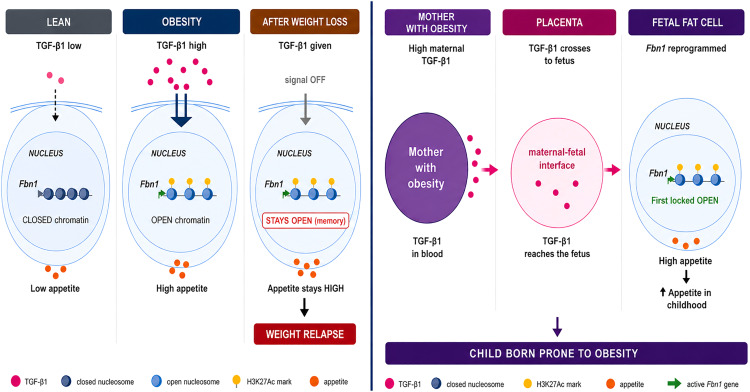
Researchers led by Atul Chopra of Case Western Reserve University and the Harrington Discovery Institute found that an inflammatory signalling molecule elevated in obesity, transforming growth factor beta 1, or TGF-beta 1, increased activity of the Fbn1 gene in fat cells. This gene produces the precursor to asprosin.
A lasting molecular change
In laboratory-grown fat cells, four days of exposure to TGF-beta 1 increased Fbn1 expression and asprosin production. These changes persisted for 14 days after the exposure ended. The researchers traced this to changes in chromatin—the structure that packages DNA—at the Fbn1 gene, leaving it in a more active state.
In mouse models with prior obesity, asprosin remained elevated after weight loss, even when body weight had returned to levels similar to control animals. When these mice were later given a high-fat diet, they regained more weight. In one weight-loss model, neutralizing asprosin prevented this excess regain.
The study also examined whether maternal obesity could influence offspring. Offspring of mice with obesity, and offspring of mice given TGF-beta 1 late in pregnancy, had higher asprosin levels and gained more weight on a high-fat diet. The researchers propose that maternal TGF-beta 1, rather than asprosin alone, may be the signal affecting fetal fat tissue.
What this does – and does not – show
The findings suggest a possible shared mechanism behind weight regain and increased obesity susceptibility in offspring. They do not prove that the same process occurs in humans or that asprosin alone determines body weight.
The research was conducted in cultured cells and mice. The authors say the next step is to confirm whether the same chromatin changes and asprosin patterns exist in human fat tissue and during human pregnancy. Many factors affect a child’s future weight, including genetics, diet, physical activity and family environment.
For clinicians, the study supports the idea that obesity should be treated as an ongoing condition rather than as a problem that ends once weight is lost. Patients may need continued support to maintain weight loss, even after reaching a treatment goal.
Source: Cell Reports