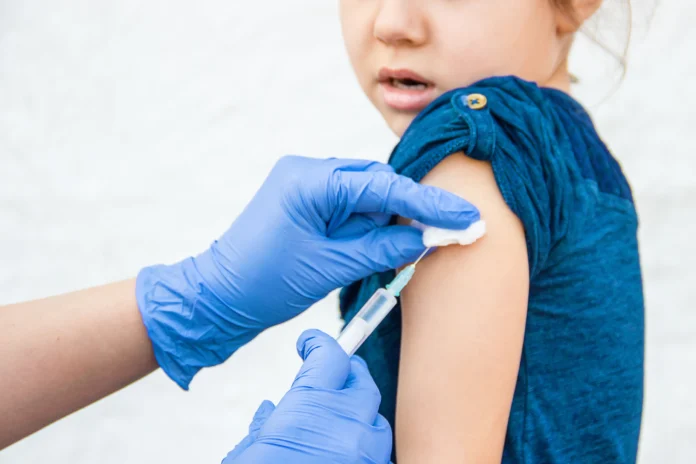
When a frightened parent turns to social media for advice during an infectious disease outbreak, particularly in a mothers’ support group, they should expect to find reassurance and support. But in one of Facebook’s largest groups, called Crunchy Moms, which has nearly half a million members, the reality is radically different.
In August, amid a measles outbreak in Lancaster County, Pennsylvania, one mother posted in the group: “I can’t calm down, I’m worried about my little one.” She was considering vaccinating her three-year-old to protect her six-month-old baby at home. Within minutes, her plea for help received hundreds of responses, all of which completely disregarded modern medicine.
Group members categorically urged the mother not to vaccinate her child. One claimed that dying from measles was “completely impossible.” Others argued that the vaccine itself spreads the disease and that getting vaccinated is equivalent to directly “injecting poison” into the body. Notably, Facebook’s own artificial intelligence (AI), which automatically processed 589 comments, left a dry summary at the end of the post: “Commenters argue that the vaccine is unnecessary or harmful.”
This online narrative is completely at odds with medical facts. In reality, six measles-related deaths have been recorded in Pennsylvania this year alone, including two infants from Lancaster County. Medical professionals unanimously confirm that the measles, mumps, and rubella (MMR) vaccine is safe and the best, life-saving tool for preventing the disease.
Scientists and doctors say the misinformation circulating in Crunchy Moms and similar groups is alarming. New mothers are becoming unwittingly drawn into online discussions hostile to science and evidence-based medicine. One scientist who investigates harmful health misinformation on the platform describes Crunchy Moms as “the most dangerous group on Facebook.”
Misinformation has been a problem on Facebook for years, but in the past, the company attempted to curb its spread. In 2025, Meta founder Mark Zuckerberg said there was “too much censorship” on the platform. The company subsequently changed its policies, eliminating fact-checkers in the United States and shifting its focus to moderating only extremely dangerous or illegal content.
Meta says it continues to prohibit harmful medical misinformation, but it remains unclear how effectively this policy is enforced. An investigation by The Guardian found that misinformation spreads freely in Crunchy Moms, a group with 490,000 members. Moreover, Meta frequently recommends the group to users through its own algorithm, even when they are not searching for similar content.
In Crunchy Moms, which was created in March 2025, false claims about the dangers of vaccines are actively circulated. Some members believe that contracting measles or chickenpox naturally is healthier than getting vaccinated. Misinformation frequently claims that vaccines cause autism or sudden infant death syndrome (SIDS).
A Guardian journalist reported more than 50 posts and comments that violated Facebook’s rules, but the platform took no action on any of them.
Experts warn that the misinformation spread by such groups poses a direct threat to public health, particularly at a time when infectious diseases are increasing globally. The group’s founder, Sarah Rupp, however, believes that she is simply promoting “freedom of speech” and allowing people to make their own choices.