


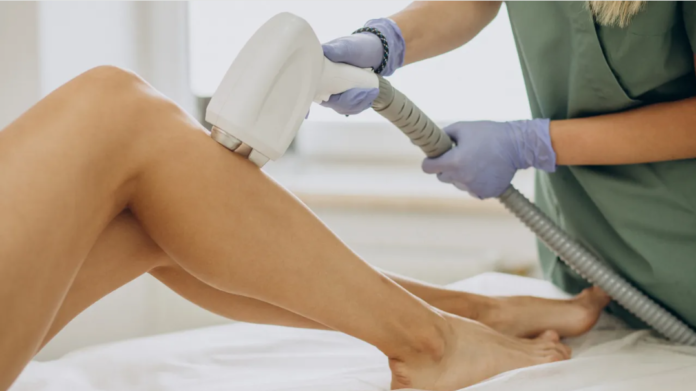
A large-scale clinical study published in the scientific journal Journal of Cosmetic and Laser Therapy, encompassing 16,900 participants, has revealed the latest findings regarding the safety of laser hair removal, showing that the overall complication rate of the procedure stands at 0.69%.
According to the key findings of the study:
-
Minimum complication rate: 1 in every 100 procedures.
-
High safety standards: A high level of safety during the procedure is achieved only when it is performed by qualified specialists using modern equipment.
-
Importance of cooling systems: The study emphasizes that the use of modern epidermal (upper skin layer) cooling protocols virtually eliminates serious skin damage and long-term adverse outcomes.
-
Long-term safety component: A long-term monitoring study of 948 patients (over a period of up to 11.5 years) confirmed that laser hair removal is not associated with any systemic or irreversible, permanent side effects.
Additionally, the article (Laser Hair Removal: An Update and Literature Review) compiles findings on the safety aspects and risks of laser hair removal, detailing the specific approach required for the procedure, the types of side effects that may accompany it, and the factors that can hinder its effectiveness.
The primary condition for safety during the procedure is the correct selection of the device according to the patient’s skin type. According to the study, the Neodymium-doped YAG (Nd:YAG) laser is the safest for dark skin types (IV–VI) because melanin in the epidermis absorbs the beam minimally. Consequently, the risk of pigmentation changes is lowest (with a relative risk coefficient of 0.23 compared to the Alexandrite laser). In turn, the use of the Alexandrite laser (755 nm) is safe for fair skin types (I–III) under proper cooling conditions.
Regarding potential side effects, temporary redness (erythema) and follicular edema are characteristic of the procedure and typically disappear quickly. Furthermore, modern contact and epidermal cooling systems virtually minimize the risk of thermal burns and serious skin damage.
The study also discusses paradoxical hypertrichosis, which presents a challenge in laser hair removal—in such cases, hair growth is stimulated in the area treated by the laser (most commonly on the face and neck). The main risk factors cited include dark skin types, insufficient energy density of the laser beam, and hormonal factors.
Regarding challenges related to effectiveness, patients with hormonal disorders (such as PCOS) or those undergoing estrogen/anti-androgen therapy experience altered hair growth dynamics. The study authors explain that such cases require an individualized approach—both to increase effectiveness and to prevent potential complications.
What Standards Do Aesthetic Centers in Georgia Follow, and To What Extent Are Equipment and Specialist Certification Components Considered?
In Georgia, laser hair removal equipment and specialist qualifications are not regulated by the state, despite the existence of health risks, such as burns. Additionally, there is a significant price variation for the procedure among salons, which may reflect the quality of service.
As several large aesthetic medicine centers told Medscriptum, challenges regarding the quality and origin of equipment still persist in the Georgian market. At the same openness, they noted that there are also beauty centers operating in the market that work exclusively with certified laser devices and can provide supporting documentation.
As they point out, alongside health risks, an additional challenge is that devices of questionable origin have a sharply lower efficacy, forcing patients to undergo procedures for years, whereas with proper protocols and high-quality equipment, results are achieved in a much shorter timeframe.
Iako Siradze-Tarnava, a physician-cosmetologist at the Neo-Neo clinic, explains that when a clinic uses equipment purchased from an official supplier, the partner simultaneously provides technical support, including scheduled maintenance and timely troubleshooting, which is important for the safety and outcomes of the work process.
“Modern laser devices utilize more advanced cooling systems, including dual-contact cooling, which is particularly important for the safety of the procedure. A high-quality cooling system reduces the risk of burns, protects the epidermis from overheating, and reduces pain, discomfort, and the risk of post-inflammatory hyperpigmentation. To summarize, on the one hand, a quality cooling system protects the skin, while laser energy acts purposefully on the hair follicle. When selecting a laser device for a clinic, the cooling system should be evaluated not as an additional comfort feature, but as one of the most vital technological components of device safety,” explained Iako Siradze-Tarnava, physician-cosmetologist at the Neo-Neo clinic.
Natalia Kurasbediani, a laser hair removal specialist and injectionist at the Luari clinic, spoke with Medscriptum about the risks of laser hair removal equipment and the safety standards that must be maintained during the procedure:
“The risk of complications in laser hair removal depends on the technical reliability of the device, correct parameters, and the specialist’s qualifications. Compliance with safety protocols significantly reduces the risk of burns, pigmentation changes, and other side effects. When discussing safety, it should be noted that the laser hair removal beam reaches the superficial layers of the skin’s dermis and the hair follicle, and does not extend to internal organs. Accordingly, when the procedure is performed correctly, there is no basis for internal organ damage or direct impact on the hormonal system. The precision of operating parameters is ensured by device calibration. Calibration means checking the accuracy of the device’s energy and operating parameters and adjusting them if necessary to ensure the procedure is performed safely and effectively. The equipment must be regularly inspected by a technician. The patient has the right to request a relevant certificate to ensure the safety of the procedure,” explained the specialist.
According to her, the safe execution of the procedure largely depends on the effectiveness of the cooling system:
“Effectiveness depends on the type of device and correct parameters. Following the procedure, mild redness or follicular edema is frequently observed on the skin, which is considered a normal reaction,” explained Natalia Kurasbediani, laser hair removal specialist and injectionist.
It is worth noting that a monitoring mechanism for laser hair removal equipment does not yet exist in the country; therefore, conducting the procedure safely depends heavily on patient awareness and the self-regulation of aesthetic centers.
Source: jcrm.jams.pub
