


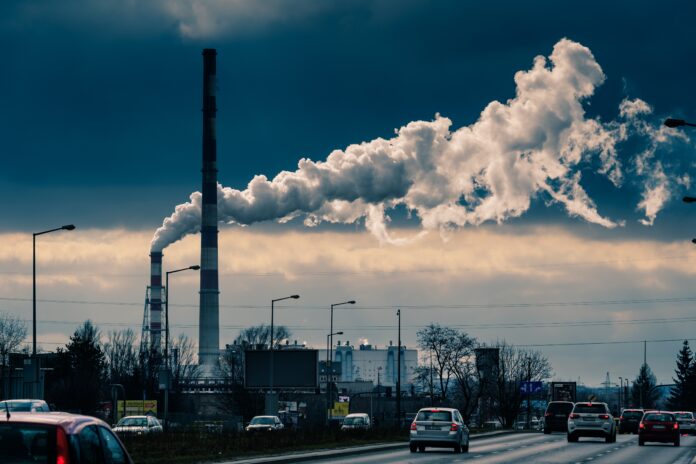
According to a new global report, air quality on Earth is deteriorating at an alarming rate. The vast majority of the world’s population breathes air that significantly exceeds established health safety standards.
The Swiss company IQAir analyzed data from 9,446 cities across 143 countries. The study revealed that safe air is found in only 14% of the world’s cities, a decrease from the previous year’s figure of 17%.
What Causes Air Pollution?
Scientists explain that the primary reasons for the worsening conditions are climate change and the consumption of fossil fuels. The year 2025 proved to be a record-breaking year for wildfires in Europe, which sharply increased the concentration of harmful particles in the air.
Particularly dangerous are PM2.5 particles. Due to their minute size (less than 2.5 micrometers in diameter), they easily penetrate the lungs, enter the bloodstream, and cause respiratory and cardiovascular diseases.
The Most Polluted and Cleanest Places
The world’s 25 most polluted cities are concentrated in just three countries: India, Pakistan, and China. Among them, the Indian city of Loni set a negative record, as the concentration of harmful particles there exceeds the World Health Organization (WHO) safety limit by 22 times.
On a global scale, the five most polluted countries are Pakistan, Bangladesh, Tajikistan, Chad, and the Democratic Republic of the Congo. Meanwhile, the South African town of Nieuwoudtville, famous for its beautiful flowering season, was named the cleanest place in the world.
Europe
In Europe, only three countries meet WHO standards: Andorra, Estonia, and Iceland. In other countries, the situation has worsened. For instance, pollution in Switzerland and Greece increased by 30% due to smoke from North American wildfires and Saharan dust.
Against this backdrop, Malta showed the best improvement, reducing pollution by 24% thanks to a transition to renewable energy and stricter control of transport emissions.
Georgia
According to the IQAir 2025 report, Georgia is among the 91% of countries that fail to meet WHO safety standards. The average annual concentration of harmful PM2.5 particles in the air exceeds the established limit by approximately 2-3 times.
Tbilisi and Rustavi remain the main hotspots of pollution in the country. Air quality there is negatively affected by emissions from faulty vehicles, intensive construction, industrial emissions, and seasonal dust masses characteristic of the region.
Although Georgia falls into the “moderately polluted” category, experts emphasize the urgent need to improve monitoring systems. This would ensure the population has access to real-time data as global air quality continues to decline due to climate change.
