


Researchers from Rice University and The University of Texas MD Anderson Cancer Center have developed a groundbreaking, AI-based microscope. This innovative device will significantly simplify the process of early cancer detection and diagnosis for physicians.
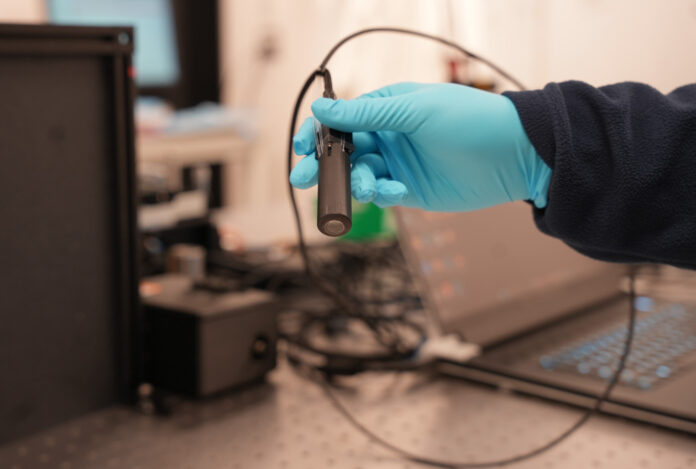
Named PrecisionView, the device is the size of a standard pen. Until now, doctors had to compromise between high-resolution imagery and a wide field of view. Furthermore, diagnosing epithelial cancers (such as cervical or oral cancer) often requires invasive and painful biopsies. This new technology solves the problem by allowing specialists to visualize cellular structures and blood vessels across large tissue surfaces in real-time, without the need for a biopsy.
Typically, in medical practice, artificial intelligence is used to enhance the quality of pre-existing images. However, in this case, scientists programmed the AI to design the microscope’s optical system itself. As a result, PrecisionView features a field of view five times wider and a depth of focus eight times deeper than traditional devices, all without losing cellular-level image precision.
This achievement means that doctors can now simultaneously observe two key hallmarks of cancer: cellular changes in the tissue and microvessels beneath the surface. The device generates detailed tissue maps in real-time, making the distinction between healthy and precancerous cells much faster and more accurate.
Initial testing conducted on patients’ oral and cervical tissues was successful; the device identified pathologies without error. Notably, the technology is not only effective but also affordable. It costs approximately $3,000 to manufacture, meaning PrecisionView can be utilized in clinics and developing regions where laboratory infrastructure is limited.
While further research is required before the technology can be widely integrated into clinical practice, scientists are confident: the fusion of AI and innovative optics is the future of medical diagnostics, potentially protecting millions from late-stage diagnoses.
