The passing of Grey’s Anatomy actor Eric Dane at the age of 53 has once again brought Amyotrophic Lateral Sclerosis (ALS) into the center of global medical and social attention. The disclosure of the actor’s final months served to illustrate the clinical burden this pathology creates in patients’ lives. This case highlights the aggressive nature of the disease and the necessity for therapeutic strategies that focus on maintaining quality of life alongside prolonging it.
From a Mysterious Illness to Global Discourse
The recognition of Amyotrophic Lateral Sclerosis as an independent nosology is associated with the name of the 19th-century French neurologist, Jean-Martin Charcot. It was he who determined the fundamental clinical-anatomical characteristics of this pathology, which had remained an unexplained phenomenon for decades prior.
In the 20th century, the disease gained wide social resonance through prominent figures such as baseball star Lou Gehrigand the brilliant physicist Stephen Hawking. Their personal stories placed the clinical picture of ALS at the epicenter of public awareness. A turning point in research was the 2014 large-scale charitable campaign, the Ice Bucket Challenge, which mobilized unprecedented financial resources for scientific inquiry. As a result of these collective efforts, by 2026, the treatment of ALS has become a primary focus of medicine, with a major emphasis on gene technologies and personalized therapy.
Clinical Presentation
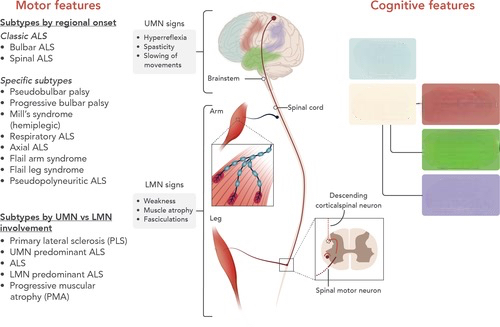
ALS causes the systemic degeneration of motor neurons, which in turn leads to muscle atrophy and a critical decline in respiratory function. According to global statistics, 90% of cases are sporadic and linked to environmental factors, while the remaining 10% are determined by genetic predisposition.
The primary clinical manifestations often develop covertly:
In 70% of patients, the process begins with a motor deficit in the limbs.
In 25%, it starts with bulbar symptoms (impairment of speech and swallowing).
Notably, despite the growing regression of the physical state, most patients maintain stable cognitive functions.
In modern medicine, the diagnostic process relies on the Gold Coast standard criteria and needle electromyographic (EMG) studies.
The Molecular “Storm”: A Modern View of ALS Pathogenesis
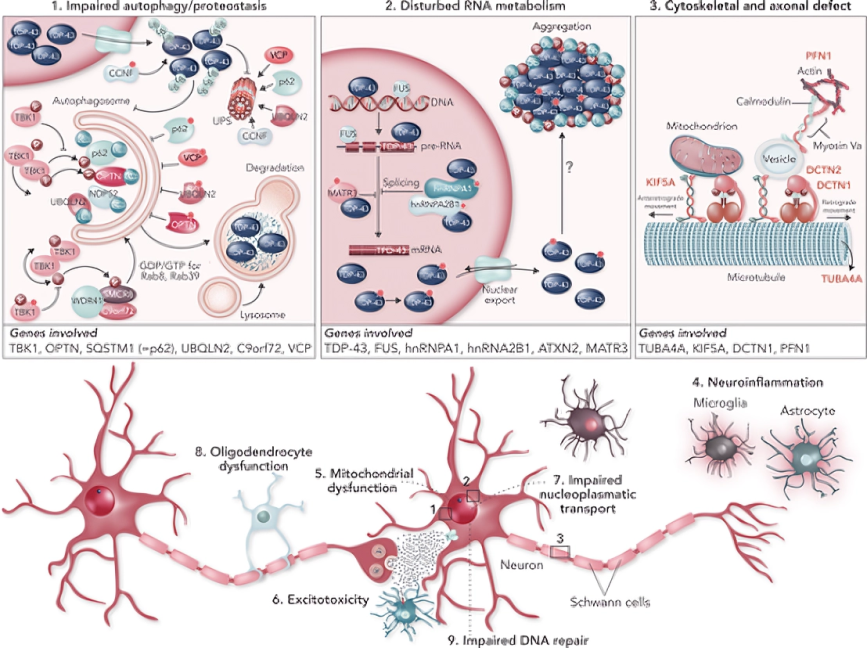
While ALS was previously considered an isolated death of motor neurons, today it is perceived as a collaborative, multi-layered destructive process involving various harmful factors. In 97% of cases, the main sign of the disease is the pathological accumulation of the TDP-43 protein. Simultaneously, excess glutamate accumulates between cells, causing over-excitation of neurons – a phenomenon known as excitotoxicity.
Mitochondrial dysfunction and oxidative processes provoked by the mutant SOD1 gene play a significant role, disrupting the intracellular transport system. Disruption of RNA metabolism is a result of FUS/TARDBP mutations, while the involvement of immune system cells (microglia and astrocytes) makes neuronal degeneration irreversible.
RNA Technologies and 2026 Achievements
By 2026, scientific progress has replaced early, fragmented ideas about the disease. While oxidative stress was once considered the main cause, scientific focus has now shifted to RNA-binding proteins. The discovery by the University of Utah regarding the role of the STAUFEN-1 protein has formed a new vision of the pathological process, laying the foundation for innovative RNA-targeted treatments.
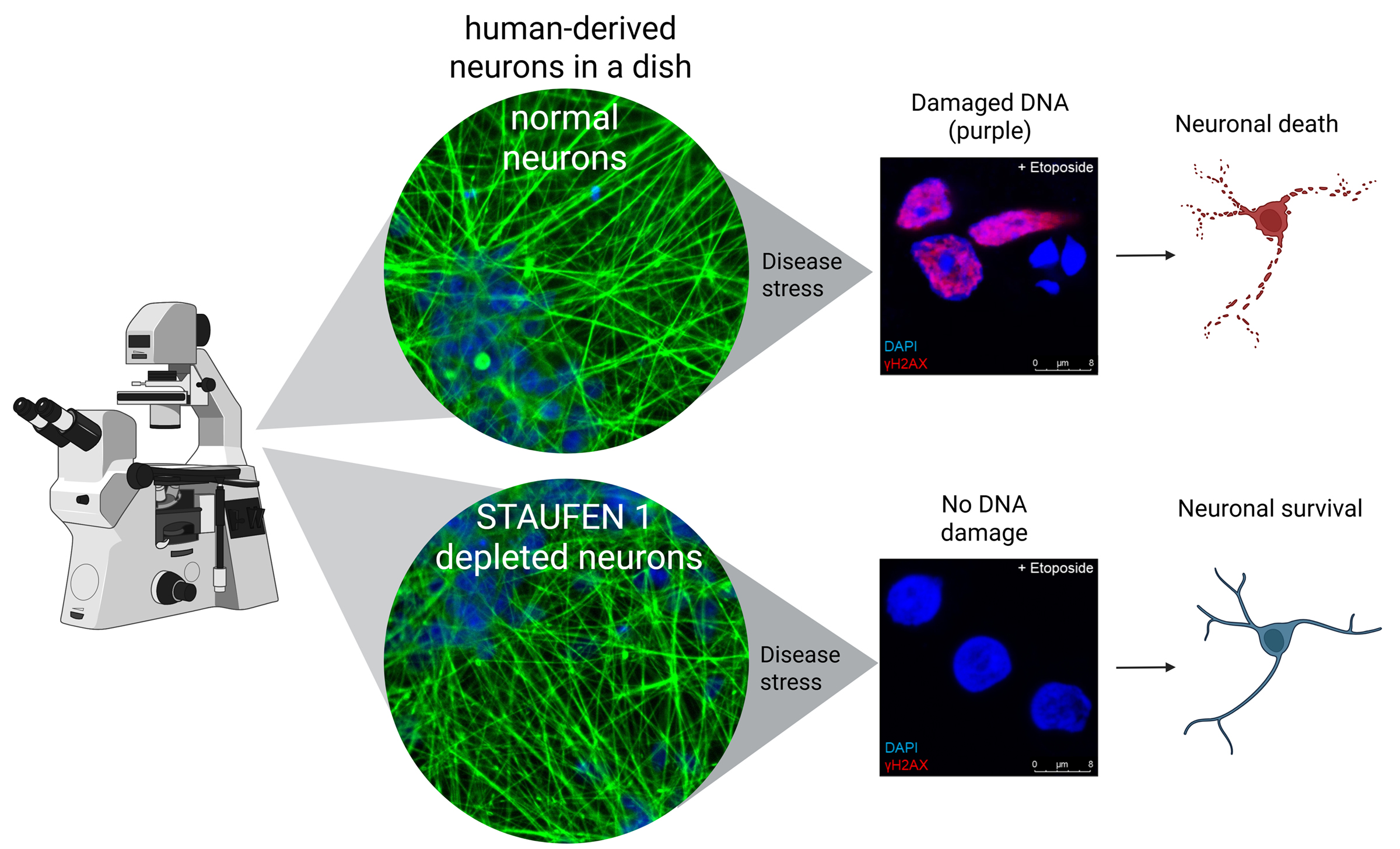
This theoretical breakthrough has directly reflected in treatment results. Data from Washington University reveal that the drug Tofersen reduces SOD1 protein levels by 70% and blocks the pathological growth of neurofilaments (NfL). The reversal of symptoms achieved through splicing modulators indicates the reversibility of the process at an early stage.
In the diagnostic process, the use of Artificial Intelligence (which can now differentiate ALS subtypes) and NfL levels has made early detection a reality.
From the Management of Symptoms to Gene Engineering
For decades, the treatment of ALS was limited only to palliative care, the alleviation of symptoms. Until the 1990s, doctors fought muscle spasticity and emotional lability with various medications, although they could not have an influence on the progression of the disease itself. A multidisciplinary approach, including non-invasive ventilation (NIV) and specific systems of feeding (PEG), significantly increased the duration of the life of patients, but the fatal nature of the pathology remained unchanged.
The first decisive step was taken in 1995, when Riluzole appeared on the market. This was the first preparation that reduced the risk of mortality by the hindrance of the toxic release of glutamate and established the first standard of disease modification.
The 21st century expanded the therapeutic possibilities of the fight with ALS. The preparation Edaravone, which appeared in 2017, slowed the tempo of functional worsening by 33% in patients at an early stage during intravenous use. Later, in 2022, Relyvrio appeared on the scene, which aimed at the elimination of cellular stress and mitochondrial damage, although in 2024 the PHOENIX study could not confirm its effectiveness, which was followed by the withdrawal of the preparation from the market. This fact turned into a strict reminder for the scientific society about how critical the maximum accuracy of clinical data is.
The real breakthrough turned out to be the approval of Tofersen (Qalsody) in 2023. This is the first preparation of gene therapy that impacts the SOD1 mutation directly and neutralizes the pathological protein within the cell itself. According to 2026 data, this preparation successfully maintains functional stability in patients.
2026 Clinical Trials and Therapeutic Perspectives
By 2026, the field of ALS research is reaching unprecedented scales. International consortia, such as ALL ALS, process large-scale biosamples and new clinical data through artificial intelligence.
At the epicenter of the mentioned process stands the HEALEY ALS platform (an innovative model of adaptive clinical research). It has already united more than 1300 patients and 7 different regimes of treatment. The main advantage of the system is operability: it quickly excludes methods having low effectiveness and opens the way to perspective preparations. A clear example of this is Pridopidine, which has already moved into the third phase study (PREVAiLS) thanks to neuroprotective properties. According to the forecast of Mass General Brigham, this model halves the terms of research, while the scientific society expects final results by 2027.
At the same time, the scientific search continues with several important strategies. The program TRIAL READY prepares more than 500 patients for optimal integration in clinical trials through the validation of biomarkers, while the University of San Francisco (UCSF) studies the effectiveness of the transplantation of stem cells and new neuroprotectors.
At present, more than 50 active studies are registered on ClinicalTrials.gov, which include such innovative agents as gold nanocrystals (CNM-Au8) and RNA-therapeutic preparations.
According to the forecast of the biotechnological sector, by 2028, the authorization of more than five new therapeutic means is expected on the market. The mentioned achievements confirm that the fight with ALS moved from fragmented attempts to a systemic, high-technology attack, which generates real and tangible hope for patients.
Sources: NIH; ScienceDirect; NIH; European Journal of Neurology; University of Utah; LabioTech; UCSF Clinical trials; Mass General Brigham; Clinical Trials