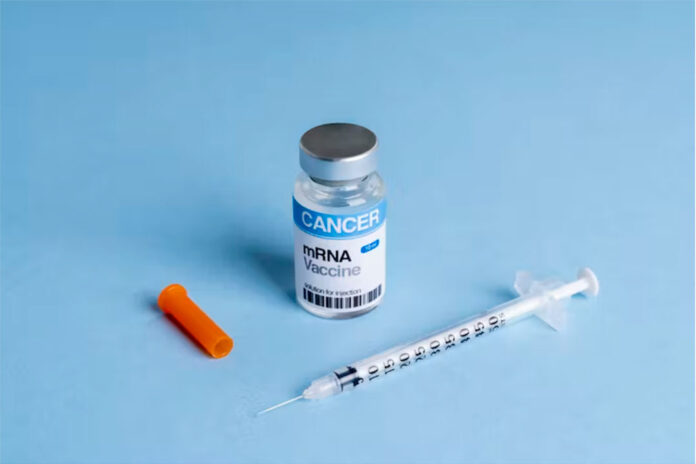
An experimental personalized mRNA vaccine developed by pharmaceutical companies Merck and Moderna, in combination with Keytruda, reduces the risk of melanoma (skin cancer) recurrence or death by 42%. The latest clinical trial results were presented at the European Society for Medical Oncology (ESMO) Congress in Madrid.
The study included patients whose tumors had already been surgically removed (adjuvant therapy). The data demonstrated that combining the innovative vaccine with the approved immunotherapy drug Keytruda is significantly more effective than standard treatment with Keytruda alone.
How does the personalized vaccine work?
The new drug (provisionally designated as intismeran autogene) is based on the same mRNA technology used in Moderna’s COVID-19 vaccine. However, rather than protecting the body against a virus, it trains the immune system to launch a targeted attack against cancer cells.
The therapeutic is custom-made for each patient. Following surgery, the excised tumor tissue undergoes genetic sequencing. Based on these data, scientists develop a vaccine that trains the immune system to recognize and destroy the unique markers characteristic of that specific patient’s tumor.
According to Dr. Michael Postow, an oncologist at Memorial Sloan Kettering Cancer Center (MSKCC), this represents a highly targeted immune stimulation with a mechanism of action and efficacy unprecedented in clinical practice.
Building on these promising clinical outcomes, the companies are already working with the U.S. Food and Drug Administration (FDA) toward regulatory authorization. In parallel, personalized mRNA technology is being evaluated for the treatment of other forms of cancer, including lung and pancreatic malignancies.