


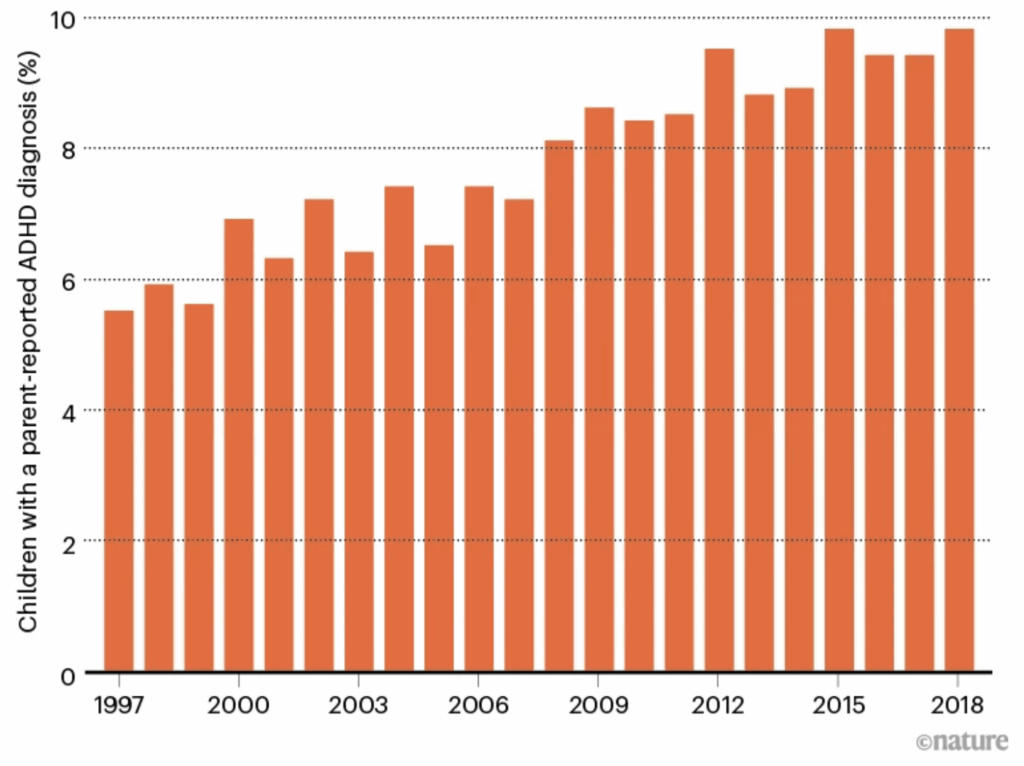
Over the last two decades, the frequency of Attention-Deficit/Hyperactivity Disorder (ADHD) has increased dramatically in many countries. For example, in the United States, it has been recorded that over 11% of children have been diagnosed with this condition at least once in their lifetime. This massive event has created a basis for a global discussion about why ADHD is being identified in large numbers and how healthcare should ensure support for these individuals.
What is ADHD?
ADHD is a complex neurodevelopmental disorder characterized by the following symptoms: inattention, impulsivity, and hyperactivity. For diagnosis, these clinical signs must be present permanently for at least six months in multiple settings (e.g., educational institutions and home) and significantly impede the individual’s daily functioning.
ADHD manifests in three clinical forms: primarily inattentive, primarily hyperactive-impulsive, or combined type.
A key criterion for diagnosis is functional impairment, which means that the symptoms must cause noticeable and objectively confirmed problems in academic, professional, or social environments. This subjective diagnostic threshold complicates the assessment process, as clinicians need to compare the severity of symptoms with variations in functioning that exist within neurotypical development (comparison to the norm).
What Is Driving the Increase in ADHD Diagnosis?
The increased frequency of ADHD diagnosis is due to several factors, and this trend does not directly indicate an increase in the absolute number of individuals with ADHD. The most important contributing factor is the improvement in diagnostic accuracy and the rise in public awareness, which encourages more individuals to seek a specialist for diagnosis and effective therapeutic intervention. It is also noteworthy that girls and women, whose condition was historically often overlooked due to the relatively different manifestation of symptoms, are now being identified more frequently.
Crucially, the update of diagnostic guidelines has led to an expansion of criteria. Specifically, the fifth edition of the Diagnostic and Statistical Manual of Mental Disorders (DSM-5) lowered the age and symptom threshold, allowing more individuals to meet the official diagnostic criteria. Additionally, clinicians today approach diagnostics more inclusively and often co-diagnose ADHD with other comorbid disorders, including autism, anxiety, and depression.
The rise in public awareness—especially through digital and social media platforms, such as TikTok—incentivizes individuals and parents to request qualified assessment. For many people, this “informational exposure” explains symptoms that have existed for years but were misunderstood, which ultimately contributes to the increased frequency of diagnosis. However, the opposite side must also be considered: the simple concordance of symptoms shared on social media does not automatically imply a confirmed diagnosis.
The Dual Nature of Increased Diagnosis
Although the increase in diagnosis ensures patient access to treatment, there are well-founded doubts about overdiagnosisand the inappropriate use of medications. Cases have been recorded where a diagnosis is made without in-depth clinical assessment, sometimes even based on a brief online screening. Against this backdrop, however, many experts argue that underdiagnosis—especially in developing countries and among girls/women—remains a problematic issue.
Leaving ADHD unaddressed can lead to serious consequences: it can cause significant delays in the academic sphere, an increased risk of accidents, and severe complications in mental health. As for treatment, the use of stimulants like methylphenidate is leading, as its high efficacy and safety are backed by decades of scientific research, provided it is managed appropriately. Furthermore, behavioral therapy and environmental modification occupy a central place in the treatment strategy.
Source: nature
