


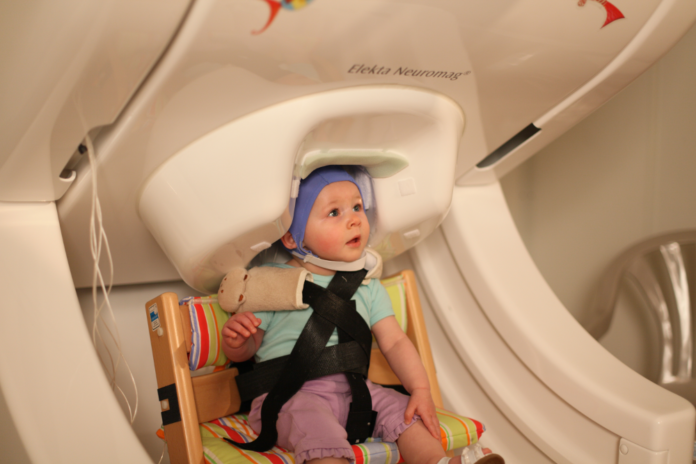
Newborns of mothers with anemia have reduced brain volume. Scientists observed that this change affects key regions involved in movement, learning, and emotional regulation.
A research team from King’s College London and the University of Cape Town followed more than 300 mothers and their infants. The children underwent brain scans several times between the ages of three months and two years. The data show that the total brain volume of children born to mothers with anemia is 4% smaller. Scientists emphasize that even mild anemia during pregnancy can have negative effects on the infant.
Immediate changes were observed in three specific brain regions — the putamen, caudate nucleus, and corpus callosum. The study’s lead author, Jessica Ringshaw, explains that the differences between children increase over time and that this deficit never completely disappears. According to her, the developmental delay observed in the brain translates into noticeable cognitive difficulties by school age.
Today, anemia, which is primarily associated with iron deficiency, affects more than one-third of pregnant women worldwide. Consequently, global health experts are once again calling for routine screening for iron deficiency and anemia during pregnancy.
The researchers used entirely new portable MRI scanners and published their findings in the journal Brain Communications. According to Professor Steve Williams, this innovative technology allows specialists to accurately measure the effects of malnutrition on the developing brain, even in challenging geographic environments.
