


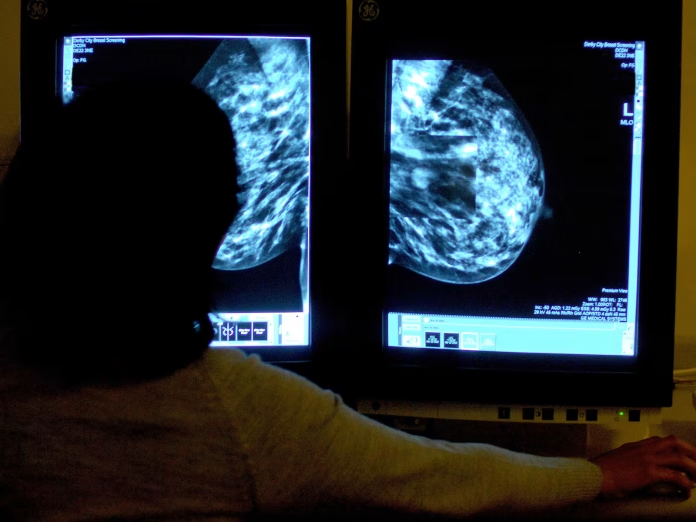
According to a large-scale study conducted in Sweden, the use of artificial intelligence in breast cancer screening reduced the risk of developing advanced stages of the disease by 12% and significantly increased the detection rate at early stages.
This was the first study of its kind, involving 100,000 women. Researchers divided the participants into two groups: one group underwent AI-supported screening, while the other followed traditional methods.
How Does the AI System Work?
The AI system analyzes mammograms in an automated mode and categorizes them based on risk levels. This process allows doctors to allocate resources more efficiently and focus their attention on the most critical cases.
-
Low-risk cases: These are sent to only one radiologist for review. This significantly reduces the workload on medical personnel for data where signs of the disease are virtually non-existent.
-
High-risk cases: These are referred to two radiologists for in-depth analysis. This “double-reading” ensures maximum accuracy in complex diagnoses and reduces the likelihood of error.
Furthermore, the system automatically flags suspicious areas, helping the radiologist concentrate on specific locations. Such visual support ensures that even minute changes, which might be difficult for the human eye to detect, do not go unnoticed.
Key Findings of the Study
Following AI-supported screening, the rate of cancer detection in subsequent years decreased from 1.76 to 1.55 per 1,000 women. This 12% decrease indicates that AI identified the disease at its earliest stage, substantially reducing the number of advanced cancer cases in the future.
The early diagnosis rate is particularly noteworthy: in the AI group, 81% of cancer cases were detected directly during the screening stage. In comparison, this figure did not exceed 74% in the control group, where analysis was performed solely by radiologists.
Additionally, the technology showed significant progress in identifying aggressive forms of the disease. AI missed 27% fewer aggressive subtypes of tumors compared to traditional methods. All of this suggests that the most dangerous forms are identified much more accurately and rapidly using this technology.
Expert Perspectives
Experts explain that artificial intelligence not only facilitates early diagnosis but also significantly reduces the workload of radiologists. However, specialists emphasize that the widespread implementation of this technology must be handled with caution, using pre-tested tools and under conditions of constant monitoring.
Despite the successful results, medical professionals do not support the full replacement of doctors with artificial intelligence. AI is viewed as a powerful supportive tool; however, the final decision and the ultimate reading of the mammogram must always be completed by a human—a qualified radiologist.
