


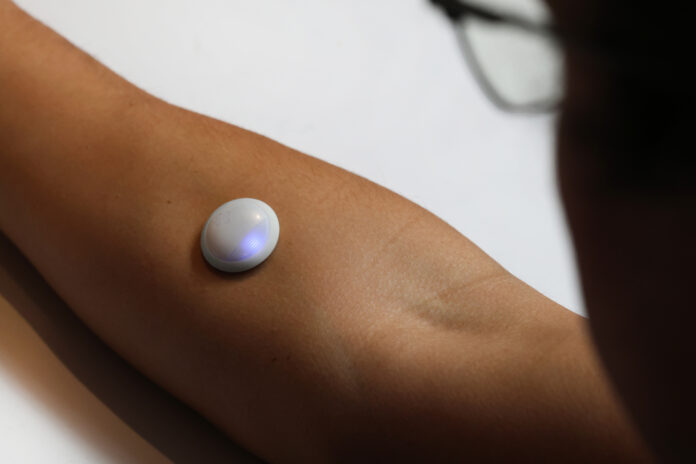
The U.S. Food and Drug Administration (FDA) has granted regulatory approval for a new glucose sensor, Biolinq Shine, offering a new opportunity for effective disease management for patients with Type 2 Diabetes (T2D). This innovative device provides real-time, needle-free monitoring of blood glucose, offering a simpler, more comfortable, and integrated means of controlling sugar levels.
The number of people with diabetes reaches millions worldwide. Maintaining glucose levels within the target range (Time-in-Range) is a vital strategy for reducing the risk of complications in these patients. Traditional glucose monitors are often invasive and inconvenient, involving frequent finger pricks or constant dependence on a smartphone. Biolinq Shine addresses this challenge with an autonomous, needle-free sensor that provides instant information about glucose levels via an LED screen placed on the forearm.
How Does Biolinq Shine Work?
The device uses surface microsensor technology that is placed only in the top layer of the skin—at approximately 20 times less depth than standard Continuous Glucose Monitors (CGM). This design eliminates the need for inserted needles or filaments, making its wear and use practically painless.
The device continuously measures glucose and provides instant visual feedback via blue, yellow, or red LED indicators, corresponding to normal, high, and low glucose levels.
For detailed data, the Biolinq mobile application compares changes in glucose levels with physical activity and sleep parameters. This ensures a comprehensive analysis of the metabolic profile on a single platform, helping the user to accurately see how their lifestyle affects glucose dynamics.
Dr. David T. Ahn, Head of Diabetes Services at Hoag Hospital, calls Biolinq Shine a “new category of glucose monitoring.” He notes that the device focuses on simplified metabolic feedback rather than precise numerical glucose values. He states, “This is an early, but important step toward creating simpler, more accessible, and integrated sensors.”
Rich Young, CEO of Biolinq Shine, expressed gratitude for the FDA’s thorough review process. According to him, this stage is a turning point for the wearable biosensor industry, ensuring their large-scale implementation. The company plans to expand the platform to monitor additional markers, such as ketones and lactate, which will further contribute to cardiometabolic health.
The device is classified as a medical device for adults aged 22 and older who do not require insulin. The official launch of the product on the U.S. market is planned for 2026. It aims to support users with easily understandable and practical metabolic health data.
The Biolinq Shine glucose sensor is designed for five days of use on the forearm; this limited duration is due to its concept as a needle-free, superficial microsensor. While standard Continuous Glucose Monitors (CGM) allow for longer wear, Biolinq Shine has focused on maximizing comfort and ease of use.
Source: Medscape; Biolinq; Pharmacy times
