


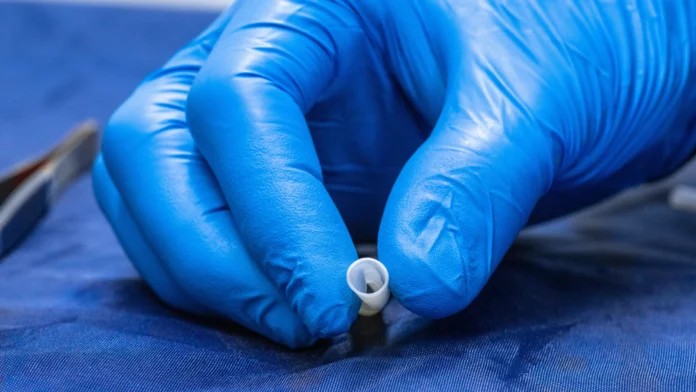
Damaged blood vessels resulting from trauma, gunshot wounds, or atherosclerosis threaten millions of lives. Surgical treatment often requires using artificial vessels or those from the patient’s own body, which frequently leads to serious complications. Scientists have achieved unprecedented success: they have created and clinically tested a bioengineered blood vessel grown from real human cells in laboratory conditions. This innovation is truly promising for patients and completely changes the future of vascular surgery. The research has been actively covered in Wired and JAMA Surgery.
Bioengineered Blood Vessels: Life from the Lab
The bioengineered blood vessel, called Humacyte Human Acellular Vessel (HAV), developed by researchers at Humacyte, could become a true breakthrough. This is not just an artificial tube, but a natural tissue produced in the laboratory from human cells on a biodegradable scaffold. Crucially, doctors can use it immediately when a patient needs to replace a severely damaged or ruptured blood vessel (e.g., due to severe trauma, a gunshot wound, arterial rupture, or for hemodialysis patients).
How Was the Artificial Blood Vessel Produced?
It all began with a few cells taken from a pig artery, from which the first blood vessel was “grown” in the laboratory. These artificially grown blood vessels were then transplanted into animals and observed to function like real blood vessels. The next interesting question was how the bioengineered blood vessel would perform in the human body.
Preliminary testing was conducted on over 700 donors. After ten years of work, cells from only five donors were ultimately selected because they proliferated most effectively in the laboratory.
How Are Blood Vessels Grown?
Millions of pre-obtained cells from these five selected donors, also grown in laboratory conditions, are placed on a special biodegradable polymer scaffold in a specialized incubator. Inside the incubator, an ideal growth environment is created for them, providing nutrients and thus growing tissue that secretes collagen and proteins. The donor cells rapidly multiply and build what is called a vascular structure.
After two months, the polymer scaffold dissolves, and the cells degrade via a special solution. What remains is a quite durable, flexible collagen tissue that has the shape of a blood vessel. This is “decellularized” tissue, meaning it no longer contains living cells.
Its Greatest Advantage?
It’s an “off-the-shelf” blood vessel, meaning it’s ready for transplantation into the body at any moment. It doesn’t require individual customization or advance ordering and waiting.
Because the bioengineered blood vessel does not contain living cells, this reduces the risk of rejection by the immune system. The risk of infection and thrombosis is also significantly lower.
As vascular surgeon Anton Sidawy states: “People have been trying to create a tube-like material like this for a long time… This technology changes the rules of the game.”
Clinical Trial Results: Phase 2 Trial Ongoing in Hemodialysis Patients
Results from a Phase 2 clinical trial published in JAMA Surgery, involving 60 hemodialysis patients, demonstrated the remarkable efficacy and safety of this bioengineered tissue. HAV vessels showed higher patency and a significantly lower risk of infection and thrombosis compared to synthetic grafts. Only a small number of infections were observed during the study, which markedly improves the quality of life for hemodialysis patients, reducing the need for repeat hospitalizations and interventions. Notably, after integration into the patient’s body, HAV grafts begin to attract cells and regenerate tissue. The study, still in its early stages (Phase 2), lays a solid foundation for future, larger-scale clinical evaluation of HAV.
Beyond Hemodialysis: Broader Perspectives and Clinical Advantages
The success of Humacyte’s bioengineered blood vessel in hemodialysis patients is just the beginning. This technology has enormous potential in other areas of vascular surgery, such as coronary artery bypass grafting (CABG) and the treatment of peripheral artery diseases. Its main clinical advantages include:
Longer-lasting effectiveness: Improved patency rates.
Fewer complications: Reduced risk of infection and thrombosis.
Improved patient quality of life: Reduced need for repeat interventions and better functional outcomes.
“Off-the-shelf” product: No need to harvest a patient’s vein, which reduces trauma and speeds up the procedure.
These characteristics make HAV an attractive alternative that can significantly expand treatment options and improve surgical outcomes.
Conclusion and Future Steps
The bioengineered blood vessel developed by Humacyte represents a triumph of medical engineering, bringing us closer to the future of regenerative medicine. The success of the Phase 2 clinical trial provides a strong foundation for both further (Phase 3) studies and its approval by regulatory bodies. If this technology is widely adopted, it has the potential to significantly improve the quality of life for millions of patients worldwide, reduce surgical complications, and expand treatment possibilities. This is not just a new graft, but a new paradigm in the treatment of vascular diseases, making the medical future brighter.
Source:
Wired: This Blood Vessel Was Grown In A Lab With Real Human Cells.
JAMA Surgery: Lawson, J. H., et al. . A Bioengineered Human Vascular Graft in Patients Undergoing Hemodialysis: A Phase 2 Trial. Retrieved from
