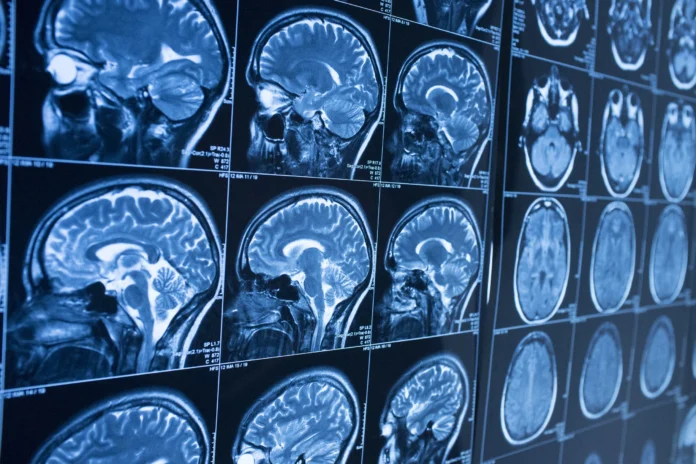
A new study published in the journal JNeurosci suggests that brain activity among people on the autism spectrum (ASD) is so variable and individual that traditional research methods based on group averages may prove ineffective.
Researchers at the University of Iowa, Dorit Kliemann and James Traer, analyzed data collected at Indiana University and the California Institute of Technology (Caltech). As part of the experiment, scientists monitored brain activity in autistic and non-autistic (neurotypical) adults as they watched films from different genres, including animation, action, romantic comedy, and thriller. Using the resulting neuroimaging data, the team developed a computational model to identify connections between brain activity and the films’ auditory, visual, and abstract social features.
When the researchers compared average brain activity across the two groups (autistic and neurotypical participants), the results appeared almost identical. However, the picture changed dramatically when the data were analyzed at the individual level.
The researchers found that individual data from autistic participants deviated much more from their own group average than data from neurotypical participants deviated from theirs. This pronounced individual variability in brain activity was observed across nearly all neural systems, but was most evident in the brain’s so-called social network.
Since current approaches to autism research and therapy are largely based on group averages, the authors argue that this paradigm needs to change.
“We were surprised by the similarity in group averages. These findings suggest that we should shift our focus toward examining the details of individual brain responses — how and why do they differ from one another?” says study co-author James Traer.
The scientists conclude that similar group averages can conceal individual differences, making standard, one-size-fits-all approaches often ineffective. According to Dorit Kliemann, identifying subgroups within the autism spectrum could help researchers better understand the condition and ultimately open up possibilities for developing support strategies tailored to each individual. In future research, the team plans to investigate how this variability in brain activity relates to the individual behavioral differences characteristic of autism.