


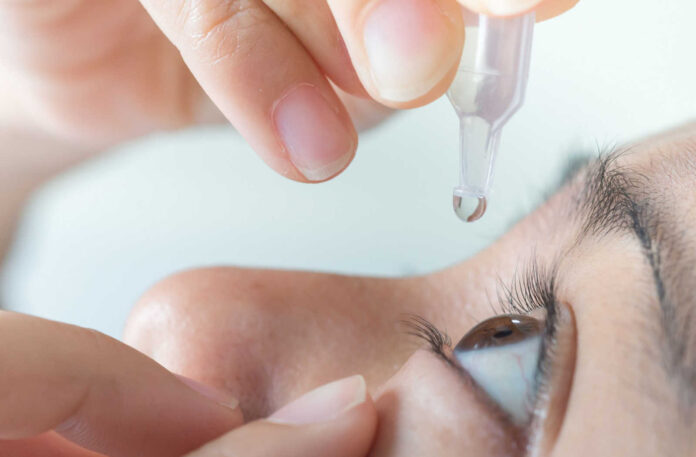
According to a new study published in the journal Science Advances, scientists have developed revolutionary eye drops capable of halting the growth of retinal tumors (retinoblastoma) and preserving vision. A research team from Shenyang Pharmaceutical University, led by Professor Zhan Yu, used exosomes derived from porcine biological material (sperm) as the base for the drug.
What is the biological mechanism behind these innovative eye drops?
Retinoblastoma, which primarily affects children, is currently treated with invasive methods such as intraocular injections, chemotherapy, or laser therapy, which often cause damage to healthy tissues. In contrast, Chinese scientists have found an innovative solution by utilizing nanoscale extracellular vesicles called exosomes. Naturally, these particles create a sort of “invisible cloak” for spermatozoa, protecting them from the immune system and helping them temporarily open biological barriers.
The scientists placed a so-called “nanozymic system” inside the exosomes, which selectively attacks only tumor cells. To increase the drug’s precision, they added folic acid molecules, as retinoblastoma cells are particularly attracted to this substance. Experiments showed that the efficacy of inhibiting cancer cells reached 82.7%, while the survival rate of healthy tissues remained above 85%.
Results of the study conducted on mice
Tests conducted on mice revealed that 30 days after using the drops:
-
Tumor growth was halted.
-
Visual function was preserved.
-
The drug caused no damage to healthy parts of the eye.
A new perspective in Alzheimer’s treatment
While the study was directed against retinoblastoma—a rare childhood cancer—Chunxia Zhao, a researcher at the University of Adelaide, explains that this technology could be crucial for overcoming difficult biological barriers, such as the blood-brain barrier. This approach opens significant possibilities for the effective therapy of Alzheimer’s and other neurodegenerative diseases.
This technology is important for Alzheimer’s therapy because it offers a non-invasive way to bypass the blood-brain barrier. This natural filter blocks the vast majority of therapeutic drugs from entering the brain, making the treatment of neurodegenerative diseases extremely difficult. The ability of exosomes to “trick” the body’s defense mechanisms and deliver medicine directly to neural tissues will allow scientists to develop eye drops that target damaged areas of the brain.
However, despite the high efficiency of laboratory studies, scientists emphasize that the project is still in the “proof-of-concept” stage. Naturally, further clinical trials are required.
