


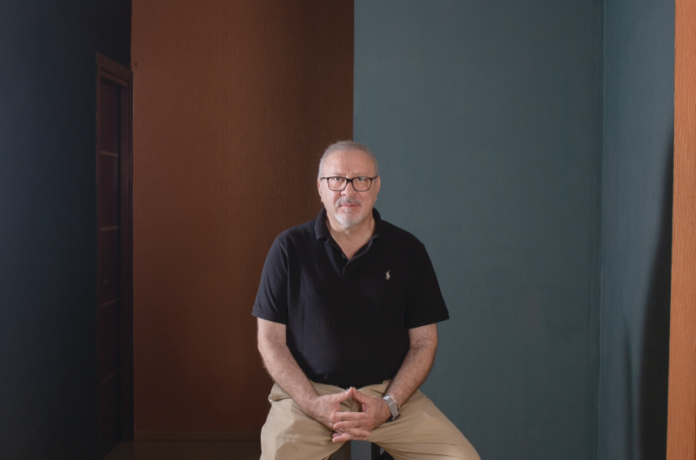
Neurology is a field of discovery that has undergone tremendous evolution over the past few decades. Once regarded primarily as a diagnostic specialty with limited therapeutic options, it has transformed into one driven by innovation, offering new diagnostic and treatment modalities at an unprecedented pace. At the forefront of these advancements stands the United States a country whose medical system, for all its complexity, rewards hard work and persistence. The greatest virtue of the U.S. is that everyone who works hard can find their place.” Andro- Zangaladze
We spoke with Dr. Andro Zangaladze, an accomplished Neurologist at Jefferson Health in New Jersey. He left Georgia several decades ago to pursue a path strewn with obstacles and hardships, yet he reflects on them with melancholy and admiration. For our interview with Dr. Z, as his peers call him, we touched on the past, present, and future of neurology and his connection to it, as well as discussed emerging ideas and diagnostic/treatment modalities becoming available to patients.
Dr. Zangaladze, could you tell us a little bit about the experience and challenges you faced leaving Georgia to pursue residency in the United States?
Yet, the path to success was not without challenges. I remember that when I finished medical school in Tbilisi, I was almost immediately placed in front of patients, without much in terms of supervision. I remember it vividly: a few of us, fresh graduates, suddenly responsible for an entire ward of 180 neurology patients at the Tbilisi Republic Hospital. Some patients had been there for months. It was a strange system; patients stayed so long because there was no insurance, no payment structure, nothing pushing the system to efficiency. I still recall my colleagues and me, just 22 or 23 years old, would often feel unprepared for such responsibility. I remember one of them jokingly saying that they would “hide under the desk when a new patient with a stroke was brought in”. We were afraid of making mistakes. Yes, we had internships and professors who tested and taught us, but most of our training happened on the job. It was hard, exhausting, but it shaped us.
When I later started residency in the U.S., it was a whole different world. There, the structure was entirely different; you had senior residents, fellows, attendings, and a real sense of supervision and hierarchy. You worked hard, both physically and mentally, but you were learning within a system that guided you.
The biggest challenge for me, and for most foreign medical graduates, was adapting. We didn’t have the same kind of hospital experience during medical school. In Georgia, even though I had several years of neurological practice before moving to the U.S., I had almost no experience in general internal medicine. So, beginning an internship there felt like starting from zero.
I’ll never forget my first on-call night at Grady Hospital. The nurses were calling me with questions that, in hindsight, were very simple, things like how much insulin to give based on a patient’s glucose level. But at that time, I hadn’t experienced this before.
Those first few weeks were incredibly hard. There were nights I asked myself, “Why am I doing this? Do I really need to go through this again?” But I reminded myself that every new beginning is difficult. You have to forget what you knew and be ready to learn all over again, and that’s exactly what I did.
Some of my colleagues who had come from the former Soviet Union had it even harder. Many of them were established specialists back home, well-known, respected physicians, but their experience wasn’t always easily adaptable to the American healthcare system. They mentioned how they had to relearn medicine in many ways.
For me, it wasn’t a “hit and run” either. I had to rebuild myself as a doctor within a completely new environment. For American medical graduates, the transition from student to resident is smooth; they’re already familiar with the workflow, expectations, and hospital culture. For us, it was like being reborn in medicine. However, in the end, that experience, as difficult as it was, taught me perseverance and adaptability.
Do you think the easier time of transition is because the students in the U.S. have more autonomy and clinical practice in the last years of medical school?
In many ways, that is the case. Medical students in the United States, especially in their last two years, M3 and M4, have more autonomy. It’s important to mention that, of course, they are under strict supervision by older residents, fellows, and attending physicians. By the time they reach the final year, they’re almost functioning as junior residents. It’s a gradual process, almost like a military rank system; you start as a private at the bottom and work your way up. You gain responsibility step by step, and by the time you begin residency, you’re already confident managing patients under supervision.
For us, it was very different. When training in the Soviet Union, you gained valuable theoretical knowledge, but without prior experience, one cannot take care of the patients’ well-being properly. Once you entered a new medical environment like the U.S., you were essentially starting from zero.
I like that you mentioned autonomy, because that’s exactly what was missing back then. In the Soviet system, when you were part of an academic department, even senior associate professors didn’t make full treatment decisions on their own. The entire system was very hierarchical and centralized. The department chairman made all the key decisions.
We had weekly or biweekly rounds, where the chairman would go patient by patient, asking, “What are you doing here? What are you doing there?” and then deciding the course of management. This wasn’t just in Georgia; it was the same throughout the Soviet Union and across many countries in the socialist bloc.
So as a young doctor, even though you worked within an academic department and carried many responsibilities, you weren’t truly independent. You functioned almost like a resident who constantly needed approval from above.
When I arrived in the U.S. and saw that after residency, doctors were completely autonomous, making their own diagnostic and treatment decisions, it was eye-opening. I remember thinking, “Wow, this is something new.”
Of course, being on call was a different story. In the Soviet Union, we were left entirely on our own. I often tell people: right after medical school, I had to make real-time decisions on what to do and what not to do, without anyone to consult. That kind of responsibility was overwhelming, but it also forced you to grow quickly.
Did the people you met in the United States know about the Republic of Georgia when you came to Atlanta?
Well, being honest, not really. When I went to Atlanta, Georgia, in 1989, very few people there had ever heard of our country. It was almost ironic, “Georgia from Georgia.”
That first trip happened through a friendship exchange program. Some Americans came to the Soviet Union and stayed in my home, and later I visited them in the U.S. That experience was the beginning of something special, a connection between American and Georgian medical professionals.
One of the key figures who made this possible was Dr. Ken Walker from Emory University, together with Professor Archil Kobaladze from Georgia. They helped establish the early collaboration between Emory and Georgian medical institutions, particularly Tbilisi State Medical University. It was a wonderful initiative, the first bridge between our two medical worlds.
When I went to the U.S., maybe one or two Georgian doctors were already there; some were brought through Ken Walker’s efforts. Now, decades later, there are dozens, even hundreds, of Georgian physicians trained or practicing abroad. It’s amazing to see how that early seed grew into a whole network of professionals across the U.S. and Europe.
At that time, however, Georgia was mostly unknown to Americans. Only after the civil war in the early 1990s, when CNN began showing footage of the conflict, the destruction, the chaos, did people start recognizing the name. It wasn’t always the best kind of recognition, but it did make Georgia visible to the world.
So yes, the landscape has changed completely. Back then, we were pioneers, the first to step into something unfamiliar. Now, Georgia is part of the global medical community, and I’m proud to have witnessed that transformation from the very beginning.
Now, moving more into the clinical field of neurology, into the kind of work you do every day, there’s an ongoing discussion about preventing dementia and ensuring earlier access to diagnosis and treatment. Do you see any role for biomarkers in this process? Are there any that are currently being developed or used for early detection of Alzheimer’s disease or other types of dementia? That’s an excellent question. We often hear the number seven or eight million when it comes to Alzheimer’s patients in the U.S., but I’d say the true figure is much higher. Those are mostly clinical estimates, the number of proven, clinically diagnosed cases. In reality, the scale of the problem is far greater.
Patients and their loved ones often come to us with questions, asking whether cognitive decline symptoms mean that they or their loved ones are dealing with Alzheimer’s. Alzheimer’s is a specific pathology and a form of dementia, while dementia itself is rather a clinical syndrome, when a cognitive decline reaches a level where patients cannot perform their usual activities, the moment when cognitive decline starts interfering with ordinary life. In contrast, those with mild cognitive impairment still function relatively well: they can work, take care of their households, and manage their routines, though subtle cognitive issues are already present.
In real-world practice, you might see someone who seems perfectly fine, functioning well, living normally, but who has already begun the Alzheimer’s disease process. That’s what we’re now trying to identify earlier. So, when we talk about seven or eight million patients, that number only reflects the tip of the iceberg, the people already in the dementia stage.
Clinically, we use several staging systems, a three-stage scale or a more detailed seven-stage model, which is more commonly used in research. But the bottom line is that the actual number of individuals affected by early Alzheimer’s or pre-dementia conditions is much higher than what’s formally diagnosed.
When biomarkers first came into the picture a few years ago, many of us were cautious. We asked ourselves, “Do I really want to know I’m developing Alzheimer’s if there’s no treatment that can change the course of the disease?” Imagine being told you have early Alzheimer’s pathology, but no effective therapy exists to prevent its progression. Every forgotten name or misplaced key now becomes a source of anxiety. So for a while, we didn’t see much reason to pursue that path, especially since the testing required a rather invasive procedure of a lumbar puncture to measure beta-amyloid and phosphorylated tau levels.
But things have changed. The introduction of anti-amyloid infusion therapies has shifted the perspective. With this introduction, it became possible to influence the disease course on some level. It’s important to highlight that the treatment carries side effects, called ARIA (amyloid-related imaging abnormalities), which may include brain swelling or microbleeds. Unfortunately, the risks are higher, and the prospect of clinical improvement is minimal, for patients with advanced disease and significant brain atrophy; however, if started early in the disease course, it has been shown to be effective.
We still don’t fully know how this will play out in real-world practice, whether it will truly alter long-term outcomes. But the early evidence suggests it probably will. In ten years, we’ll have the data to know for sure. I believe that patients who start treatment early in the disease course will continue to function well into their late ages. That’s the hope, and that’s where the science is leading us.
The difference can be remarkable. Patients who begin treatment early often stay independent much longer. They’re active, engaged, and their cognitive skills remain largely intact. Compared to those who start therapy later, you can really see the impact. It’s encouraging, though we still need more long-term data. That’s the direction the field is moving in: earlier detection and earlier intervention.
We now have blood tests that make the detection much easier. Instead of doing a spinal tap, we can get results from a simple blood sample; it takes five minutes, and the results are available the next day. The same biomarkers we once tested in cerebrospinal fluid can now be measured in blood, helping us identify people who might have early Alzheimer’s pathology or who are at higher risk.
The two key biomarkers are the beta-amyloid 42/40 ratio and the phosphorylated tau217 (p-tau217). Beta-amyloid test is useful, but it’s less specific; levels of this marker can be abnormal in other conditions like encephalitis, Lewy body disease, or frontotemporal dementia (Pick’s disease). In contrast, p-tau 217, which reflects the presence of neurofibrillary tangles, has higher specificity for Alzheimer’s disease.
After one or both of these biomarkers are found to be abnormal, we proceed with imaging to visualise the brain tissue. The test of choice is a PET (Positron Emission Tomography) scan, which effectively shows areas of amyloid deposition. If the imaging is also suggestive of the Alzheimer’s disease process, we proceed with possible treatment options.
Before starting anti-amyloid infusion therapy, several important steps should be taken. First, the patient’s cognitive function is evaluated using standardized tests. To minimize the risk of side effects, testing for the APOE4 gene variant is also performed. Patients who carry two copies of this variant (homozygous) are at a higher risk of developing ARIA complications. Finally, it’s essential to assess the risk of brain bleeding, especially in patients receiving anticoagulant therapy. If these risk factors are absent and the disease has not advanced significantly, treatment can be safely initiated.
These therapies are fascinating. They’re the first to actually modify the disease process rather than just manage symptoms. Treatment typically begins with infusions. Depending on the medication we use, it could be every two weeks or once a month, for a prolonged time. The goal is to clear amyloid from the brain and keep it from reaccumulating, which we call maintaining an amyloid-free brain.
The data so far suggest that treatment can delay functional decline by about a year or longer. That might not sound like much, but for an 80-year-old patient, an extra year or two of independence, being able to live normally, enjoy life, and stay connected, is incredibly meaningful.
So would you say that cognitive impairment functions as a spectrum, with varying severities across conditions?
Exactly. Cognitive impairment is a broad spectrum. Dementia is not synonymous with Alzheimer’s; patients have various causes of it, some of which are treatable, such as metabolic, some infectious, and autoimmune conditions. Alzheimer’s is just one part of that larger picture.
So when we talk about dementia, we’re really talking about a final common pathway, the outcome of many different diseases and mechanisms. And that’s why identifying the underlying cause early is so important.
Back to the treatments that we’ve been discussing, the anti-amyloid therapies are effective only for Alzheimer’s disease. They don’t work for other forms of dementia, such as frontotemporal dementia, because the underlying pathology is completely different. It’s not the same molecular or structural substrate.
That makes sense. And when you first entered neurology, did you encounter that perception that the field was limited, mostly focused on diagnosis rather than treatment? Absolutely. Back then, neurology was often described, especially in the U.S., as a “diagnose and adios” field, meaning you could identify a disease but couldn’t really offer much help to the patient. Fortunately, that’s changing.
Today, we have several areas in neurology where disease-modifying treatments actually make a difference. The two most remarkable examples are multiple sclerosis (MS) and dementia, particularly Alzheimer’s disease. These therapies can alter disease progression and extend the quality of life. For dementia, this is especially valuable in older adults. For MS, it’s transformative for younger patients who can now live full, active lives with proper management.
We’re also seeing great progress in autoimmune neurological disorders, conditions like neuromyelitis optica, myasthenia gravis, and chronic inflammatory demyelinating polyneuropathy (CIDP). These are diseases where we now have genuine, disease-modifying therapies that can prevent relapses and disability.
Epilepsy is a bit different. We don’t yet have disease-modifying treatments unless the seizures are secondary to another process, like inflammation. Those are what we sometimes call autoimmune epilepsies. If the inflammation resolves, the seizures may disappear completely, which is not the case for primary epilepsy.
And this brings up an interesting debate: what truly qualifies as epilepsy? Traditionally, we define it as having at least two unprovoked seizures occurring more than 24 hours apart. If the seizures are provoked or are acute symptomatic seizures, say due to trauma, infection, or inflammation, we don’t call it epilepsy per se. So the distinction between provoked and unprovoked events remains central in epilepsy management.
You mentioned that in some neurological conditions, we lack disease-modifying treatments. Could you expand on that, particularly in the context of epilepsy and stroke? Yes. In epilepsy, when there’s a well-defined focus in the brain, we still don’t have any therapy that can truly regenerate or normalize the affected structure. The same is true for stroke; beyond acute intervention and secondary prevention, there’s currently no treatment that can restore dead tissue or rebuild those neural connections.
Regeneration is still largely in the research stage. Studies are exploring metabolic or neuro-restorative approaches, but nothing clinically effective has been found yet. Once we’re able to restore or regenerate damaged neurons, that will completely change how we treat neurological patients.
In epilepsy, we sometimes perform surgery to remove the epileptic focus, which can be very effective, though invasive. Do you see a future where neuromodulation, methods like transcranial magnetic stimulation (TMS) or focused ultrasound, could replace such surgeries? Rapid TMS (rTMS) has been shown to reduce seizure frequency in some drug-resistant epilepsy patients, and is a promising therapy, but not yet an established treatment, due to a lack of large-scale randomized trials. Additionally, it’s not particularly comfortable for the patient; you can imagine the sensation of constant zapping on the scalp. So, I don’t see TMS as the solution. TMS has also been researched for uses in post-stroke recovery to aid brain plasticity and is an established treatment method in the field of psychiatry for conditions such as Depression and some forms of anxiety disorders.
The established and most commonly used neuromodulation treatments include: responsive neurostimulation, deep brain stimulation, and Vagus nerve stimulation.
Responsive neurostimulation (RNS) involves placing electrodes directly on or near the seizure focus inside the brain. The device provides continuous, low-intensity stimulation and then automatically delivers a brief burst at higher intensity when it detects seizure activity. It’s a closed-loop system, essentially the brain stimulating itself to prevent seizures before they generalize.
Then there’s deep brain stimulation (DBS). It’s less specific to a single seizure focus but acts by increasing the seizure threshold and reducing overall cortical excitability. The most commonly targeted area is the anterior nucleus of the thalamus (ANT), and there’s ongoing research on which thalamic subnuclei respond best for different seizure types, such as generalized, focal, tonic, or atonic seizures.
Vagus nerve stimulation (VNS) is another option. It’s the least invasive; it doesn’t require opening the skull. The device is implanted in the chest and connected to the vagus nerve in the neck. It’s somewhat less effective than DBS or RNS, particularly for focal epilepsy, but it’s safer and fully reversible. We often start with VNS, and if it doesn’t work, we can move on to more invasive modalities.
Neuromodulation overall is an exciting field. It’s technically demanding, but it absolutely has a future. I think in the coming years we’ll see more non-invasive approaches, perhaps something inspired by TMS or even newer technologies using focused electrical or ultrasound fields that can modulate neuronal activity without surgery.
That’s fascinating. Since you mentioned autoimmune conditions earlier, I wanted to ask about that as well. In oncology, we now use targeted immunotherapies against specific cell markers or receptors. Do you think a similar strategy could be applied to autoimmune neurological diseases? All of these monoclonal antibody treatments we’re using now are, in fact, targeted immunotherapies. They act directly on certain immune cascades, specific molecules, or receptors that drive inflammation. We’re not quite at the precision level of oncology yet, but the principle is the same: identifying a molecular target, then selectively blocking or modulating it to halt the autoimmune process. This is still evolving, but it’s already transforming neurology.
Photos: Ana Boko
