


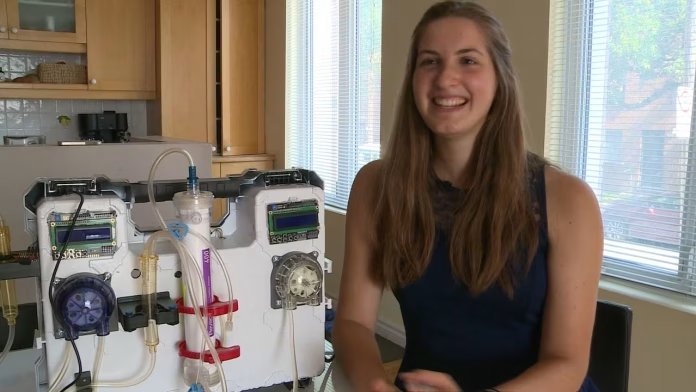
Anya Pogharian, a teenager from Montreal, turned a school assignment into a true medical breakthrough. She developed a portable dialysis machine that costs just $500, compared to the tens of thousands of dollars typically required for such equipment.
Dialysis is a medical procedure that replaces kidney function. When a person’s kidneys can no longer filter blood, harmful substances and excess fluid accumulate in the body. A dialysis machine acts as an artificial kidney: it draws blood from the body, cleanses it of toxins using a special filter, and then returns it. Currently, this process requires expensive devices that are primarily available only in large hospitals.
The Montreal teenager brought about a genuine revolution in this field. While working on the project, Anya Pogharian was inspired by the daily challenges faced by patients with kidney failure. She spent over 300 hours researching and assembling the device. Notably, the prototype is made entirely of used and inexpensive parts, which ensures its affordability.
A standard dialysis procedure is performed several times a week, and each session lasts several hours, exhausting the patient both physically and psychologically. Anya’s prototype, built through hundreds of hours of labor, demonstrates that effective medical technology does not always require high-cost components.
The significance of this invention is defined by several factors. First and foremost is the price. Standard commercial dialysis machines cost approximately $30,000, posing a significant burden for many medical institutions. Anya’s device drastically reduces this cost. Furthermore, during the testing process, the prototype showed the potential to significantly shorten the multi-hour procedure.
Anya Pogharian created this revolutionary device in 2015. More than ten years have passed since then, and her discovery has become an important symbol in the process of democratizing medical technology.
Although bringing a medical device to mass production involves complex, long-term clinical trials and bureaucratic barriers, Anya’s project provided a massive catalyst for the scientific community. She proved that it is possible to radically reduce the manufacturing cost of a dialysis machine, forcing major manufacturers to direct more resources toward creating budget-friendly and portable models.
Today, the influence of Anya Pogharian’s idea is clearly visible in modern healthcare. Her innovation has heightened interest in home-based dialysis systems, allowing patients to no longer be tethered to hospitals. Additionally, this project laid the groundwork for numerous international initiatives aimed at providing low-cost medical equipment to developing countries.
Anya continues her work in the medical field, and her story remains an inspiration for young inventors striving to make technology accessible to everyone.
