


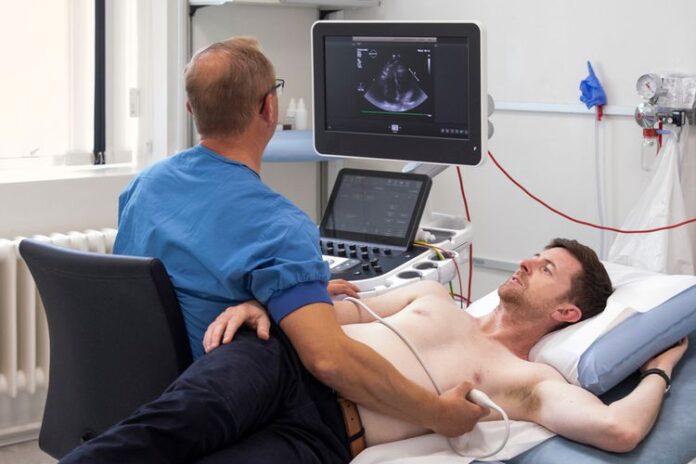
Syncope – a sudden, brief loss of consciousness caused by a temporary reduction in cerebral blood flow – accounts for approximately 1% to 3% of emergency department visits. For these patients, transthoracic echocardiography (TTE) is one of the most frequently ordered diagnostic tests because it effectively detects structural cardiac abnormalities that could cause fainting.
National guidelines recommend performing a TTE when structural heart disease is suspected, but they do not specify exactly which patients should undergo testing. In practice, this ambiguity leads to a vast number of unnecessary studies and, consequently, a high rate of normal results. As a result, TTE represents a major driver of cardiovascular imaging costs for Medicare; in 2022, the average cost of a single TTE study was $464.
To address this gap, the ROMEO score was developed in 2018. It assigns one point to each of the following five clinical features:
A history of heart failure
A history of ischemic heart disease
An abnormal electrocardiogram (in the emergency department)
An elevated high-sensitivity troponin T level
An elevated NT-proBNP (N-terminal pro-B-type natriuretic peptide) level
A score of zero on the scale was created to identify patients whose probability of having clinically significant abnormalities on an echocardiogram is minimal—precisely those cases where withholding the exam is completely safe for the patient.
Testing the Score’s Performance
Any diagnostic score is only valuable when its efficacy is validated beyond the boundaries of the study in which it was created. For this reason, researchers sought to externally validate the ROMEO score using data from a different, larger study: the Practice Approaches to Syncope in the Emergency Department (PACES) study, which enrolled patients across six U.S. emergency departments between 2020 and 2024.
The analysis included adult patients aged 40 years and older who presented to the clinic with symptoms of syncope or presyncope (near-fainting) and underwent an echocardiogram within the following 30 days that was interpreted by a cardiologist. Notably, this expanded the age criteria compared to the derivation study of ROMEO, which included only patients aged 60 years and older.
Of the 1,287 patients enrolled in the study, 427 underwent an echocardiogram within the specified timeframe. Among them, 88 patients—approximately one in five—were found to have clinically significant abnormalities. Most commonly, these were a reduced ejection fraction (which measures the heart’s pumping ability) or a regional wall motion abnormality.
What the Numbers Show
The results are particularly striking in one core metric: a ROMEO score of zero correctly ruled out significant echocardiographic abnormalities with a 98.9% sensitivity and a 98.6% negative predictive value. Put simply, if a patient exhibited none of the five risk factors, the likelihood that their study would reveal a clinically significant abnormality was extremely low—amounting to only 1.4% in this group.
The score’s overall discrimination accuracy reached an AUROC of 0.83 (statistically higher than the 0.77 achieved in the original derivation study). The researchers hypothesize that this improvement was driven by the inclusion of younger patients (the 40–59 age group). Specifically, in this cohort, elevated biomarker levels point more accurately to true structural heart disease than in older adults, where elevated biomarkers are frequently driven by age-related changes.
However, like most medical decision rules, the safety of ROMEO comes partly at the expense of precision. Its specificity was only 20%, meaning that a positive score (one or more risk factors) does not automatically indicate heart disease—many patients with a positive score turned out to have a completely healthy heart. In reality, this tool was designed to answer a single primary question: when can we safely withhold the test? It is by no means intended to pinpoint exactly who needs an echocardiogram.
The Single Exception
Among the 69 patients in the study who scored zero, a significant abnormality on an echocardiogram was found in only one: a 52-year-old woman. She arrived at the hospital experiencing presyncope, had a normal electrocardiogram, and her biomarker levels fell just below the pathological threshold.
The patient left the clinic against medical advice and returned ten days later in critical condition with a pulmonary embolism (a large blood clot lodged in the main pulmonary artery). This case serves as a reminder to clinicians that any screening tool—even the most effective—is merely a supportive instrument and not a guarantee; therefore, clinical judgment remains paramount.
Considerations to Keep in Mind
The study is subject to certain limitations. Because it was conducted primarily at major academic medical centers, its findings may not automatically generalize fully to regional or small community hospitals.
Additionally, only a third of the original study cohort underwent an echocardiogram, raising the potential for selection bias. Nevertheless, the researchers note that among patients who did not undergo the test, 30-day serious cardiac outcomes were rare (1.4%)—indicating that significant pathologies were unlikely to have been missed in the unexamined group.
Given the low specificity, the authors emphasize that the ROMEO criteria should be utilized only as an adjunctive decision tool and not as the sole determinant of whether an echocardiogram should be ordered.
Source: Academic Emergency Medicine
