


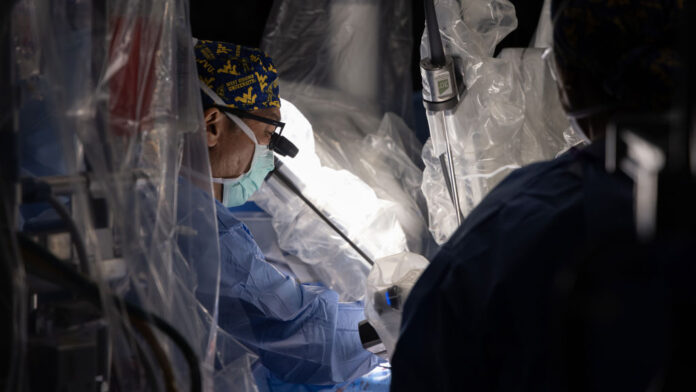
Modern medicine is evolving rapidly, with particularly interesting changes observed in cardiac surgery. In recent years, robotic technologies have been increasingly used in surgery, allowing complex operations to be performed using minimally invasive methods. One of the most impressive examples of this progress was the world’s first surgery during which doctors performed seven different cardiac procedures in a single surgical intervention using robotic technology.
This historic operation was conducted in Saudi Arabia at the King Faisal Specialist Hospital & Research Centre. This case entered medical history as the first documented surgery where the correction of numerous heart pathologies was carried out in a single robotic intervention.
Heart disease is one of the leading causes of death worldwide. Complex cardiac patients often suffer from several pathologies simultaneously and require multiple surgeries for treatment. Traditionally, this implies at least one open-chest surgery—sternotomy—and numerous subsequent invasive operations, which negatively affects the patient’s rehabilitation period, overall health, and mental state.
The development of robotic surgery has significantly changed this outlook. Today, surgeons work through a special console from which they control robotic instruments with microscopic precision. This technology allows the operation to be performed through several small incisions, significantly reducing surgical trauma.
The Historic Operation
The historic surgery was performed on a 70-year-old woman who had several complex cardiac pathologies simultaneously. Normally, such a case would require surgery performed in several stages. However, the surgeons decided to resolve all problems at once using a robotic minimally invasive approach.
The following procedures were performed during the operation:
-
Mitral valve replacement
-
Tricuspid valve reconstruction
-
Arrhythmia treatment (Maze procedure ablation)
-
Left atrial appendage closure (“sewing the ear”)
-
Atrial septal defect closure
-
Correction of an anatomical pulmonary vein defect
-
Additional cardiac corrections related to the patient’s comorbid pathologies
Thus, seven different cardiac surgical interventions were performed in one operation, which was recorded for the first time in world practice.
How Robotic Heart Surgery is Performed
In robotic surgery, the doctor does not stand directly over the patient. They sit at a special console from which they manage several mechanical “arms.”
The main stages of the procedure are:
-
Several small incisions (1–2 cm) are made in the chest.
-
A camera and micro-instruments are inserted through the incisions.
-
The surgeon controls the robotic arms from the console, which replicate their movements.
-
The system provides a 3D high-definition image.
-
The robot neutralizes natural hand tremors and increases precision.
Thanks to this technology, the surgeon can work in deep anatomical structures of the heart where traditional surgery is more difficult.
Advantages of This Method
Robotic cardiac surgery has several important advantages:
-
Minimal Trauma: The operation is performed with small incisions, and full chest opening is not required.
-
Reduced Bleeding and Infection Risk.
-
Fast Rehabilitation: In this specific case, the patient was discharged approximately eight days after the surgery with fully restored heart function.
-
Treatment of Several Pathologies in One Surgery.
-
High Precision and Control.
Significance for Cardiac Surgery
This operation represents a significant milestone in the history of cardiac surgery. It demonstrated that robotic technology allows complex combined procedures to be performed in a single operation that were previously only possible in several stages.
This achievement is especially important for:
-
Elderly patients
-
Cases of multi-pathological heart diseases
-
High-risk operations
Such an approach may significantly change the standards of cardiac surgical treatment in the future.
The Future of Cardiac Surgery
Robotic technologies are already rapidly changing surgical practice. In recent years, several world-class achievements have taken place, including heart transplantation performed with robotic technology, which was also carried out at the same center.
Experts predict that the following will develop in the future:
-
Surgical systems supported by Artificial Intelligence
-
Remote (tele-surgery) operations
-
Even less invasive approaches
-
Automated surgical instruments
All of this could mean that heart surgeries will become safer, faster, and more effective in the future.
The world’s first case of seven cardiac surgical procedures being performed in a single robotic operation clearly shows how quickly modern medicine is developing. Robotic surgery is not only a technological innovation but also the beginning of a new era in cardiac surgery—an era where complex operations will be performed more safely and with less trauma.
source
