


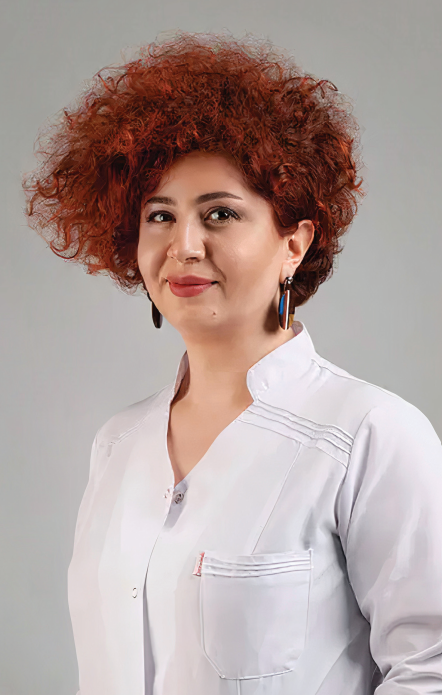
When faced with a choice, follow the path others have worn smooth, or forge a new one. Most people take the easier option. Only a rare few decide to change the rules. True leaders don’t wait for the right moment; they create it. Dr Natia Vashakmadze, the young chairwoman of the Association of Endocrinology and Metabolism, is one of those rare few.
She was 30 years old when she decided not to wait. Having just returned to Georgia after completing her residency abroad, she was already thinking about a platform that would reshape Georgian medicine and more specifically, the futures of Georgian doctors and their patients.
Seven years on, the Association of Endocrinology and Metabolism is far more than a professional body. It has become a genuine network for change, a space where early-career and experienced physicians can learn from one another, where the patient is always the protagonist, and where every lecture, session and debate ultimately serves the same purpose: better care.
Vashakmadze’s story is not simply one of individual success. It is the story of a woman who refused to be deterred and who, at a young age, became the leader of a new generation of physicians.
In this interview, she traces the path she has taken, a path that has already made it easier for hundreds of physicians to access the knowledge they need, and that is headed toward an even more ambitious destination.
— Natia, how did the idea for the Association of Endocrinology and Metabolism come about?
— The idea came to me shortly after returning to Georgia from my residency. I wanted to create a platform where doctors could access unbiased, high-quality, reliable medical information. The idea was born already loaded with challenges. I was a 30-year-old doctor who had just come back to Georgia, and I genuinely didn’t know how established colleagues would respond to such an ambitious proposal from someone so young. I worried about it, but I didn’t let it stop me. There was scepticism at first, of course. But my team and I didn’t flinch. Thankfully, attitudes shifted quickly. People could see that we had genuinely created a space where doctors from different specialties and levels of experience could gather, discuss topics that mattered to them all, and engage with developments in medicine each year. That, after all, is the whole point: bringing the practices, insights and knowledge of the international medical community to our own.
— But you didn’t stop there…
— The next step was to translate and publish current professional literature from the United States and Europe into Georgian. With official authorisation from the American and European Thyroid Associations, the American Endocrine Society and the American Diabetes Association, we now regularly translate, publish and distribute international clinical guidelines in Georgian. These are also freely available on our association’s website. I am genuinely proud that many Georgian physicians now use these translations as their go-to reference guides in clinical practice.
— You’ve mentioned these international organisations. I have to ask: how did a young doctor, without the usual credentials or track record, earn their trust and support?
— They saw our enthusiasm and our genuine commitment to making their knowledge and recommendations accessible to Georgian doctors and ultimately, to patients. We kept emphasising the need: many Georgian physicians, even those who know English, have limited experience working with complex medical texts in a second language. We wanted to ensure they had access to the most current literature in their own language. I want to use this platform to thank each and every one of those organisations. Without exception, they granted us copyright permissions free of charge. In 2022, when we translated two of their guidelines, the American Endocrine Society awarded us a special grant to have the Georgian translations printed and distributed to physicians. One guideline addressed elevated blood triglycerides; the other covered the management of dyslipidaemia in patients with endocrine disorders. It was an incredibly moving show of support, and it gave us even greater motivation to continue. To this day, we feel their full confidence and unconditional support. Whenever we need permission to translate something, we can get it free of charge.
— What do you think underpinned that level of trust?
— Probably the fact that everything we publish, and every event we run, is entirely independent, free from industry influence, and grounded solely in the interests of medicine. We are very proud of that. After every event, we circulate a feedback questionnaire asking our audience about their impressions and specifically, how transparent we have been. At our most recent event, 97.8% of respondents said the lectures were completely free from pharmaceutical industry influence. That figure would be the envy of even the most reputable European medical organisations. It reflects the care we put into vetting every speaker to ensure they present only evidence-based, rigorously verified medical information.
— What has seven years taught you? What has changed?
— We try to select the most relevant topics and tailor them as closely as possible to what our physicians actually need. We continuously gather feedback and ask for recommendations, which is why our events are always responsive to the needs of the medical community. In a very real sense, they reflect what doctors themselves want. The programme and format have evolved considerably. Our lectures are now highly practical, packed with clinical recommendations focused on what a working doctor needs at the bedside. We have enormous respect for science, but at events like ours, pure academic discourse isn’t enough. We also spend a good deal of time on real clinical cases, sharing the medical histories of actual patients and walking through the decision-making process together: what brought this person in, how we managed it, where we went wrong, and what the outcome was. We’ve significantly expanded the time set aside for discussion. After each session, every doctor has the opportunity to ask questions and join the conversation. Our roster of invited speakers is growing in both number and calibre, and so is our audience. We started with 50 attendees; this year, over 300 physicians attended our congress. Next year, we expect more.
— Every event must come with its share of nerves as well as excitement…
— This year, ahead of the congress, the anxiety reached a new peak. We knew that everyone was expecting something exceptional. The joy of delivering on that of going beyond what people expected was extraordinary. That is our motivation, our fuel, to push even harder next year.
— Georgia is fortunate to attract visits from well-credentialled physicians, but your speakers stand out even in that company. How do you bring them on board?
— Now, it’s quite easy. In the beginning, it was genuinely difficult to persuade them. These days, an invitation from us makes them happy, and they are willing to rearrange other commitments to come. Professor Juan Carlos Galofré from Spain, for example, whose schedule fills up six months in advance, had his clinic days fully booked during the dates of our congress. He rearranged his patients, extended his working hours on other days, drove from his city to an airport in another city, flew to us, and flew back to patients waiting for him that same afternoon. Our international speakers tell us that they learn and grow at these meetings, too. And they are exceptional not just as clinicians, but as people, warm, generous, genuinely engaged. They have been great supporters of everything our organisation and I personally have built, and I hope to continue counting on them.
— One guest deserves a special mention: Gary Hammer, one of the most distinctive and charismatic speakers at the congress, whose presentation felt more like a performance than a lecture. He had the room in the palm of his hand in a way you rarely see at a medical conference. His verdict that Georgia had hosted a world-class event must have meant a great deal.
— Until recently, Gary Hammer served as president of the American Endocrine Society, one of the most prestigious organisations in our field. He and his team attend and oversee major conferences worldwide, so hearing someone with that level of experience publicly say that we lead by example was deeply moving.
— I followed your preparations closely, how you worked to engage doctors, draw them into the build-up to the congress, and create a sense of anticipation around the speakers and topics. That kind of pre-event energy is still relatively unusual in the medical world. How did you approach it?
— Part of it was simply the breadth of the programme. Our speakers included a nutritionist, a cardiologist, a gynaecologist and a lipidologist. This wasn’t a gathering for endocrinologists alone. Endocrinology intersects with every specialty because hormones regulate the entire body and affect virtually every system. The topics we discuss are relevant to all clinicians, which created such sustained engagement between the audience and the speakers.
— Which topics generated the greatest response?
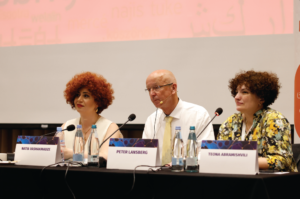
— I have to start with the adrenal gland session, and single out thyroid disease in pregnancy and the management of papillary carcinomas. These are areas where there is no settled global consensus; they remain open, actively debated, which makes them genuinely exciting. Peter Landsberg delivered a brilliant lecture on insulin resistance and lipid topics that, on the surface, feel familiar, but that he presented from a completely fresh angle. It felt like hearing them for the first time. He examined the mechanisms underlying insulin resistance through the lens of the ‘elephant in the room’: insulin resistance, obesity and metabolic disorders have become so prevalent that we have almost stopped noticing them; they have become normalised. Yet they remain among the leading causes of chronic disease worldwide, including diabetes, vascular pathology, oncological conditions and premature death. Georgia is no exception.
— Do you think Congress will change how physicians approach these conditions?
— I believe clinical practice will improve as a result, and we have data to support that. We test participants before and after every event, it’s one of the ways we measure the real impact of what we do. This year, the pre- to post-test results showed a 28% improvement in clinical knowledge, which is an excellent outcome, and one that translates directly into better care for patients.
— Guidelines and treatment strategies for type 2 diabetes are shifting globally, and this was another key theme at the congress. Will the doctors who attended be prescribing more up-to-date treatments as a result?
— That is precisely the aim. I hope every session will ultimately translate into stronger clinical competence. I’d single out adrenal disease and the latest developments around aldosterone as especially significant. In the days immediately after the congress, a new guideline on primary aldosteronism was published by the organisation that Gary Hammer leads, and Hammer presented its contents to Georgian physicians before it was even in print. We are already in correspondence to translate it into Georgian. It contains significant advances in both diagnostics and treatment. For example, the new guideline recommends that primary aldosteronism be ruled out in every patient with hypertension before treatment for hypertension begins. This is an entirely new approach worldwide, and Georgia will be adopting it in parallel. The same applies across lipidology, nodules of uncertain aetiology, obesity, type 1 and type 2 diabetes, osteoporosis, thyroid disease and more. In some cases, the developments we discuss at the congress haven’t yet made it into official guidelines, but we are already ahead of the curve.
— You mentioned that obesity has been declared a global pandemic. Is it a lifestyle issue or a chronic disease? And what role do cultural habits and traditions play? Are you planning to develop a Georgian management guideline?
— Obesity is a chronic disease, and it has genuinely spread across the world like a pandemic, affecting developed and developing countries alike. It arises from excessive caloric intake and a sedentary lifestyle. In that sense, it is a product of lifestyle, but it is ultimately a serious chronic non-communicable disease. There is even some evidence of a degree of social contagion: people living alongside those with obesity tend to adopt similar habits and develop similar problems. Obesity doesn’t spread like an infection, but behaviours do. It needs to be taken seriously by patients, society, and doctors. International obesity management guidelines exist, and we follow them, though we haven’t yet translated them into Georgian. When lifestyle changes alone aren’t sufficient, pharmacological treatment is needed. Fortunately, effective treatments now exist, and in severe cases, bariatric surgery is an option. As for cultural factors, in Georgia, so-called abdominal obesity is widely regarded as normal. That is precisely our elephant in the room.
— How does it feel to be a female leader in this field?
— There is something deeply satisfying about building something of genuine value. My fuel is doing work I love, work I believe in, and work I know is making a positive difference. Waking up every day with the sense that my team and I can make things better is extraordinary. I no longer have the luxury of slowing down or stopping. I’m always looking for what’s next. The plans are serious. First, there is the Johns Hopkins ‘pocket protocol’ for managing hyperglycaemia in hospitalised patients – given to us as a gift by its creator, Mihail Zilbermint, whom we will definitely be inviting to next year’s congress. We also have two more guidelines to publish this year. I’ll share something here for the first time: by the end of this year or early next, we will be publishing a book, a project that has been years in the making. The translation is complete, the editing is finished, the rights are secured, and we will soon be going to print with the Georgian edition of Endocrinology of Aging: Clinical Aspects in Diagrams and Images a prestigious and significant title from Elsevier. Our eighth congress next year will be larger and will run for three days. We’ve realised that, given the level of interest, two days simply aren’t enough. We’re planning to involve patients directly, run workshops, and introduce debates on contentious topics that generate the sharpest discussion among clinicians. There are other plans too, but I’ll keep those under wraps until next year.
— What are your personal plans going forward?
— I’m working on my doctoral thesis at Ilia State University, researching the role of selenium, a trace element, in thyroid dysfunction. My supervisor is Juan Carlos Galofré. We have interesting preliminary data, and the project should be complete in roughly a year and a half. I also plan to expand the endocrinology department at Helsicore and develop an active educational space in the field. That’s what I can share for now, but there will be more.
By Ekaterine Saria
