


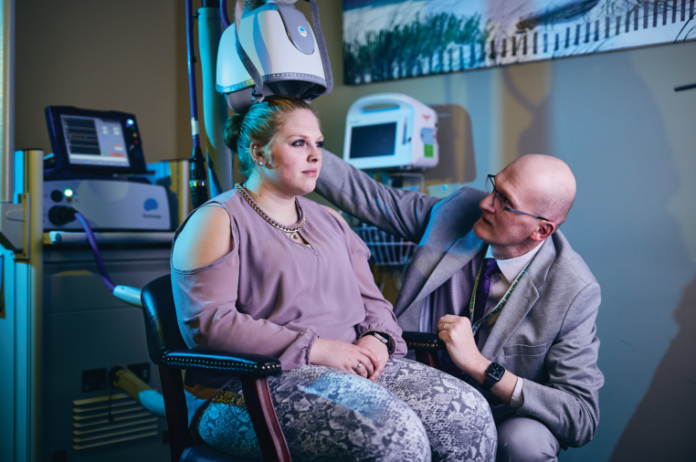
Growing up in the noisy courtyards of Zugdidi, Irakli Mania realized from an early age that his life could not be contained within a small town. In the 1990s, marked by civil war, constant unrest, and poverty, students studied not from books but from photocopies under the flickering light of candles, and walked to university on foot. At that time, he firmly decided that, no matter the circumstances, he would become the best doctor possible. At that time, such a dream was out of reach in Georgia, so he would have to continue his education in the United States.
From the hallways of Davit Tvildiani Medical School to research at Emory University, and from there to the prestigious Drexel residency in Philadelphia, the road was neither short nor easy. At every stage, alongside medicine, he was learning resilience. He had to overcome many obstacles, bridge cultural gaps, and adapt to strict standards. His commitment to his goal and his readiness to meet every opportunity fully prepared ultimately led to his success.
Today, he is not only a highly accomplished psychiatrist and scientist but also the president of the Pennsylvania Psychiatric Society. For Irakli Mania, leadership is not about loud words, but about daily, relentless work. You are a good doctor, he says, when you listen to the last patient who comes to you late at night with the same attention as you give the first patient of the morning. When dreams from years ago have become your everyday reality, and you now guide others along the same path through your example.
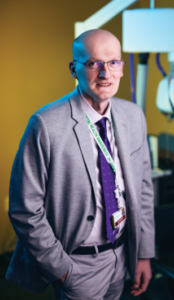
What was the journey from Tbilisi to Philadelphia like? Which step was the turning point?
I came to America 25 years ago. I’ve spent almost half of my life here. The road was quite difficult, but at the same time, incredibly interesting. I was born in Zugdidi, in the shadow of the Abkhazian war, poverty, and a very harsh social climate. In such an environment, it was hard to even think about studying and personal growth, yet studying was what I loved most.
It was clear to me that in those conditions, I would not be able to achieve my goals. While still in school, I firmly decided that I wanted to become a doctor and that I had to continue my education in the United States. I worked very hard, and perhaps I was talented enough, because during my university years, I passed the medical licensing exams required to study further in America.
Right after graduating from university, I came to the U.S. A well-known physician, Emory University professor, and a great friend of Georgia, Ken Walker, was the person who at that time helped talented Georgian students and doctors. It was he who brought me to Atlanta.
Did that become the turning point?
I can’t say that a single moment had decisive importance. I had to overcome many difficulties. The work ethic and expectations here are very different. I spent four years at Emory University engaged in psychiatric research. Getting into Drexel’s residency program was a significant success, as I had succeeded in a highly competitive selection process. There, I was appointed chief resident, and because of my high academic performance, right after completing residency, I received offers to study further at Yale, Harvard, and other universities. My career path was set for a rapid climb, but the government at the time did not allow me to pursue it. I was disappointed, but now, looking back, perhaps it was for the best.
That path has led me to Keystone Health, where I have worked since 2008, and which has become my second family. On this path, I have faced many challenges, but I overcame them thanks to the support of this team. I’ve stayed here so long because I genuinely love these extraordinary people, and they value me as well. We have achieved a lot together. In 15 years, we have built a very modern and well-organized clinic in this small town. Our center is one of the largest, and I don’t think there’s anything quite like it in a similar geographic location anywhere else in the United States. I am very proud of that!
What was the biggest surprise in the American clinical system?
I arrived in 2000 from Georgia, which was in a difficult state at the time. I remember that we used to boil disposable gloves and reuse them. Here, the hospital looked like a hospital. The equipment, computers, and interiors were all new and well-maintained. There is no need even to discuss hygiene or the availability of medications.
Doctors, residents, fellows, nurses, and social workers all worked together as one united team caring for the patient. Here, the physicians are held in the highest regard and trusted. You feel it everywhere, whether in the clinic or even out on the street. If they know you’re a doctor, they will address you as “Doctor Mania,” and in that address, you can sense deep respect for the profession. Here, learning never ends. Alongside students, practicing doctors and professors are always in search of something new.
At first, I thought I would stay in America for 3-4 years and then return to Georgia to serve my homeland. At that time, we all felt like that. However, you soon realize that this is insufficient time, and upon seeing others advance in their careers and gain experience, you also aspire to grow professionally and reach your full potential. That’s how I stayed. Here, you are constantly developing, and if you work hard and give your all, nothing is out of reach. If you had asked me 15 years ago whether I wanted to become president of the Pennsylvania Psychiatric Society, I would have laughed and said it was utopian. And yet, based on my own example, I can say that in this country, anything is achievable. The most important thing is still a well-functioning system. In medicine, that’s decisive; one person alone can achieve nothing. The system must be effective.
Dr. Irakli, how did a doctor born in Georgia become president of the Pennsylvania Psychiatric Society?
From childhood, I naturally assumed the role of a leader. Perhaps it’s genetic, a family trait. My father was a factory director, my mother managed a pharmacy, and my grandmother was a school principal. What helps me greatly is that I am very goal-oriented. I always have a clear direction. I am constantly learning, developing, preparing, working, and whenever an opportunity arises, I am ready to seize it. In reality, fortune favors the prepared. Emotional intelligence and the ability to adapt quickly are also essential.
I also enjoy meeting new and interesting people. A leader must be able to accept failure, stand back up after a fall, and listen to criticism. I sometimes joke that if you want to be loved by everyone, don’t become a leader, become an ice cream seller! The ability to make quick decisions and take responsibility is probably the most important. I always try to lead others by my example, and that helps me a great deal.
Why has psychiatry become such a prestigious field?
Psychiatry is a fascinating specialty. The stigma is gradually decreasing, and the level of stress is lower. That’s why today, many talented people are entering the field, more than 10-20 years ago. I’m pleased that this year, a record number of eight Georgian students came to my clinic for observerships, and they want to pursue psychiatry.
In the United States, there is a vast demand for psychiatrists and mental health specialists, and a person should be where society needs them most. Have you ever wondered why trauma surgery is so well developed in Germany? The explanation is simple: they went through two world wars and countless injuries. In today’s world, psychiatry is experiencing similar popularity, and the field will continue to grow. The need for psychiatrists will increase even further. So, those who choose this path will undoubtedly be successful.
You’ve made such a compelling case for psychiatry that even I’m tempted to consider it…
They joke here that psychiatry is the new dermatology. There’s always demand for dermatologists because they have a relatively more straightforward work schedule and a better work-life balance. Now, getting into psychiatry has also become harder, with considerable competition.
Has isolation become the most significant challenge for psychiatry? Has technological progress increased the number of diagnoses?
About three or four years ago, the U.S. Surgeon General officially declared an epidemic of isolation and introduced a six-point plan to address it. COVID made this problem even more visible. Civilization is advancing, yet people have become more withdrawn, as if we no longer need one another. Social media replaces personal interactions and fosters isolation, which in turn increases individualism.
In our childhood, we could only read about or hear information in a newspaper or on the radio; now, we learn it instantly from social media. There’s a constant flood of information: every disaster, tsunami, earthquake, flood, war, or other tragedy is reported to us in detail. Our brains can’t handle that level of ongoing stress. Life has become much more complex. We were taught that life in the city was more difficult, with higher stress and greater prevalence of psychiatric disorders than in rural areas. But now, everywhere feels like a city. That’s why psychiatric disorders have increased. This is a challenge of modern life.
Now that there’s less stigma surrounding psychiatric illnesses and better access to care, does that also contribute to the growing number of diagnoses?
Trust in psychiatrists has grown. People are now convinced that if they come to a doctor, we will help them. In the past, they suffered in silence at home; now they see professionals more often. As a result, the proportion of depression and anxiety disorder cases has risen in the statistics, though it’s hard to say that the actual diseases themselves are more common today.
What is the greatest challenge in psychiatry?
Without a doubt, it’s substance abuse. Both in the United States, in Georgia, and worldwide. In America, everyone is talking about the opioid epidemic. (The use of opioid narcotic drugs is a serious national problem and is closely linked to the pharmaceutical company Purdue Pharma. As a result of their marketing campaign, the opioid OxyContin, previously prescribed only for severe cancer-related pain, became accessible to a much broader population. It began to be prescribed for back pain, headaches, and other minor causes of pain, treating pain itself as an illness. This led to an increase in opioid dependence, which in turn drove up demand for street drugs. Purdue Pharma was blamed for triggering the opioid epidemic and was fined billions of dollars, funds that are now used annually to fight addiction.)
The situation is dire. In the United States, more people have died from overdoses than in all the wars America has fought in the last two centuries combined, more than have ever died in car accidents. Every year, over 100,000 people lose their lives to drugs. To counter these statistics, we must rely on substitution therapies and preventive programs.
In Georgia, the approach toward drug users is becoming stricter…
From what I hear, I don’t like it, though I’m not deeply involved in the matter. Here, fentanyl is the biggest problem. The government is trying to prevent its entry into the country, but this fight has not been very successful, since fentanyl is much more potent and cheaper than heroin. As a result, the government has shifted much of the burden of addressing this issue onto psychiatrists and other addiction specialists. Part of the funds that were previously allocated to law enforcement are now spent on treatment and prevention.
In addition to public awareness campaigns and the over-the-counter availability of the medication Narcan (naloxone), so-called “safe injection sites” have also been created in exceptional cases. Drug users can go there without fear, bring their drugs, and be provided with a clean needle or, if needed, foil or a smoking pipe. After using the drug, they remain on-site for some time under observation, and if they feel okay, they go home. It’s a controversial issue; it may seem like drug use is being enabled, but when a person’s life is hanging in the balance, you have to save the life.
Currently, Georgia’s approach resembles what it was during Nixon’s time. The “war on drugs” (the anti-drug campaign of the 1970s imposed very harsh penalties for the use of any narcotic substances). How has the U.S. approach to drug addiction changed? Has time shown that strict punishment alone doesn’t work?
In the U.S., the approach toward drug users changed about 10-20 years ago, and the discussion is still ongoing. In my view, drug addiction should not be punished. The “war on drugs” is a lost battle. The drug trade has a much larger budget than what the U.S. government allocates to fighting it. You cannot eliminate this problem; it’s impossible. That doesn’t mean you should encourage or condone drug use, but drug users must be saved.
What role do psychiatrists play in shaping public opinion?
A major one, which is made possible by the structure of organized psychiatry in the United States. We strive to help both the public and lawmakers make informed, fair decisions.
To continue with the topic of drugs, for example, a hot topic currently is the legalization of Marijuana in the state of Pennsylvania. There are pros and cons, and I have a hard time making a concrete statement, but what I can say is that the professional stance of the Psychiatric Association is that marijuana use should not be medicalized. In some states, however, voters and, under their pressure, legislators are pushing for medical legalization. In Pennsylvania, for instance, if a person has anxiety, they can obtain a certificate allowing them to use marijuana. Medical societies, psychiatric or neurological associations, explain why this should not be permitted. No professional medical organization to my knowledge supports medical use of marijuana.
Under the U.S. Controlled Substances classification, there are five categories. Paradoxically, marijuana belongs to the first category, defined as having no accepted medical use and a high potential for dependence; it is placed at the top of the pyramid alongside heroin. Cocaine, on the other hand, is in the second category, meaning it still has some specific medical applications. The third category includes substances that are used for medical purposes but still carry significant risks.
This is why organized psychiatry is essential. There must be a two-way relationship between lawmakers and organized psychiatric and other professional associations to ensure accurate information is communicated. This is how mistakes can be avoided. Sometimes they come to us for input; other times, we take the initiative to oppose specific legislative proposals.
Many people believe that only those with weak willpower become addicted. What role does dopamine play in the development of addiction?
Even in the United States, there is no unanimous agreement that addiction is a disease of the brain rather than simply a behavioral problem or a matter of weak willpower. Strengthening this understanding will take a great deal of time, work, and effort. As for dopamine, I’ll try to explain this complex topic in simple terms. In the brain’s limbic system, there is an area called the nucleus accumbens, our pleasure center. Everything that brings us pleasure connects to this nucleus. Usually, pleasurable stimuli might be sex, food, drugs, alcohol, tobacco, or other things.
Dr. Nora Volkow, the head of the U.S. National Institute on Drug Abuse, has a hypothesis that people with addiction do not have enough dopamine receptors in this nucleus. As a result, they cannot derive sufficient pleasure from human interactions, and the drug becomes their primary source of joy. Addiction forms through a combination of psychological and physiological processes: the body physically requires the substance, and the number of receptors decreases over time. According to Volkow’s hypothesis, such individuals need an excess amount of stimulation to feel pleasure; perhaps this is how addiction begins. There is another theory: a person may not initially have this receptor deficit, but for some reason, they start using a substance, and then gradually become physically dependent. These substances, including nicotine, are not easily given up. What happens next? When you consume these substances, dopamine surges, and you feel pleasure. This is physiological when neurotransmitters are in excess, the receptors downregulate and become depleted. It can take years for them to return to their original state. The situation then resembles the first scenario, a closed loop.
Childhood trauma and severe psychological stress, such as PTSD, increase the risk of addiction. If we link dopamine receptor depletion to addiction, is this connected to childhood psychological trauma?
Addiction often develops in people who have experienced repeated trauma. For example, veterans returning from war frequently have post-traumatic stress disorder (PTSD) and later develop alcohol dependence. Most of the people with substance use disorders I encountered were in Veterans Affairs. However, I’m not aware of studies indicating whether the problem stems directly from the trauma itself or whether it’s the stress-induced context that leads to substance use, which then affects dopamine function.
These individuals need help. If a patient cannot find relief, they may start “self-medicating” with drugs or alcohol. Over time, dopamine receptors become depleted, the brain becomes impaired, and addiction develops.
Speaking of addiction, in the context of the obesity epidemic, should we also talk about food addiction? Does it arise for the same reasons?
In the United States, the obesity epidemic operates through the exact mechanisms as any other form of addiction, for example, dependence on ultra-processed foods that are very salty or sugary. There’s also an interesting observation: GLP-1 agonists, such as Ozempic, which we use for obesity and diabetes, have produced unexpected results. We prescribe the drug for weight loss, and suddenly the patient stops drinking alcohol.
Nowadays, serious research is underway into whether this class of medications could also help with substance use disorders. While there’s no conclusive evidence yet, if a patient is overweight and we are also addressing substance dependence, we often choose to prescribe this group of drugs.
In Georgia, people often go to psychologists for treatment of mental health issues and think that psychiatrists are only for prescribing medication. How does the American system work?
In Georgia, people sometimes don’t even go to psychiatrists for medication; they go to neurologists instead. Yes, both of us treat the brain, but neurology focuses more on structural disorders like Parkinson’s disease, migraines, and others, whereas psychiatry deals more with the mind, mood, and personality. There is still a stigma that if you go to a psychiatrist, it means you’re “crazy” or “insane.” This mindset must change; psychiatric patients should be going to psychiatrists. Going to a neurologist to treat “neurosis” is wrong, wrong, wrong! These slogans should be everywhere. Here, that’s not the case.
Psychology and psychiatry are often confused, both here and in Georgia. Psychiatry is a medical specialty. A psychiatrist is a doctor who has completed a full medical education, with about 10 years of training. A psychologist is not a doctor. They can treat patients using psychotherapeutic methods, but cannot prescribe medication. If a person has the means to see a psychiatrist, they should go to one. The psychiatrist will develop a treatment plan, which may include prescribing medication, referring to a psychotherapist, or both.
It’s unfortunate that in Georgia, psychiatrists don’t or can’t monitor their patients regularly. These are chronic conditions; they evolve over time, and constant monitoring is essential.
I’d also like to ask about a relatively new field: interventional psychiatry. How effective is transcranial magnetic stimulation in cases of treatment-resistant depression?
Transcranial magnetic stimulation (TMS) is my favorite treatment method. I’ve been performing TMS for a very long time and am considered an expert in this field. I’m a member of the Clinical TMS Society and personally know many other experts. In the U.S., this method is widespread. The rest of the world is still catching up, but the procedure is gradually gaining ground in Europe as well.
At this stage, we can’t use transcranial magnetic stimulation to treat everything. I believe that as the technology improves, it will be applied to a broader spectrum of disorders. Every psychiatric illness “lives” in the brain, and this tool allows us to reach any part of the brain non-invasively and influence it. The more treatment options we have in psychiatry, the better results we’ll achieve. Until recently, medication and psychotherapy were the only treatment methods, but that list is growing.
Why hasn’t TMS become the gold standard?
One of the main reasons is cost. A complete course costs an average of $15,000, which is very expensive for psychiatric treatment. Insurance does cover the treatment, but usually only in cases of treatment-resistant depression. This is why there is a false perception that the method is used only for resistant depression. In some cases, it could be the first-line treatment for depression.
One of the advantages of this treatment is its specificity. Any psychiatric medication has side effects, but TMS targets only a specific area of the brain and has no systemic side effects. This method is also used for anxiety disorders, obsessive-compulsive disorder, post-traumatic stress disorder, and even tobacco and substance addiction.
Comparing magnetic stimulation to medication treatment, I recall an important example. From 2006 to 2010, the well-known STAR*D study (Sequenced Treatment Alternatives to Relieve Depression) was conducted. Thousands of patients were given antidepressants in a step-by-step sequence according to an algorithm. One of the key findings was that each subsequent medication was less effective than the previous one. After four complete courses of antidepressants failed, the likelihood of solving the problem with further medications became very low, approaching zero.
Today, before we can start magnetic stimulation for a patient, they must have tried at least four medications for insurance to cover it. After treatment, among such seemingly hopeless patients, 60% experience significant symptom reduction, and 40% achieve complete remission, with all symptoms disappearing. Considering all this, I believe this method will become the gold standard in the future.
Of course, there are other types of neuromodulation, but at present, TMS is the best. Important to note that TMS can be a first-line therapy; comparatively, ketamine therapy will never be first-line. It should be used only when other treatment options have been exhausted.
For many, including students and doctors, psychiatry is associated with a cohort of severely ill patients, individuals who are challenging to communicate with, and the psychological stress that comes from working with them. How accurate is this stereotypical view of psychiatry, and how do you personally cope with it?
I have never regretted my choice for even a minute. You need to know yourself; if you cannot accept people as they are, you should not become a psychiatrist. Among my patients, there are murderers, drug addicts, robbers, but that doesn’t bother me.
Today, we are effective. In my practice, many patients feel very well, and you wouldn’t even notice they have a problem. They live, they work, and some hold very high positions. This gives me motivation, knowing I am doing meaningful work. Having grateful patients is a huge encouragement.
Because I have been working for many years, I now have two main types of patients: the first are long-term patients whom I see periodically and know very well. If they have a problem, I can quickly help them, allowing them to continue living their regular lives. The second group consists of people who have already seen every possible doctor and have finally come to me. Working with them is much more difficult, but I can still help a great many of them, and that too is a huge motivator. When others couldn’t help and you can, their gratitude is multiplied. Of course, you can’t help everyone, but you can ease their condition.
As we wrap up, please tell us about the Psychiatric Association and organized psychiatry.
The American Psychiatric Association is a powerful and historic organization, founded 185 years ago. I can’t even compare it to European associations. Think of it as the World Psychiatric Association, with 40,000 members, each paying $1,500-$2,000 in annual dues. We have lobbyists and committees that monitor legislation. This is normal, lawmakers don’t understand psychiatry, so lobbyists work with congressmen while we provide them with expert advice.
In addition, attending meetings and conferences arranged by APA allows us to discuss new developments, which is particularly beneficial for young professionals. Here, they meet new colleagues, exchange ideas, get valuable advice, join interesting research projects, and gain many other opportunities. We host engaging lectures, and updates reach all members in a timely manner.
We have specialized programs—if you’re interested in addiction psychiatry, or someone else is focused on child psychiatry, there are dedicated groups where members share information. We support psychiatrists, people with mental health problems, and their families in every way possible. This is organized psychiatry, and it is essential for every country.
From the small streets of Zugdidi to a prestigious clinic in Pennsylvania, Irakli Mania’s journey has been not only a professional one but also a profoundly personal voyage. He is convinced that the most significant changes begin when a person is not afraid of their own goals.
“Treatment is not just about medications and procedures,” says Irakli. “You must always empathize with the person and tell them: we are in this together. When those words are sincere, that’s when true healing begins.”
Author: Levan Alavidze; Photo: Kikala Studio
