


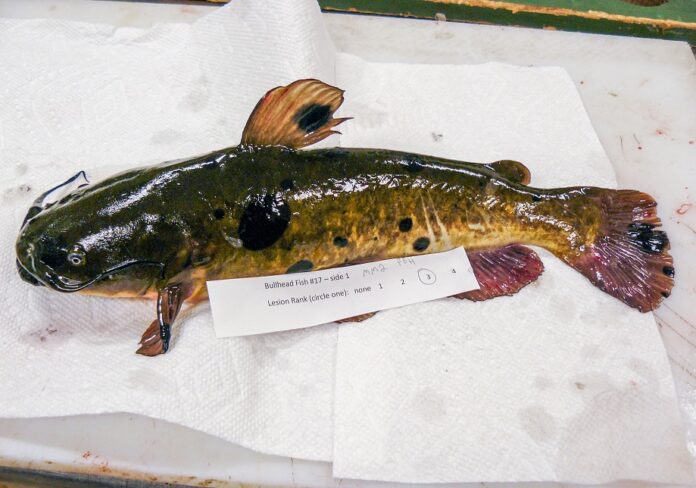
Scientists have discovered an entirely new, fourth type of transmissible cancer. According to a study published in the journal Nature, melanoma found in brown bullheads living in Lake Memphremagog, Vermont, does not develop through genetic mutations within the organism, but is transmitted from one fish to another in the form of live cancer cells.
Initially, researchers attributed the cause of the disease to chemical water pollution or a viral infection. However, years of genetic sequencing revealed no trace of a virus. Geneticists at the University of Vermont discovered that the DNA of the tumor tissue did not match the DNA of the host fish on which it was growing. This confirms that we are dealing with a clonal, transmissible cancer where the tumor cell itself acts as the infectious agent.
The disease manifests in fish as black growths on their bodies, including their mouths and barbels, making it difficult for them to forage for food. Genetic analysis shows that the disease has already spread across several US states and Canadian provinces, as the cancer propagates rapidly through interconnected bodies of water.
Until now, scientists knew of only three types of transmissible cancer (including those found in Tasmanian devils and bivalve mollusks). According to the researchers, this discovery demonstrates that transmissible tumors may be more common in nature than previously thought.
Researchers emphasize that this transmissible cancer poses no threat to human health: the fish cancer cells are exclusive to this species, and if they were to enter the human body, our immune system would instantly recognize and destroy them as foreign entities.
