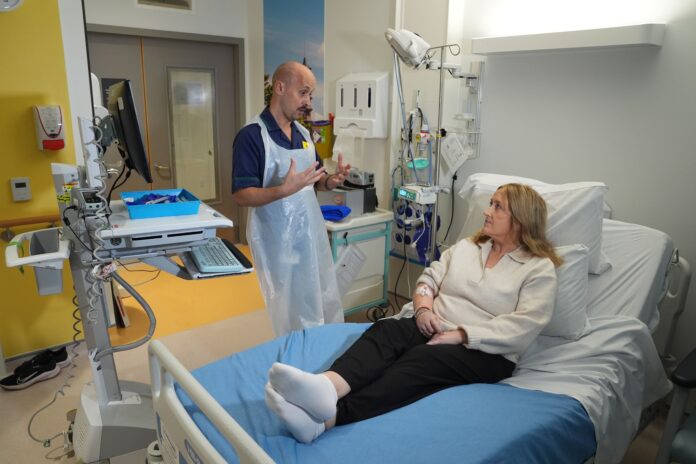
Early clinical trials currently underway in the UK have shown that an innovative experimental treatment, which involves “resetting” a malfunctioning immune system, can put systemic lupus erythematosus into complete remission. According to data presented at the European Congress of Rheumatology (EULAR) by a research team from University College London Hospitals (UCLH), five out of the first six patients have been in stable remission for more than 18 months and have completely discontinued drug therapy.
This approach, known in medicine as CAR-T (Chimeric Antigen Receptor T-cell) therapy, has previously been used to treat hematological malignancies, but its efficacy is now also being demonstrated against autoimmune pathologies. In lupus, the body’s B cells mutate and begin producing antibodies that attack its own organs and tissues. Using this innovative method, scientists genetically engineered the patients’ own T cells in the laboratory to selectively target and destroy the pathological B cells. A few months after treatment, new, healthy B cells begin to form in the body, leading to a complete renewal of the immune system.
One of the first patients in the study, 64-year-old Katie Tinkler, who had suffered from an aggressive form of lupus for 30 years and was on the verge of dialysis due to kidney, heart, and lung damage, underwent the therapy in November 2024. According to the patient, the treatment gave her her life back: the functioning of her internal organs was fully restored, the pain syndrome vanished, and for the first time in a decade, she was able to return to an active daily routine and sports.
Although the process is complex and requires a preliminary course of chemotherapy to prevent the rejection of the modified cells, clinicians still view the results as highly promising. Dr. Maria Leandro, a consultant rheumatologist at UCLH, notes that if sustained remission is maintained in patients for 3 to 5 years, it will be a massive step toward ultimately curing the disease.
The scientific community believes that the potential of CAR-T therapy extends far beyond lupus. Since the pathogenesis of many autoimmune diseases is based on similar mechanisms, scientists are already planning and conducting clinical trials to use this method for treating severe chronic pathologies such as multiple sclerosis (MS) and rheumatoid arthritis.