


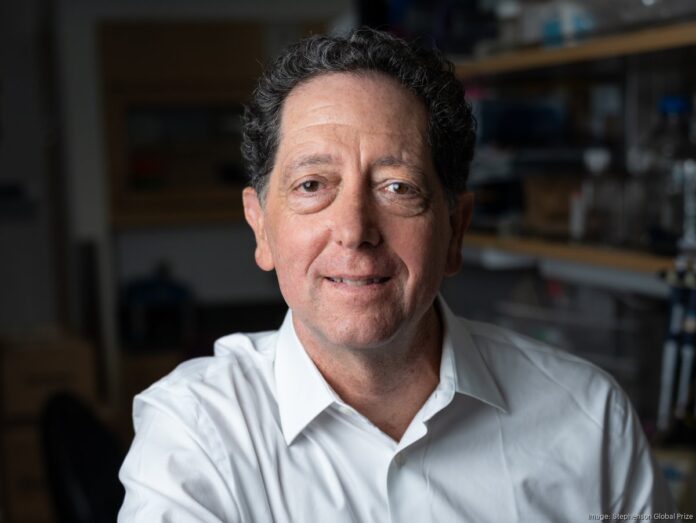
University of California (UCSF) professor and researcher Kevan Shokat has received the $1 million Stephenson Global Prize for his major contribution to pancreatic cancer research. The award recognizes 16 years of intensive scientific work that led to the development of a groundbreaking drug for pancreatic cancer. The U.S. Food and Drug Administration (FDA) authorized the medication only recently, in August.
The drug, daraxonrasib (marketed under the brand name Rasonque), was developed by Revolution Medicines, a company co-founded by Kevan Shokat. It is intended for adult patients with metastatic pancreatic adenocarcinoma who have previously received at least one systemic therapy.
The final phase of clinical trials showed impressive results: in patients with an aggressive form of pancreatic cancer, the new drug nearly doubled survival. Median overall survival reached 13.2 months, compared with 6.7 months with chemotherapy.
How does the new therapy work?
The main target of Shokat’s discovery is the KRAS protein. In the most common and deadly forms of pancreatic cancer, mutated KRAS genes are found in more than 90% of cases and effectively become stuck in an “on” state. Cancer cells hijack this molecular switch, allowing them to multiply uncontrollably.
For years, scientists believed that blocking this process was impossible because no therapeutic molecule could bind to the protein while it was in its “on” state. However, Shokat’s laboratory found a different approach — they developed a molecule that binds to the protein when it is in its inactive, or “off,” state. When KRAS attempts to become activated and send signals to tumor cells, the drug prevents it from doing so and blocks the process.
“This process did not happen overnight. To see the fruits of this progress is extraordinary,” says Frank McCormick, head of cancer biology at the University of California.
For context, pancreatic cancer has the highest mortality rate and lowest survival rate among the major types of cancer. The disease often causes no symptoms in its early stages, and only 13% of patients are alive five years after diagnosis. The approval of daraxonrasib represents one of the major advances in this field.
As for the $1 million prize, Professor Kevan Shokat plans to devote the money entirely to laboratory research and continue working on new cancer drugs.
