


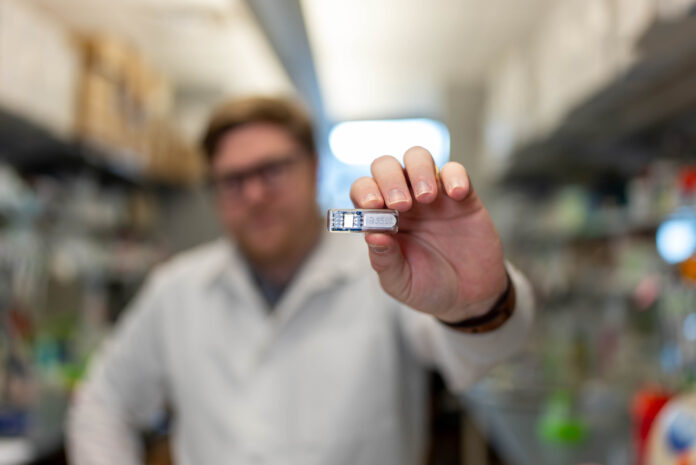
The synergy between modern biomedical engineering and synthetic biology has laid the foundation for a revolutionary transformation in therapeutic strategies. A recent study published in the journal Device, initiated by scientists from Northwestern and Carnegie Mellon Universities, establishes an entirely new approach to the automation of chronic disease treatment. The research team successfully developed an innovative biohybrid platform named HOBIT (Hybrid Oxygenation Bioelectronics System for Implanted Therapy), which functions as an in vivo “living pharmacy” and provides endogenous, continuous, and controlled synthesis of medical preparations.
Historically, severe hypoxia has presented the primary biological barrier for implantable systems based on cellular therapy. The high density of genetically engineered therapeutic cells encapsulated within the implant device induced an oxygen deficit, resulting in massive apoptosis and necrosis of the cellular population. Consequently, the therapeutic efficacy and functional longevity of the device were drastically limited.
The HOBIT system resolved this issue through the integration of electrochemical oxygenation. The device consists of three core components: a cellular chamber for housing the genetically modified cells, a miniature oxygen generator, and an electronic system that regulates oxygen production and ensures wireless communication with external devices. Because the device generates oxygen directly within the implant, the cells receive a stable supply of oxygen even under conditions of low systemic oxygenation.
The miniature generator performs electrolysis of the surrounding water molecules, whereby oxygen is generated locally, directly within the cellular chamber. Through this mechanism, the scientists succeeded in increasing cellular density approximately sixfold compared to traditional, non-oxygenated systems.
For proof-of-concept validation, the researchers utilized genetically modified cells capable of simultaneously synthesizing three biological agents with distinct pharmacokinetic profiles: an anti-HIV monoclonal antibody, a glucagon-like peptide-1 (GLP-1) analogue used for the treatment of type 2 diabetes mellitus, and leptin—a hormone that regulates energy balance and metabolism.
A 30-day experiment conducted on mice demonstrated that the viability of cells within the subcutaneously placed oxygenated implants reached 65%, whereas this figure was only 20% in the control group. Furthermore, the concentration of all three therapeutic proteins in blood plasma remained stably maintained throughout the entire duration of the study.
Moreover, the half-life of traditional exogenous biological medications is frequently variable, which complicates the maintenance of their optimal therapeutic concentration in plasma and necessitates frequent, invasive injections. Programmable “cellular factories” like HOBIT minimize the risk of missing medication doses and ensure a more stable, continuous delivery of therapeutic agents.
The next phase of the research involves testing the device in larger animal models and adapting it for the investigation of therapies based on transplanted pancreatic cells.
Source: phys.org
