


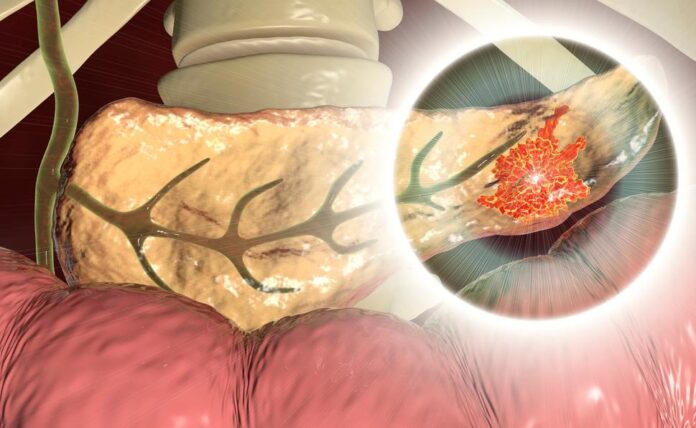
Pancreatic cancer still remains one of the most aggressive and difficult malignancies to treat. Despite decades of research, survival rates remain low, largely because the disease is often diagnosed at an advanced stage and develops within a highly complex tumor microenvironment that actively supports tumor growth and resistance to therapy. A recent study published in JCI Insight provides important new insight into this environment by revealing how stress-related nerve signals may influence pancreatic cancer progression.
The research, conducted in Oregon Health & Science University, protland, shows that communication between sympathetic nerves and fibroblasts within tumors can trigger biological changes that promote cancer development. The findings highlight the nervous system as an active participant in shaping the tumor microenvironment rather than a passive bystander.
To better understand the implications of the study, Medscriptum spoke with the study’s leading author, Ece Eksi, about the mechanisms behind the discovery, its potential therapeutic implications, and the future direction of this rapidly developing field of research.
The Tumor Microenvironment: A Key Driver of Disease
Pancreatic tumors develop within a dense and complex biological ecosystem known as the tumor microenvironment. In addition to cancer cells, this environment contains immune cells, structural proteins, blood vessels, and large numbers of fibroblasts. These fibroblasts often transform into cancer-associated fibroblasts (CAFs), cells that play a critical role in shaping tumor growth and behavior.
Unlike many other cancers, pancreatic tumors are characterized by an especially strong stromal reaction. The surrounding tissue becomes dense and fibrotic, forming a protective barrier that not only supports tumor survival but can also limit the effectiveness of chemotherapy and other treatments.
At the same time, pancreatic tissue is heavily innervated by nerve fibers from the autonomic nervous system. In particular, the sympathetic nervous system, which regulates the body’s stress responses, extends fine nerve branches into tumor tissue. Researchers have long suspected that these nerve fibers may influence cancer biology, but the exact cellular mechanisms behind these interactions have remained unclear.
The new study provides compelling evidence that sympathetic nerve signaling can directly influence fibroblasts in the tumor microenvironment, altering their behavior in ways that ultimately promote tumor progression.
Nerve Signals Transform Fibroblasts Into Tumor-Supporting Cells
The research team discovered that signals released by sympathetic nerves can shift fibroblasts toward a specific subtype known as inflammatory cancer-associated fibroblasts (iCAFs). These cells produce inflammatory mediators and contribute to extensive remodeling of the extracellular matrix surrounding tumors.
In the interview with Medscriptum, DR Eksi explained the molecular mechanisms underlying this process.
“Our data suggest that sympathetic nerve signaling activates fibroblasts through pathways that shift them toward an inflammatory cancer-associated fibroblast (iCAF) state. One of the key mediators we identified is the axon-guidance molecule SEMA3C, which is induced in fibroblasts exposed to sympathetic signals and contributes to extracellular matrix remodeling and tumor-promoting changes in nearby cancer cells.”
SEMA3C is particularly interesting because it is traditionally known as a molecule involved in neural development and axon guidance. In pancreatic tumors, however, it appears to serve as a molecular bridge linking nerve activity with fibroblast activation and tissue remodeling.
These findings illustrate a complex biological feedback loop: nerves send signals that activate fibroblasts, fibroblasts reshape the tumor microenvironment, and these changes in turn promote the survival and growth of cancer cells.
A Potential New Therapeutic Target
One of the most intriguing implications of the study is the possibility that interfering with nerve signaling could become a new therapeutic strategy against pancreatic cancer. Because fibroblast activation plays a major role in tumor progression, blocking the signals that trigger this activation may help slow disease development.
When asked whether targeting sympathetic nerve signaling could realistically become part of future cancer therapy, Dr Ece responded that the approach shows promise but requires careful investigation.
“As we learn more about the cancer-specific ligand–receptor interactions that mediate communication between sympathetic nerves and the tumor microenvironment, targeting these signaling pathways could become an important strategy to reduce tumor growth in pancreatic cancer. In particular, disrupting sympathetic signaling to fibroblasts may help limit the tissue remodeling processes that support tumor progression.”
However, because the sympathetic nervous system regulates many essential functions in the body, therapies targeting these pathways would need to be highly selective to avoid unwanted systemic effects.
Beyond Pancreatic Cancer
While the findings are particularly relevant for pancreatic cancer, the researchers believe that similar neural–stromal interactions may occur in other tumor types as well.
According to Dr Ece, the phenomenon may represent a broader biological principle in oncology.
“We suspect that similar interactions may occur in other cancers, especially in tissues that are highly innervated. Pancreatic tumors are particularly rich in stromal cells and nerve fibers, which may make these interactions especially prominent, but growing evidence suggests that neural regulation of the tumor microenvironment is a broader phenomenon across multiple cancer types.”
If future studies confirm this hypothesis, neural signaling could emerge as an important regulatory layer in cancer biology alongside immune and stromal interactions.
Biomarkers for Tumor Aggressiveness
Another potential application of this research lies in the identification of biomarkers that could help predict tumor behavior. Signals associated with nerve–fibroblast communication might provide clues about the aggressiveness of a tumor’s microenvironment.
Discussing this possibility, it was noted that such biomarkers could eventually assist clinicians in evaluating patient prognosis.
“Signals associated with nerve–fibroblast communication, such as specific stromal activation markers or extracellular matrix remodeling pathways, may help identify tumors with more aggressive microenvironments. Further studies in larger patient cohorts will be necessary to determine whether these features can reliably predict prognosis.”
Although this concept remains under investigation, it highlights the growing importance of understanding the tumor microenvironment when assessing cancer progression.
Mapping the Neural Architecture of Tumors
Looking ahead, the research team plans to further explore how nerves interact with different cell types inside tumors. A key challenge in this field is the ability to detect and quantify extremely fine nerve fibers within tumor tissue.
To address this issue, the group has developed specialized tools for mapping tumor innervation.
“Our next step is to map how nerves interact with different cell types within tumors directly in patient tissues. While many groups are now applying spatial profiling approaches, our lab has developed specialized tools such as AxonFinder, which allows us to detect and quantify fine nerve fibers in tumor samples at large scale. Using these tools, we aim to generate detailed maps of tumor innervation and identify the molecular signals that mediate communication between nerves and cells in the tumor microenvironment.”
These technologies could provide unprecedented insight into the neural architecture of tumors and help scientists identify the signaling pathways that connect nerves with cancer-supporting cells.
A New Dimension in Cancer Research
The discovery that sympathetic nerves can activate fibroblasts and drive tumor-promoting changes represents a significant advance in our understanding of pancreatic cancer biology. It reinforces the concept that tumors function not merely as clusters of malignant cells but as dynamic ecosystems shaped by complex interactions between multiple cell types.
By revealing how the nervous system participates in these interactions, the study published in JCI Insight opens a new frontier in cancer research—one in which neural signals, stromal cells, and tumor biology are closely interconnected.
As researchers continue to map these networks and uncover the molecular signals involved, targeting nerve–tumor communication could eventually become a promising strategy in the fight against one of the most lethal forms of cancer.
