


Approximately 5-7% of the population worldwide lives with a diagnosis of ADHD (Attention Deficit Hyperactivity Disorder). To manage this syndrome, preparations such as methylphenidate and amphetamines have long been considered “cognitive modulators.” It was believed that they directly strengthen those areas of the brain that are responsible for the concentration of attention. Precisely this explains the fact that in the last 20 years their consumption has significantly increased: the demand among adult patients has tripled, and among children – it has doubled, which makes these medications one of the fastest-growing pharmacological groups.
However, the latest study published in the journal Cell has called the previously known mechanisms of the action of stimulants into question. A study of the functional connections of the brain of almost 12,000 adolescents showed that the opinion that stimulants directly perform the “focusing” of attention might be erroneous.
It turned out that the preparation “redistributes” the brain activity completely differently. Accordingly, it is necessary that we re-evaluate not only the methods of ADHD management, but also the motivation of those people who take these substances without any medical indication. Until now, knowledge about stimulants relied on small-scale observations, which often gave mutually exclusive results. While within the framework of the ABCD study, scientists used almost 6,000 high-quality neuroimaging scans, which gave them the opportunity to study the work of the brain as a whole, at the level of connectomics.
Methodology of the Research
The main value of the ABCD study is determined by its scale and realism. Scientists were not limited only to an artificial laboratory environment and observed adolescents from 8 to 11 years of age for a long time. Precisely this process revealed an alarming picture of the consumption of stimulants: it turned out that only a fifth (20.7%) of those children who took the preparation before the scan had an official diagnosis of ADHD. This datum clearly confirms that the use of these medications has long gone beyond the limits of medical indications.
To ensure the accuracy of the data, the researchers used a filtration mechanism. From the thousands of samples of fMRI scanning, only those cases were selected where the patient’s movement was minimal, in order to exclude any kind of “visual noise” in the results. While modeling the brain’s connections, the scientists took into account all possible variables (age, sex, socio-economic status, and sleep regime).
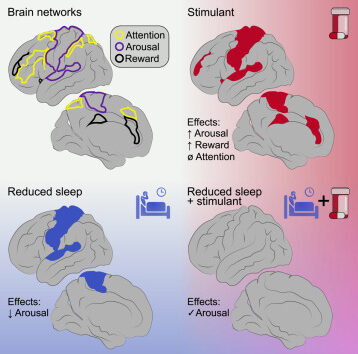
To re-verify the results, special “spin-tests” were also conducted (a statistical method which confirms that the results are not determined by the anatomical structure of the brain), while the validity of the obtained conclusions was later confirmed in a group of adults as well (after taking 40 mg of methylphenidate).
Another interesting finding of the study is that all stimulants, including Ritalin and Adderall, left an absolutely identical trace on the brain’s networks. At the same time, in the control group, which was taking an antihistamine preparation (cetirizine), similar changes were not recorded at all. This gave the scientists a solid basis to conclude that the recorded effects are not a general pharmacological reaction, but are specifically a signature characteristic of stimulants.
The Influence of Stimulants on the Brain’s Neural Networks
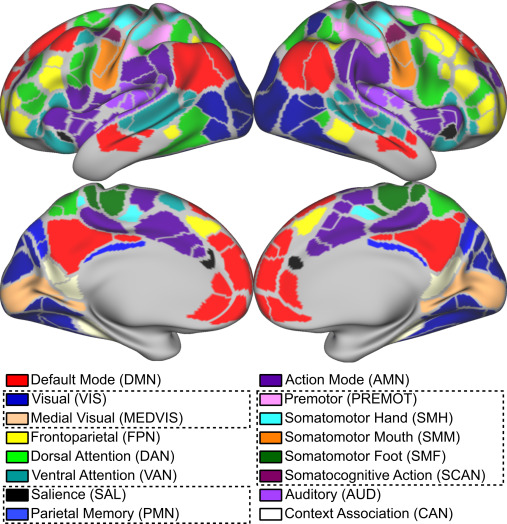
The ABCD study revealed that stimulants cause the most dramatic changes not in the attention networks, but in the sensory and motor networks (SCAN/SM). During the action of the preparation, the restructuring of functional connections primarily proceeds in those areas that are responsible for movement, hearing, and vision. These transformations exactly coincide with the arrangement of norepinephrine receptors in the brain—that substance which alerts the organism during danger or high activity.
Scientists established that stimulants have a minimal influence directly on the centers of attention management. After the effect of the general awakening of the organism was excluded from the data, it turned out that the traditional attention networks (DAN/VAN/FPN) remain unchanged.
Instead, the preparation strengthens the connections between the so-called “salience network” and memory areas (PMN). This process forces the brain to perceive any current task as a priority and as bringing a reward. Precisely because of this, a person manages to focus on one task for a long time.
At the same time, stimulants sharply increase the level of norepinephrine and dopamine, which ensures the awakening of the organism and the feeling of the “importance” of the task. Precisely this factor clearly explains their effectiveness during narcolepsy, traumatic fatigue, diet, or sport. The preparation creates the energy and focus necessary for action even when the person does not possess internal motivation.
Physiological markers also reinforce this neural picture: the suppression of the alpha-rhythm recorded on EEG scanning, the quickening of breathing, and the increase in the level of norepinephrine point toward the full mobilization of the organism. Ultimately, the study confirms that we are dealing not with a “smarter” brain, but with a maximally activated system that successfully masks the signals of fatigue.
“Chemical Sleeping”
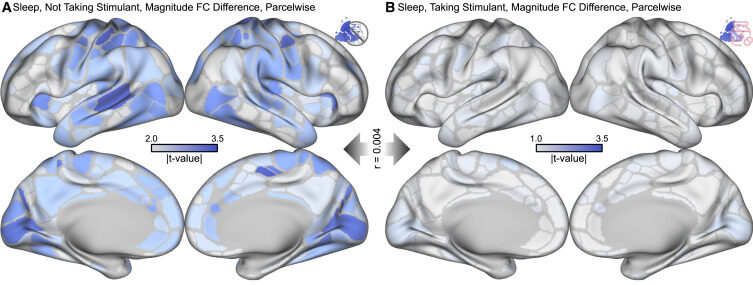
One of the most unexpected findings of the study turned out to be the almost identical neural pattern existing between the effect of stimulants and sleep. The data testify that the taking of the preparation changes the functional connections of the brain exactly the same as full-fledged rest manages to do. In both cases, the decrease in the activity of the sensory-motor networks and the strengthening of the signs of awakening are recorded. This is especially noteworthy against the background that more than half (52%) of the children participating in the ABCD study were unable to maintain the recommended 9-hour sleep regime.
In those children who did not take the medications, the sleep deficit was directly reflected on their academic performance and cognitive tests. The lack of sleep caused the excessive activity of the sensory networks, which correlated with low grades and errors made in memory tests (n-back). However, under the influence of stimulants, this picture changed radically. Neuroimaging revealed the so-called “survival” effect, during which the children who had less sleep but were under the action of the preparation fully equalized with their well-rested peers in their data.
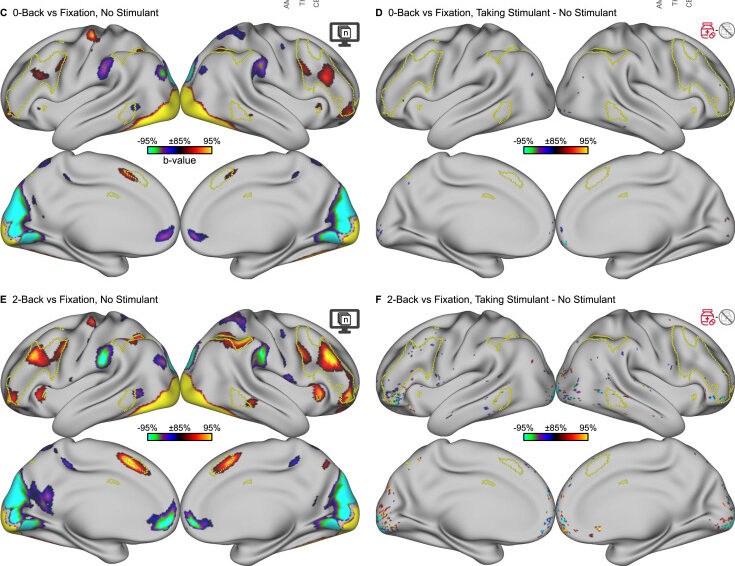
For names and locations of networks
In fact, the stimulants artificially awakened the organism through norepinephrine and “erased” the negative trace caused by the sleep deficit. Precisely this also explains the paradox of why stimulants do not show cognitive “improvement” in already well-rested people: if the brain is naturally rested, the preparation simply has nothing more to “correct.” In this way, that which we call cognitive progress is often only the return of the functions of a sleep-deprived brain to the basic norm.
The results of the study unanimously confirm that quality sleep is the best predictor of all cognitive metrics. While taking stimulants, only one universal advantage was recorded: the reduction of the reaction time by approximately 100 milliseconds during the performance of n-back tests. This means that a person reacts faster, but not “smarter.”
These findings dispel the myth about the so-called “smart drugs,” because in healthy children, an increase in IQ or the level of attention was not revealed at all. Accordingly, the non-purposeful use of stimulants to expand cognitive capabilities is completely deprived of a scientific basis. These preparations only help those who need to compensate for the “lag” caused by biological factors or a sleep deficit and to return to their natural norm.
Balance Between Treatment and Biological Needs
Against the background of all this, the taking of stimulants for children having ADHD remains of critical importance to eliminate academic lagging. However, in parallel with the treatment, special attention should be paid to the sleep regime, because its disturbance often characterizes both the diagnosis itself and the preparation as a side effect.
Despite the fact that stimulants temporarily restore the cognitive functions of sleep-deprived children, this still does not mean the full-fledged compensation of biological losses. A chronic sleep deficit significantly increases cellular stress, the loss of neurons, and the risk of depression. Precisely because of this, specialists advise periodic breaks (the so-called washout periods) while taking the preparation, which gives the organism the possibility of natural restoration.
Limitations of the Research and Future Perspectives
Despite the unprecedented scale of the ABCD study, the diversity of data existing in the real world (various medications, dosing, and subtypes of the diagnosis) still makes the identification of narrow specific details difficult to a certain extent. Besides, “attention” itself is such a difficult and multifaceted phenomenon that its exact neural localization remains a great challenge for scientists to this day.
Future research will be focused directly on task-based fMRI scanning, in order to better study the brain’s reaction toward a reward. An in-depth analysis of the pharmacokinetics of the preparations and the production of long-term sleep monitoring are also planned.
Ultimately, according to the study, for cognitive “improvement,” quality sleep is often also sufficient. Taking into account that more than half of adolescents and adults are chronically sleep-deprived, many of them can achieve the desired cognitive effect without stimulants, only at the expense of full-fledged rest.
Source: Cell
