


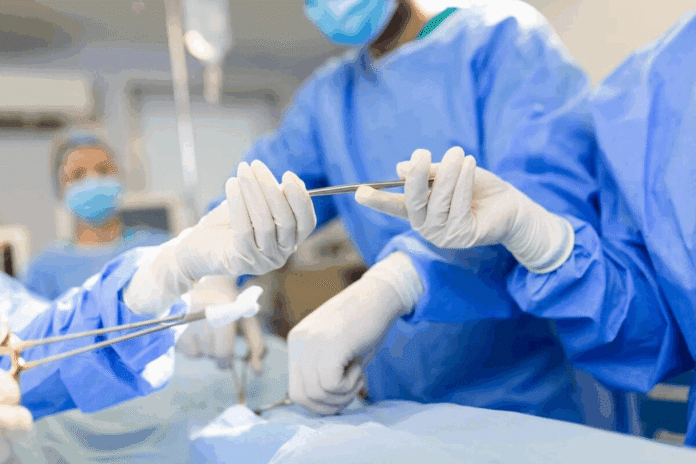
The first bone marrow transplantation procedure has been successfully performed in Adjara. The bone marrow transplantation service has been launched at Batumi University Hospital, where two patients have already undergone the procedure. The introduction of this new medical service enables patients to receive this life-saving, highly specialized treatment locally, without having to leave the region or the country.
Bone Marrow Transplantation (BMT), also known as Hematopoietic Stem Cell Transplantation (HSCT), is a medical procedure in which damaged or completely destroyed bone marrow is replaced with new, healthy bone marrow cells.
Bone marrow (Medulla Ossea) is a soft, spongy, fatty tissue located within the cavities of flat and long bones, including the hip bone, femur, and sternum. It is responsible for producing red blood cells (erythrocytes), white blood cells (leukocytes), and platelets. These blood cells are essential for survival, as they ensure oxygen transport, protection against infections, and normal blood clotting.
Bone marrow transplantation is a life-saving treatment for hematologic malignancies, including leukemia, lymphoma, and multiple myeloma, as well as aplastic anemia and certain genetic and immune system disorders. The procedure is often performed following high-dose chemotherapy and/or radiation therapy, when restoration of the bone marrow’s hematopoietic function becomes essential for survival.
The main types of bone marrow transplantation include: Autologous Transplantation, in which the patient’s own stem cells are collected in advance and then reinfused intravenously after high-dose chemotherapy. Allogeneic Transplantation involves the use of stem cells from a compatible donor, who may be either a family member or an unrelated donor. Syngeneic Transplantation uses stem cells from a genetically identical twin, significantly reducing the risk of immunological incompatibility and graft rejection (graft is a tissue, part of an organ, or an entire organ transplanted into a recipient. Graft rejection is a natural immunological process in which the recipient’s immune system recognizes the transplanted organ, tissue, or cells as foreign and mounts an immune response against them, which may lead to impaired graft function and damage). Haploidentical Transplantation uses stem cells from a partially matched donor, such as a parent, child, or another close relative. Umbilical Cord Blood Transplantation utilizes hematopoietic stem cells collected from a newborn’s umbilical cord blood, particularly when a fully matched donor cannot be identified.
The primary goal of bone marrow transplantation is to replace damaged bone marrow and restore normal hematopoiesis. Successful transplantation can enable effective treatment of severe hematological diseases, restoration of immune system function, reduction of the risk of infections and other complications, and improvement of both patient survival and quality of life.
With the support of the Government of Adjara, the Ministry of Health and Social Protection of Adjara has funded bone marrow transplantation procedures in both Georgian and foreign medical institutions since 2019. The amount of funding ranges from GEL 125,000 to GEL 235,000, and to date, 98 patients have benefited from the program.
Source: ajara.gov.ge
