


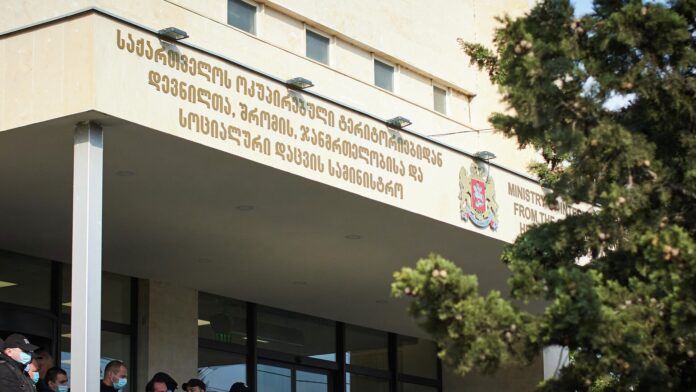
The Ministry of Internally Displaced Persons from the Occupied Territories, Labor, Health, and Social Affairs is launching an active verification process for individuals registered in the unified database of socially vulnerable families. According to Minister Mikheil Sarjveladze, the objective of this decision is to ensure that state resources are allocated solely to those citizens who genuinely need assistance.
As Sarjveladze stated during the press conference, a moratorium had been in place following the COVID-19 pandemic, which virtually halted family monitoring. This led to an accumulation of “anomalous cases” where individuals with high incomes and expensive assets continue to receive social benefits.
Current Statistics
Currently, the unified database of socially vulnerable families includes:
-
Total registered families: Approximately 400,000 (totaling roughly 1.3 million individuals).
-
Direct financial aid recipients: Over 185,000 families.
-
Total individual beneficiaries: 710,000 citizens.
Identified Discrepancies
Sarjveladze explained that the database contains families whose economic status has significantly improved, yet they retain their status due to the moratorium. The Minister cited several examples:
-
Families that have received incomes amounting to tens of thousands of GEL in the last 3 months.
-
Beneficiaries who purchased luxury vehicles (including 2024-2025 models) within the last year.
-
Individuals who have taken out bank loans worth several hundred thousand.
“State resources intended for social protection must be used only for those people who truly need and deserve them. The database must reflect the country’s economic progress,” noted Mikheil Sarjveladze.
Next Steps and Criteria
The Ministry has already identified priority groups for the initial verification. One of the primary criteria is the receipt of a monthly income of 2,000 GEL or more over the last three months.
Parallel to this, the government plans to refine the system and improve the assessment methodology to prevent future database manipulation and political speculation. The Ministry urges the public to refrain from falsifying data, as the process will be conducted under strict oversight.
