


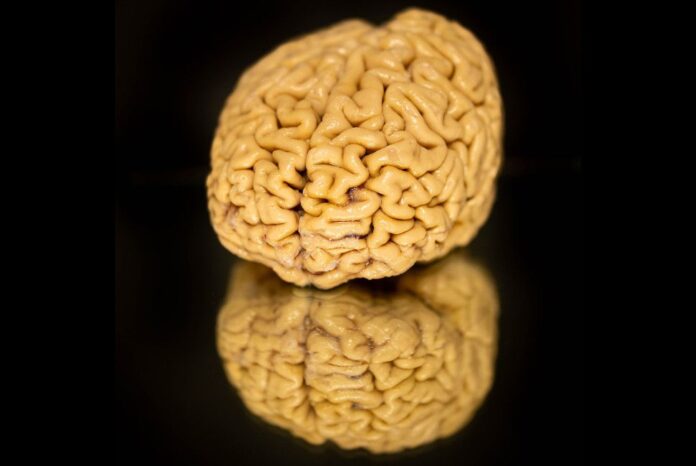
Neurodegenerative diseases, such as Alzheimer’s and Parkinson’s, affect more than 60 million people worldwide. During these conditions, the brain gradually loses nerve cells, or neurons, leading to cognitive decline, movement disorders, and the loss of daily independence. For decades, scientists have been searching for a drug that could help the brain rebuild these cells, but creating effective medications has proven to be extremely challenging. Everything changed with a new discovery by researchers at Imperial College London. They have demonstrated for the first time that it is possible to regenerate brain cells without any surgical intervention or drugs.
How Does the New Technology Work?
The foundation of this discovery is a technology called Temporal Interference stimulation, or TI. This is a non-invasive, non-surgical electrical stimulation of deep brain structures. Until now, to achieve deep brain stimulation, doctors had to surgically implant electrodes into the patient’s brain, which carried significant risks and could not be used on a mass scale. The new approach, however, is completely safe and minimally disruptive for the patient.
During this procedure, electrodes are placed on the patient’s scalp, delivering two high-frequency electrical fields into the brain. Individually, these fields are so fast that the superficial neurons of the brain do not respond to them at all, allowing the current to pass safely through the outer cortex. However, these two fields intersect at a specific point deep within the brain. It is precisely at this intersection that a new, slower rhythm is created, which the neurons can actually perceive. By adjusting the current, scientists can steer this active point precisely toward the hippocampus—the brain’s memory center, which is the first to be damaged in Alzheimer’s disease.
The Essence and Results of the Discovery
The adult hippocampus contains a reservoir of stem cells. The process by which new neurons are born is called neurogenesis, but this process is significantly impaired in Alzheimer’s. According to a 2026 study published in the scientific journal Advanced Science, researchers tuned the Temporal Interference stimulation to the brain’s natural rhythms, specifically theta waves. Tests conducted on Alzheimer’s models showed that this specific stimulation significantly accelerated the birth, growth, and maturation of new neurons in the hippocampus. No drugs, genetic engineering, or surgery were required, as the brain began to restore itself.
Chronology of the Research and the Future
This milestone did not happen overnight and was preceded by years of hard work. According to the project lead, Dr. Nir Grossman, Associate Professor of Neuroscience, the journey began in 2017 when the technology was first successfully validated in animals. Later, in 2023, the technology was tested on healthy humans, and scientists proved that the stimulation significantly improved episodic memory. In the current year of 2026, the ultimate breakthrough was confirmed: the technology can directly trigger the process of brain cell regeneration, meaning the growth of new neurons.
Dr. Grossman notes that while this work is still in the preclinical stage, it clearly shows the potential of this non-invasive method to enhance the brain’s natural ability to resist the devastating loss of nerve cells. Clinical trials on patients with Alzheimer’s disease are already underway at the UK Dementia Research Institute. Initial results indicate that the procedure is entirely safe and well-tolerated by patients. This discovery offers great hope to millions of people, providing an accessible and safe path to restoring brain function.
