


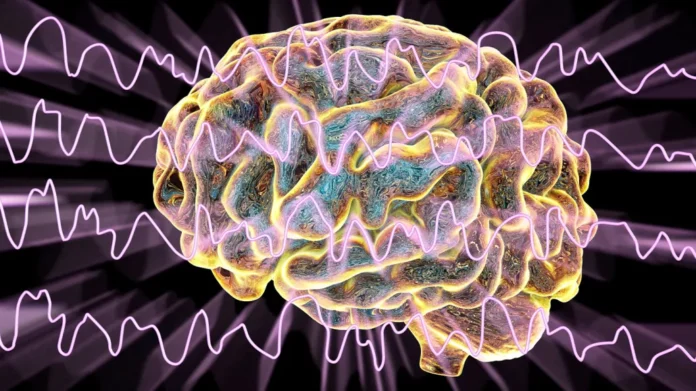
Scientists at Baylor College of Medicine have discovered that the human brain is capable of complex language processing even during deep unconsciousness induced by general anesthesia. This finding, published in the prestigious scientific journal Nature, radically shifts our understanding of consciousness and cognitive functions.
According to the study’s authors, the brain is far more active in an unconscious state than previously thought, continuing to analyze the environment even under full anesthesia.
How was the study conducted?
During epilepsy surgery, the research team recorded the activity of hundreds of individual neurons from the hippocampus (the brain region responsible for memory). To achieve this, they utilized cutting-edge Neuropixels probes for the first time in this context.
In the first stage of the experiment, patients were played repetitive sounds with occasional deviant tones. It was discovered that hippocampal neurons could distinguish unusual sounds, and this ability improved over time, suggesting the existence of learning and neuroplasticity during anesthesia.
The brain’s ability to predict the next word
In a more complex experiment, patients listened to short stories. The results were staggering: the brain was processing language in real-time. Based on neuronal activity, the brain distinguished between different parts of speech, such as nouns, verbs, and adjectives.
Furthermore, neural signals were predicting the subsequent words in a sentence. Researchers estimate that the brain’s ability to anticipate the next word resembles the operating principles of Large Language Models (LLMs) in Artificial Intelligence. Medics explain that this form of predictive coding was traditionally associated only with an awake and attentive state, yet it has now been observed in an unconscious state.
What will this discovery change?
These findings suggest that language perception and prediction do not require conscious awareness. The discovery opens vast perspectives for the development of Brain-Computer Interfaces (BCI) and may represent a significant step forward in creating new speech prosthetics for patients who have lost the ability to speak due to trauma or stroke.
However, scientists specify that, at this stage, the experiment involved only one type of anesthesia and one specific brain region. Therefore, it remains unknown whether the same patterns apply to other unconscious states, such as sleep or coma. Ultimately, this new scientific work prompts a re-evaluation of the nature of consciousness, as the brain manages far more complex processes behind the scenes than it appears at first glance.
