


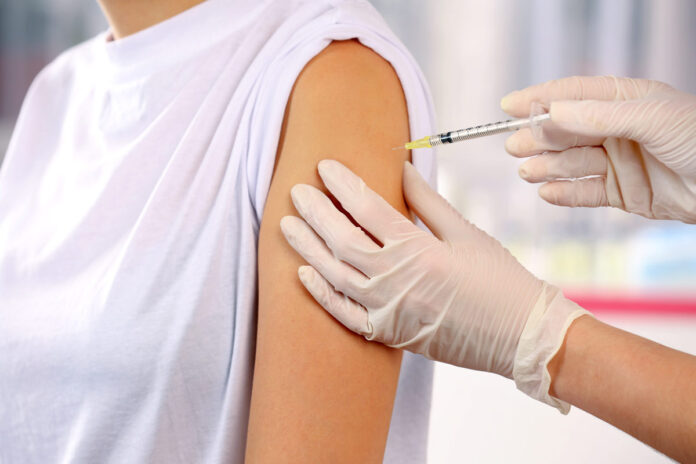
The State Immunization Program is one of the most effective and economically justified public health interventions, significantly reducing morbidity and mortality caused by infectious diseases. Operating since 1995, Georgia’s program serves as the central mechanism for controlling vaccine-preventable diseases and is gradually being harmonized with the World Health Organization (WHO) Expanded Programme on Immunization (EPI) and Immunization Agenda 2030 standards.
Evolution and Alignment with European Standards
Over the last three decades, Georgia’s immunization program has undergone a significant transformation. Medscriptum spoke with pediatric immunologist Rusudan Kanashvili regarding this topic.
As Ms. Rusudan notes, the country has “come a long way and achieved immense success, as the modern national calendar almost fully complies with European standards.” According to the expert, progress is particularly evident in the composition and quality of vaccines. This is reflected in the contrast with past experiences:
“If previously we started from the minimum Russian DTP (AKDS) vaccine, today a hexavalent vaccine is administered — covering Diphtheria, Tetanus, acellular Pertussis, inactivated Polio, Hepatitis B, and Haemophilus influenzae type b. This is a French, highly valuable, and most importantly, top-quality six-component vaccine.”
The program has progressively added the Pneumococcal vaccine (since 2014), Rotavirus (2013), and later Tetraxim (DTP-IPV) (2020), confirming the program’s continuous development and evidence-based approach.
HPV Vaccination: Expansion and Real Challenges
The Human Papillomavirus (HPV) vaccine was initially launched as a pilot in Georgia’s program in 2017. As R. Kanashvili explains, the program expanded in stages:
-
Initial phase: Pilot program for girls born in 2008–2009.
-
Expansion: Immunization for girls aged 10–12, with boys added later.
-
2023–2025 Updates: The age limit increased significantly and currently includes:
-
Women: Up to and including age 45.
-
Men: Up to and including age 45 (as of January 1, 2026).
-
The expert emphasizes the vaccine’s importance: “This vaccine is truly necessary because it has a double protection effect — the vaccinated person protects both themselves and their partner.” However, despite the lack of official statistics, the specialist estimates that real HPV vaccination coverage remains low and does not reach recommended levels.
Coverage and the Crisis of Public Trust
According to 2025 WUENIC data, coverage for DTP1 (~96%) and HepB3 (~93%) is high in Georgia. However, the target of 95% is not fully achieved for all vaccines, especially DTP3, Pol3, and Rotavirus.
Unfortunately, these statistics may not reflect the real picture; actual percentages might be much lower. Skeptical views regarding vaccines circulate widely, which is reflected in the turnout at immunization centers. Ms. Rusudan identifies the impact of the COVID-19 pandemic as a major factor:
“There are many reasons for the decline in turnout, but I would highlight the COVID vaccine specifically. The controversy surrounding it had a very negative impact on the trust built over years toward the role of vaccines and immunization in general. After the pandemic, turnout dropped significantly. The so-called ‘anti-vaxxers’ have increased, significantly shaking confidence.”
She also mentioned that public skepticism was fueled by speculations regarding the Indian-made Measles vaccine, even though the vaccine’s quality was in no way inferior to European counterparts.
Parental Awareness and Accessibility
The expert evaluates information deficiency as a major problem: “Every vaccine in the program is highly beneficial for a child’s health… These are top-quality vaccines available to Georgian citizens completely free of charge. I repeat, these vaccines are free; often, the reason for delayed visits is that parents simply do not know this.”
Delayed Immunization and Individual Schedules
If a citizen has not received all necessary childhood vaccinations, the expert says there is still a solution: “While some vaccines cannot be given if delayed (e.g., Rotavirus), it is always possible to create an individual schedule based on age and health status if the person desires.”
Georgia’s program is an evidence-based system harmonized with European standards. The challenges today are less technical and more social — trust, awareness, and the fight against disinformation. Achieving 95% coverage must remain a national priority to reduce the future burden of infectious and oncological diseases.
