


The history of medicine is, in many ways, a history of revision – of early certainties giving way to more complete pictures, and of names that once seemed adequate slowly revealing their limits. What that costs, while the revision is still pending, is a question medicine does not always ask loudly enough. Sometimes the answer is merely conceptual. Sometimes it is borne by patients – in delayed diagnoses, fragmented care, and conditions that remain underfunded and underresearched for far longer than they should.
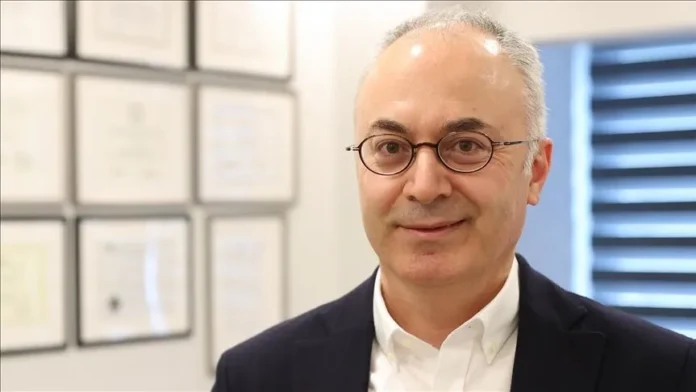
Polycystic ovary syndrome is, in many ways, a textbook case of exactly this: a condition affecting one in ten women of reproductive age, touching nearly every system in the body, carrying implications that stretch from adolescence through menopause – and named, for the better part of a century, after something that does not even reliably appear in everyone who has it. The recently adopted term PMOS is an attempt to correct the record, and while renaming a disease can seem like an academic exercise, this one carries real clinical stakes – shifting the frame from a gynecological footnote to what it actually is: a complex, lifelong, poly-endocrine and metabolic disorder. Okan Bulent Yildiz, Professor of Medicine, Endocrinology and Metabolism at Hacettepe University Medical School in Ankara, has spent much of his career arguing precisely that – and refusing to let the conversation stay small.
We spoke with Professor Yildiz at the 8th Annual International Congress of Clinical Endocrinology in Tbilisi – and while the conversation covers considerable clinical and scientific ground, it is perhaps his message to patients that resonates most: that behind the complexity, the fragmented care, and the long list of associated risks, optimism is not naive and it should never get lost in the clinical noise.
Professor Yildiz, The shift from PCOS to PMOS has been generating considerable discussion in the literature. The older name focused attention on the ovaries, while the newer framing seems to emphasize the broader metabolic and endocrine nature of the condition. From your perspective, is this mainly a change in terminology, or does it have real implications for diagnosis, screening, and treatment?
Yes, this is an exciting time for us, because the name “PCOS” has always been misleading and inaccurate. In fact, back in 2012, at our NIH workshop, we proposed changing the name. It took 14 years to arrive at the new term, and it is very important – not just as a name change, but because it reflects the systemic nature of the disorder. It is no longer limited to gynecology; it now encompasses all aspects of the condition.
Just as importantly, the idea originally came from our patients. Patient organizations around the world strongly supported having a more accurate name, and we are very happy with the change. When you say “polycystic ovaries,” it suggests that there are true pathological cysts in the ovaries of women with PMOS, but that is not the case. In fact, our data show that up to 30% of women can have this ultrasonographic appearance without having the disorder. Some women with PMOS do not have this appearance at all, while some women with this appearance do not have the disorder.
Therefore, it was absolutely the right decision not to include “polycystic” in the name. The term “poly-endocrine” better captures the different hormonal effects of the disorder. “Metabolic” is also very important from our perspective, because these patients have insulin resistance, an increased risk of diabetes, and cardiometabolic disorders. And we kept “ovarian” because the condition is still related to ovulatory dysfunction – we know there can be irregular menses, infertility, and pregnancy-related risks.
Looking at the bigger picture, I think this is much more than a name change. In the near future, we will likely see more research on PMOS and greater interest in the condition. In fact, right after we had the announcement of the name change in Prague at the European Congress of Endocrinology, more than 660 media pieces were published within a few weeks, reaching more than 1 billion people worldwide. That level of exposure is huge, and both patients and physicians are quite pleased with the change.
The older terminology didn’t only narrow the way we think about the condition itself, but also the way we communicate its long-term implications. For many people, hearing “PCOS” immediately brings fertility to mind, which can unintentionally overshadow other important health considerations. How do you balance patient communication so that you don’t overwhelm them with a long list of potential risks, while also making sure you’re not underplaying or oversimplifying the condition?
This is a challenge, I would say. I now have almost three generations of patients. Usually, a patient first comes to see me when she is young and accompanied by both parents. Some time passes, and then she comes with her mother only. Later, she starts coming alone, usually once she is over 20. Then, after a while, there is often a fiancé, and eventually they come as a couple because they are thinking about starting a family.
Given this trajectory, the way you communicate the disorder to both the patient and her family is extremely important. In the initial visits, parents are understandably anxious, often because early medical advice focuses primarily on immediate symptom management. A young patient is frequently prescribed an oral contraceptive pill and told to return only when planning a pregnancy. Even if they have not been informed about the long-term risks of the chronic disease, hearing that kind of message without broader context can feel overwhelming and restrictive to a young person and her family: “Oh, you will have difficulty having children, and this is the only medication you need to take for several years.”
Since PMOS is inherently tied to reproductive health, it is completely natural that most patients first seek care from an OB-GYN. However, because the condition also involves metabolic, dermatological and psychological health, they may not initially benefit from the combined insights of other specialties involved in PMOS including endocrinology.
Accordingly, care is fragmented. Around the world, there are only a few centers that are able to provide comprehensive clinical care to patients with PMOS. When patients come to us, it is important to spend enough time talking with both the patient and the family. What I always emphasize is that the best thing about this disorder is that if you intervene early with the right lifestyle measures, you can prevent almost every problem associated with it.
That is my main motivation when I talk to my patients. I say, “This disorder will stay with you throughout your life, and it will change over time, but whatever problem you have, we are able to help you manage it.
You mentioned that patient communication extends beyond the clinic – and I know you have also been involved in efforts to reach patients outside of a traditional medical setting. Could you tell us more about that?
At our university, we started an advocacy group for PMOS many years ago. It was initially made up entirely of medical students, most of whom also had PMOS. They share their experiences on social media, organize meetings, and over time it has become a real “sisterhood.”
Some of these students are already residents now. They have chosen specialties such as dermatology and OB-GYN because they want to help find solutions for PMOS. Their work has been very helpful and complementary to feedback from experts.
I am a PMOS expert, of course, but it is one thing when you talk to your doctor about your condition, and quite another when you talk to your “older sister” who has had the same problem and has learned how to manage it. That kind of support is extremely valuable.
The group now has quite a large following. Their videos have been viewed thousands of times. They have also collected data from girls with PMOS and published several papers themselves, which is very encouraging.
I believe peer communication is extremely important. When you are a young girl or an adolescent, you may hear one thing from a doctor and another from your parents, but an older sister can be the best channel for communicating the right information.
We know there is no single or simple explanation for the dramatic rise in the incidence of PMOS, and that its etiology is likely multifactorial. How do you view the complex interplay of these potential risk factors? Beyond the well-established clinical and metabolic contributors, have you observed any recurring patterns, environmental influences, lifestyle factors, or shared experiences among your patients that you believe may play a role?
Well, these are big questions, because for any common and complex disorder, it is very difficult to disentangle the pathophysiology. PMOS is also a common and complex disorder. Based on the genetic information we have, including GWAS studies, we can explain only about 10% to 15% of heritability.
Ultimately, genetics is number one. If PMOS runs in the family, then children should be aware of the risk from early childhood. And again, that brings us back to a healthy lifestyle, because we know that excess adiposity – especially weight gain around puberty – is a major risk factor for both androgen excess and ovulatory dysfunction. So controlling adiposity is very important.
Beyond that, there are epigenetic influences and endocrine disruptors. I could name several environmental factors beginning from intrauterine life. But in terms of practical advice for patients and families, we do not yet have enough data to say much about them. If you spend too much time discussing these factors, people can become frightened. Yes, there are environmental disruptors, but beyond the usual precautions, what are patients really expected to do? We do not have clear answers.
That is why it always comes back to a healthy lifestyle. And it is not only about adiposity. My experience working internationally has highlighted the patient needs vary by region. While metabolic disease in the United States frequently correlates with a high prevalence of obesity, the patient population in our region includes a significant number of lean individuals who present with similar metabolic risks including insulin resistance. So, it is a misconception to focus only on the number on the scale. Being fit is important, and a healthy lifestyle is not just a tool for weight management, but a universal requirement for long-term health, regardless of a patient’s body mass index.
Do you think part of this uncertainty comes from the fact that women’s bodies, and women’s biology and physiology more broadly, have received less attention in clinical research?
That is also something our patients say quite often. If you look at social media, people are generally very happy with the name change – I would say about 85% of them. Among the remaining 15% who are critical, one common reaction is, “Where have you been? You are late.” Another, very interesting, comment is: “If this were a man’s disorder, it would already have been solved and new medications would exist. Because it is a woman’s disorder, it has been neglected.”
In fact, I have been saying for many years, all around the world, that this is an underappreciated, underrecognized, and underfunded disorder. But one thing we have also not been able to do well is show that male family members are affected too. Our group demonstrated that many years ago, and now we also have genetic data. So this is not only a female disorder. Perhaps in a few years, we will have even more data, and then maybe we will no longer use the word “ovarian.”
This is definitely a disorder that runs in families and affects both males and females. But at the moment, it is still seen primarily as a female disorder. And the patients who complain that it has not received enough research attention have a valid point. We definitely need more funding. To achieve that, we need stronger advocacy.
Patients should be speaking to policymakers, and advocacy groups should be more active. When you think about breast cancer, for example, it is also a women’s disease, but there is enormous investment. The same is true for diabetes: there is substantial advocacy and funding for diabetes research. Yet even though PMOS is very common – and I just checked your population numbers, for example in Georgia there are more than 100,000 women of reproductive age with PMOS – many of these women are not even aware they have the disorder. They remain undiagnosed. So we still have a lot of work to do in PMOS research. Hopefully, we will make patients happier not only with the name, but also with better understanding and more treatment options.
You’ve also studied adipose tissue biology in PMOS. What does the altered behavior of fat tissue tell us about the disease itself, and should that change how we think about treatment?
Yes. We and others have shown that adipose tissue in PMOS is different, and the differences are quite substantial. What we know more recently is that insulin resistance increases the activity of an enzyme called aldo-keto reductase family 1 member C3, which converts androstenedione to testosterone locally in adipose tissue. So, androgens are synthesized locally in the adipose tissue of women with PMOS.
We also know that adipokine secretion is altered. The pro-inflammatory adipokines are increased, so there is greater secretion of these molecules. In addition, we have data showing increased oxidative stress in adipose tissue. More recently, we have also started studying mitochondrial dysfunction. Apparently, there are differences in mitochondrial function in women with PMOS as well.
Adipose tissue is a vital early intervention target; treating it before puberty could completely alter the trajectory of PMOS. I was actually invited to explore this concept in a 2025 anniversary editorial for Nature Reviews Endocrinology, mapping out the past and future 20 years of the disease. For PMOS, my clinical hope is that by 2045 we will have routine molecular diagnostics and the gut-brain-ovary axis will be studied in much greater depth. If we understand the disorder better we might identify therapeutic windows earlier in life such as pre-puberty or during gestation. We can transition from managing PMOS symptoms to preventing the disorder altogether.
This paradigm shift is especially important because managing symptoms of androgen excess such as hirsutism, acne, and alopecia is incredibly challenging for young women, regardless of their cultural background. Right now, our therapeutic options for these issues are honestly quite limited. That is why prevention is everything. If we can intervene before these distressing clinical features ever manifest, we can completely change these patients’ lives. I am genuinely optimistic that within the next 20 years, we will achieve that goal.
You work at the intersection of obesity, type 2 diabetes, and PMOS – three conditions that are closely linked and increasingly common worldwide. How do you see the biological connection between them? Is obesity driving the other two, or is there a shared underlying mechanism that amplifies all three?
I often say that if obesity and type 2 diabetes are twin brothers, PMOS is definitely the little sister in that metabolic family. They are entirely inseparable. When you look at the clinical data, you see this bidirectional relationship. Obesity clearly drives up the prevalence and severity of PMOS, but conversely, PMOS makes women much more susceptible to weight gain. Even in our lean patients with PMOS, insulin resistance and increased diabetes risk are still silently running in the background. They truly go hand-in-hand. Because these disorders are so tightly intertwined, we have to take a holistic approach in the clinic. If a patient presents with one, you immediately need to start asking the right questions to screen for the others.
GLP-1 and dual incretin therapies, including semaglutide and tirzepatide, are already changing obesity and diabetes care. Early data suggest they may also improve insulin resistance, androgen excess, and ovulatory function in PMOS, but they are not yet approved specifically for that indication. In your view, where do these agents fit today – and what outcomes matter most in judging their role?
It is a really exciting frontier. Our group has been working in this space, investigating the pathophysiological role of incretins in PMOS for over a decade. I can say that GLP-1 based and dual incretin therapies might be game-changers for the women with this disorder. When we were writing up the 2023 international guideline, the data specifically for PMOS was very limited to make formal, evidence-based recommendations. We therefore referred to the general population guidelines instead. But the landscape is shifting rapidly. Over the last few years, a wave of new data has emerged, and there are ongoing studies as well. This completely opens up the gut-brain-ovary axis as a prime therapeutic target. I expect these agents will have syndrome-specific indications in the near future.
We can discuss advances and new therapeutic agents at length, but practical medicine ultimately comes down to one thing: whether patients can actually access these treatments. Your work also touches on healthcare accessibility in chronic conditions – what do you see as the most effective ways to improve it, particularly for PMOS?
In any therapeutic field, when a new agent enters the market, it inevitably comes at a high cost – a reflection of the substantial investment required for drug discovery and development. Over time, however, as additional options emerge within the same class, competition tends to broaden access to both care and treatment. But it is worth emphasizing that patients alone cannot drive these improvements. Progress requires data – rigorous evidence demonstrating that a given drug is effective in a specific condition – and it requires sustained advocacy efforts to persuade policymakers accordingly. That is never straightforward, anywhere in the world.
In the case of PMOS, however, the challenge is particularly acute. If you look at the guidelines we develop for PMOS and then turn to the package insert of any drug recommended within them, you will not find the word “PCOS” anywhere. Not a single medication used in the management of this condition is formally indicated for it. That is a striking gap, and it underscores just how urgently we need more evidence-based, formally approved options for the long-term management of women with PMOS.
