


For the first time in Georgia, the modern endoscopic–bariatric procedure for the management of primary obesity, POSE-2, is being introduced at MediClubGeorgia Clinic.
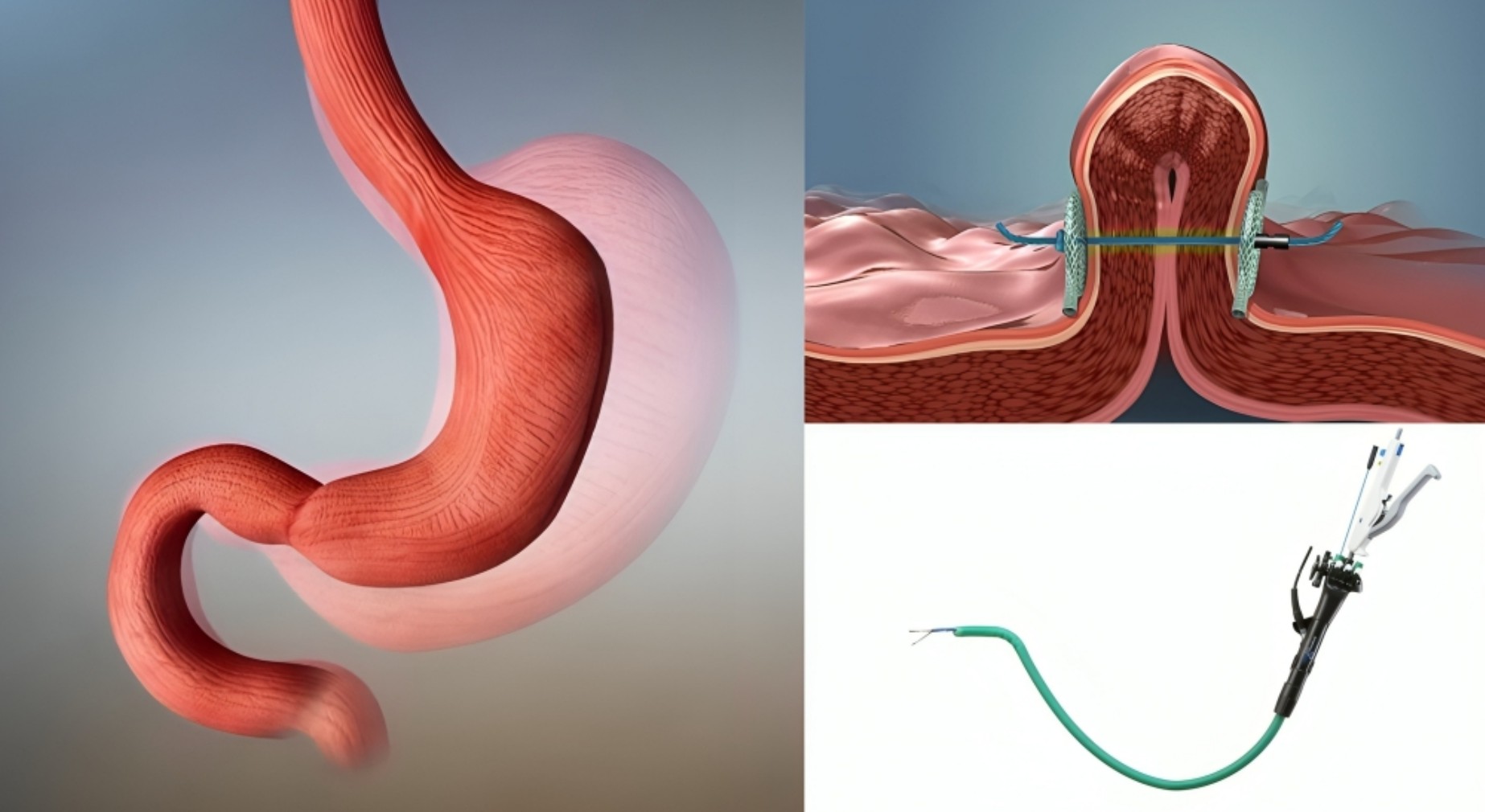
POSE-2 is an endoscopic technique performed via an endoluminal approach. Unlike open bariatric surgery, this method involves internal gastric suturing through the esophageal route without any external incisions, resulting in a reduction of gastric volume without the need for open surgical intervention.
One of the principal advantages of POSE-2 is the minimal recovery period: patients may be discharged from the clinic within a few hours following the procedure and can return to their normal daily activities within a short timeframe. The procedure itself has an approximate duration of 20–30 minutes, further contributing to a shorter and less complex rehabilitation process.
As a result of the procedure, gastric volume is reduced by approximately 75–80%, leading to early satiety and thereby facilitating the achievement of healthy and desirable weight loss. It should be emphasized that no portion of the stomach is resected; rather, internal gastric suturing is performed to remodel the stomach into a narrow tubular configuration.
Through POSE-2, baseline body weight is reduced by an average of approximately 20%.
Primary Obesity Surgery Endoluminal 2.0 (POSE-2) is an innovative approach that has been in use globally since 2019 and is actively performed in countries such as the United States, several South American nations, Spain, and others.
On December 22, an informational meeting was held at MediClubGeorgia, during which general surgeon and endoscopist Irakli Lashkhi shared with Georgian colleagues the professional experience he and his team acquired through hands-on POSE-2 training. During the meeting, Mr. Lashkhi reviewed the methodology of the aforementioned endoscopic–bariatric approach, its indications, expected outcomes, and principles of postoperative management.
Concurrent with the meeting, Mr. Irakli Lashkhi spoke with MedScriptum, providing a detailed explanation of the medical and organizational processes that any patient seeking the POSE-2 procedure at MediClubGeorgia can expect. During the interview, he highlighted the advantages of POSE-2 compared with other invasive surgical methods and also shared the patient selection criteria with the readership.
What is POSE-2, and what advantages does it offer compared with other traditional bariatric methods?
POSE-2 is an endoscopic bariatric procedure that involves internal gastric suturing without resection. This approach achieves an approximate 75–80% reduction in gastric volume. The procedure offers several significant advantages: it does not leave external scars, nor does it involve transection of gastric tissue, distinguishing it substantially from more invasive surgical interventions such as laparoscopic sleeve gastrectomy. Because no gastric tissue is resected during POSE-2, patients generally do not experience complications commonly associated with sleeve gastrectomy, such as electrolyte imbalances or vitamin deficiencies. Consequently, patients typically do not require periodic supplementation of vitamins or electrolytes.
What criteria are used to select patients for POSE-2 versus invasive surgical intervention?
First and foremost, the primary criterion is body mass index (BMI), which should range from 30 to 40. Based on age criteria, the procedure is recommended for patients between 25 and 55 years of age. Additionally, POSE-2 can be performed in cases where surgical intervention is contraindicated, or when the patient prefers a non-invasive approach, prioritizing rapid recovery and a swift return to normal daily activities. This approach allows patients to reduce overall gastric volume under minimally invasive conditions, facilitating a gradual and balanced weight loss.
What conditions constitute an absolute contraindication for POSE-2?
Patients should not have esophageal pathologies that physically prevent the passage of the endoscopic device. Such conditions include, for example, esophageal strictures. Active ulcerative lesions also constitute a contraindication. However, in cases of ulcerative disease, POSE-2 can be performed after appropriate medical therapy and complete healing of the lesions. Intervention is not recommended during the active phase of ulcerative disease, and stabilization of the condition is required prior to the procedure. The procedure is contraindicated in patients with liver cirrhosis, portal hypertension, or esophageal varices, as these conditions increase both the risk of mechanical injury and bleeding during endoscope passage. Furthermore, POSE-2 is not recommended for patients with inflammatory bowel disease (IBD), such as ulcerative colitis or Crohn’s disease, due to the heightened risk of complications. Nickel allergy must also be considered, as the sutures used for gastric plication contain nickel, posing a risk of allergic reaction. In clinical practice, there have been cases in which patients were unaware of a nickel allergy prior to the procedure; in such situations, postoperative pain was observed, though no severe complications occurred.
How is the postoperative rehabilitation period typically experienced, and what complications, if any, may arise?
In the postoperative period, patients may experience nausea and discomfort for several days, which can be effectively managed with medication. It is noteworthy that complications reported in the literature, such as bleeding, were primarily associated with the earlier version of the procedure—the original POSE method, which involved multiple internal gastric sutures. In contrast, POSE-2 employs six sutures focused on plication of the gastric body. When using the modern POSE-2 technique, significant complications are virtually absent, reflecting the high safety profile of this method. From a postoperative rehabilitation perspective, POSE-2 is an outpatient procedure, allowing patients to be discharged from the clinic quickly and to resume normal daily activities within a short timeframe. The combination of rapid recovery and minimal invasiveness represents a major advantage of POSE-2 compared with surgical sleeve gastrectomy, which involves open surgical intervention and is associated with a prolonged recovery period.
What does MediClubGeorgia offer to patients seeking the POSE-2 procedure, and what will postoperative patient management involve?
In the clinic, a multidisciplinary team performs the procedure, consisting of a family physician, nutritionist, endocrinologist, and psychiatrist. During the initial phase, the patient undergoes consultations with each of these specialists, based on which their overall health status is evaluated and the safety and appropriateness of the procedure for the individual patient are determined. The POSE-2 procedure is offered to the patient only after assessment by the multidisciplinary team. Following the bariatric procedure, the patient remains under the continuous supervision of specialists for a defined period. A detailed, week-by-week nutritional plan is prescribed, which is adjusted over time. This approach ensures safe and sustainable weight loss over the long term.
How many years has this procedure been performed worldwide? What are the statistics on weight change in patients following the procedure? What is the significance of offering POSE-2 to the Georgian population?
Weight loss is a primary concern for patients undergoing bariatric interventions. According to various clinical studies, the POSE-2 procedure results in an average body weight reduction of approximately 20%, although some reports indicate reductions of up to 25%. Compared with sleeve gastrectomy, the degree of weight loss is somewhat lower; however, the risk of complications is significantly reduced. Surgical interventions are often associated with issues such as suture insufficiency, electrolyte imbalances, and vitamin deficiencies, all of which require long-term and systematic medical management.
Given that this endoscopic bariatric procedure has not previously been performed in Georgia or other post-Soviet countries, MediClubGeorgia decided to introduce it, offering patients a modern, minimally invasive method characterized by lower complication rates and high safety. The clinic’s goal is to make the procedure accessible not only to international patients but also to the local Georgian population. It is noteworthy that the POSE-2 procedure has been successfully performed for 5–6 years, while its predecessor technique, POSE, has been in use for over 8–10 years across North and South America as well as in various European countries.
Advantages of the POSE-2 Procedure:
- Stable weight loss – promotes gradual and safe reduction of body weight.
- Short recovery period – patients can leave the clinic within a few hours and quickly return to their normal daily routine.
- No scarring – the procedure is performed endoscopically, leaving no incision on the skin.
- Minimal risk of complications.
- Long-term results and cost-effectiveness.
- Healthy eating habits established with professional guidance.
At MediClubGeorgia, the POSE-2 endoscopic bariatric procedure is scheduled to be performed under the guidance of leading Spanish endoscopist Dr. Román Turró. He is an internationally recognized specialist who assists up to 1,000 patients annually in managing excess weight. Dr. Turró is a member of the medical advisory boards of prominent international companies, including USGI Medical, Aspire Bariatrics, and Allurion. In Georgia, the POSE-2 procedure will be carried out several times with his direct involvement and supervision, ensuring adherence to international standards, the implementation of contemporary best practices, and a high level of clinical reliability for this innovative method.
Website: MediClubGeorgia
