


Oncology is at a pivotal moment. The traditional one-size-fits-all approach is giving way to precision medicine – a convergence of genomics, immunology, and advanced technologies that aims to decode the unique biology of each cancer. Treatments are increasingly tailored not only to tumor genetics, but also to the individual’s immune landscape and tumour microenvironment. Precision oncology is no longer a distant ideal; it’s already reshaping how clinicians understand, track, and outmaneuver cancer.
The inaugural International Conference on Rare Cancers and Precision Medicine, organized by Todua Clinic, Georgian School of Oncology, and Georgian Association of Molecular Diagnostics, brought together international pioneers to discuss the acceleration of these breakthroughs for our region.
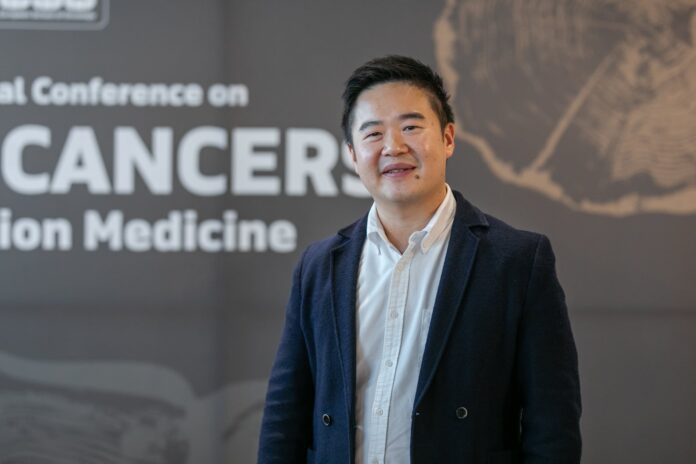
Dr. Jonathan Lim, a clinician-scientist extraordinaire from The Christie NHS Foundation Trust and The University of Manchester, embodies this revolution. His PhD in cancer immunology earned him the national ACP McElwain Prize for Translational Research, and he is currently the Deputy Lead of the MANIFEST consortium which leads UK immunotherapy biomarker research.
In this interview, Dr. Lim unpacks the evolving role of cell therapies and reveals the gaps between promise and practice that call for fresh thinking.
Before we delve into the evolving and often complicated landscape of cellular therapies, could you start by explaining to our readers what precision medicine means in the context of cancer treatment today? How would you describe its real-world importance beyond the buzzwords?
For me, precision medicine is about achieving the highest level of accuracy possible. That means truly understanding everything about the individual person and the disease – in this case, the cancer – so you can treat it in the best and most effective way. To do that, you need to bring together all available resources: clinical acumen, as well as, embracing novel technologies such as next-generation sequencing, tissue spatial profiling, blood-based biomarkers, and other advanced methods. The goal is to understand the patient’s diagnosis as thoroughly as possible so you can provide the most accurate, personalized treatment. That’s my view of precision medicine.
In selecting patients for cell therapies targeting solid cancers, how do intratumoral heterogeneity and spatial distribution of immune infiltrates influence your strategy? Are there specific biomarkers or phenotypes you prioritize that may be underrecognized in clinical trial designs?
Very relevant question. I think the cell-based therapy exemplar closest to real-world clinical application right now is TIL therapy (tumor-infiltrating lymphocytes). At the moment, the way this is done is still somewhat blind. We take a metastasis or tumor resection and, without much sophisticated characterization, extract the immune cells inside it. The idea is that we primarily want to grow the T cells, and expand them at scale. Currently, we still do not really know what exactly we’re expanding. Ultimately, the final product is billions of T cells to infuse back into the patient.
There are therefore more and more technologies emerging to help improve this. As you mentioned, we can look more closely at the tumor section itself – seeing whether immune cells are at the periphery, within the tumor, near necrotic areas, or in other specific regions. We’re still trying to figure out what the “right” approach is. There are also tools like spatial transcriptomics, where in the regions where immune cells interact with tumor cells, you can perform transcriptomic analysis to understand exactly what they’re doing there.
There are also potential useful biomarkers, such as tumor mutational burden – essentially assessing how many mutations are present in the tumor, which can sometimes serve as a surrogate marker for response to immunotherapy. People are also exploring whether we can better characterize immune cells themselves – for example, determining whether they’re exhausted, already activated, and what that means for the quality of potential targets. These are some of the questions being asked and currently being considered to improve the next-generation of TIL therapy.
You mentioned the importance of spatial patterns within the tumor. Building on that, your recent work on The Spatial Organisation of Tumour cDC1 States Correlates with Effector and Stem-Like CD8+ T Cells Location highlights this complexity. How do these spatial dynamics challenge current cell therapy strategies, and what hidden barriers do they reveal for effective immunotherapy in solid cancers?
My lab work has mostly focused on preclinical studies that correlate mechanistic findings with clinical data. In my PhD, I mainly work on cDC1s – a subset of antigen-presenting cells that we believe are among the most effective at presenting antigens, including tumor antigens, to T cells and activating them.
When we perform correlation analyses using publicly-available patient datasets, we consistently see that higher cDC1 infiltration is associated with greater T-cell infiltration, and in turn, with better patient outcomes/survival. But as you noted, these are correlations.
Scientifically, however, the model still makes sense – it aligns well with the cancer-immunity cycle that we’re familiar with. But some key questions remain. Even when cDC1s are present in the tumor microenvironment, are they presenting all the relevant antigens? Are they presenting everything needed for an effective immune response against the tumor? We don’t yet know.
So there are still many unanswered questions, especially around how to improve cell therapies’ ability to access, interact with, and function effectively within the tumor environment.
When it comes to cell therapy, it’s easy to be optimistic because the potential is so clear. But what biological or even logistical hurdles do you think are still underestimated – and could impede the real-world scalability of these therapies?
Broadly, I think there are two major themes here. I’ll start with the logistical challenges because in many ways the logistical issues are currently even bigger than the scientific ones.
Logistically, all of these products are highly personalized. Patients receive autologous therapies i.e. derived from their own tumor or their own blood. That alone requires a large, highly coordinated team to manage the entire process – from the moment the patient is identified, through to blood/tumour procurement, manufacturing, and finally administration of the product. It’s extremely complex and expensive. Every person involved has to know exactly what they’re doing at every step. Patient selection is also critical from a disease kinetics point of view, because currently patients often need to wait two or three months for the product to be ready.
Then, there’s the challenge of manufacturing capacity and capability. At the moment, only a few centers worldwide can perform academic, point-of-care production. Many others, including us, still rely on commercial companies to manufacture these therapies, which adds significant cost. In a universal healthcare system like the one we have in the UK, you have to carefully weigh the costs versus the benefits.
In addition, unlike haematological malignancies – where, as I mentioned in my talk, single targets like CD19 or BCMA are often effective – solid tumors are far more heterogeneous. Even with a very good product with strong pre-clinical evidence, we often see resistance mechanisms. We do not have the same success rates seen in hematological malignancies. That makes the health economics analyses much harder to justify.
In terms of biology, many questions still remain unanswered. As I discussed earlier with TIL therapy, it’s still essentially a ‘blind’ product. We don’t fully understand the characteristics of the cells we infuse. We know that they’re generally T cells, but are they high-quality T cells? Are they potent? Are they composed of multiple clones that recognize different antigens? We don’t know – and this likely contributes to why some patients respond extremely well while others don’t respond at all.
There’s also the issue of knowing what are the best targets in solid tumors. We’ve seen some success with cancer testis antigens – for example in sarcomas with MAGE-A4 or NY-ESO-1, which are highly expressed. Even then, inter- and intra- tumoral heterogeneity means that targeting these may control the tumor for a short time, but resistance often emerges as we have often seen in reported clinical trials so far.
Finally, most cell therapies are ‘‘one-off’’ treatments. This means that we depend heavily on that single opportunity. Yet, we know that even when we infuse billions of cells intravenously, many of those cells may never reach the tumor. There are many reasons for this, not least that solid tumors can be large, poorly vascularized, and physically difficult for cells to penetrate. Even if the cells do get into the tumor, they can face harsh microenvironmental conditions – such as hypoxia, low glucose, acidic pH, and other factors.
You mentioned resistance emerging even with promising targets. Building on that, tumor microenvironment factors like hypoxia and stromal composition are well-known contributors. Are there lesser-studied elements, perhaps metabolic or epigenetic, that you think deserve more attention in overcoming refractory disease?
I think there isn’t a straightforward answer, because every cancer type is different, with distinct drivers and factors that define it. And patients themselves differ as well – their age, risk factors, the pace of tumor growth, and other individual characteristics – so the answer really varies for each situation.
Right now, we are only at the beginning of understanding what we observe. We can identify stromal cells, cancer cells, and immune cells, and even characterize their spatial organization. But it will be crucial to understand the underlying metabolic drivers – for example, how glucose metabolism and hypoxia signatures influence immune cell survival and function within the microenvironment (and cancer growth!).
There are also other factors being explored, like the microbiome. Some researchers suggest that the intratumoral microbiome may play an important role in shaping tumor immunogenicity. And beyond that, there are likely many elements we still don’t fully understand.
How do you view the interplay between immunogenic cell death and antigen presentation in shaping durable responses to cell therapies – are there overlooked mechanisms we should rethink?
Good point. That’s actually one of the strong hypotheses driving efforts to enhance immune responses to therapies. There are many concepts where you combine or lead in with an adjunctive strategy – for example, radiotherapy or intralesional viral therapy – aiming to cause tumor cell death, promote immune infiltration, and attract T-cell penetration into the tumor. We see this as one potential strategy, but it still needs full validation. Clinical trials are testing these hypotheses, so the jury is still out on whether these approaches will help move the field further forward.
Another important point is that we often think of the tumor versus the immune system in a very one-dimensional way. In reality, many patients have metastases in multiple sites, and what happens in one location can differ from another. For instance, in melanoma, metastases in the liver may respond to immunotherapy very differently than those in the lungs, bones, or other tissues. All of these factors need to be considered when evaluating strategies to improve response.
For my final question: looking back, what would you say was the biggest lesson you learned that most deepened your understanding of how these therapies fight cancer?
My biggest lesson is to keep an open mind. As evidence-driven clinicians and/or scientists, we tend to rely heavily on published data, on what we know historically, and have studied for years. Sometimes that creates a very rigid understanding of things. But in the field of immunotherapy and in particular, cellular therapies, surprises can happen, and you need to be ready to think outside the box. That’s difficult for someone like me who is trained to work within structured systems and frameworks. Observing patients directly, standing at that translational boundary between research and clinic, teaches you a lot – you learn from every patient, and sometimes you just have to be prepared for the unexpected.
Another major lesson is appreciating the value of interdisciplinary expertise. While fundamental principles from surgeons, hematologists, and oncologists remain crucial, the field increasingly benefits from novel perspectives – AI, machine learning, mathematical modeling, physicists, etc. For example, engineers working in nanoparticles can bring fresh ways to improve immunogenicity. The key is to work collaboratively and with patients in mind, and together, finding ways to combine the best expertise to tackle extremely complex problems. Without that, we risk staying stuck in the same paradigms rather than truly innovating.
