


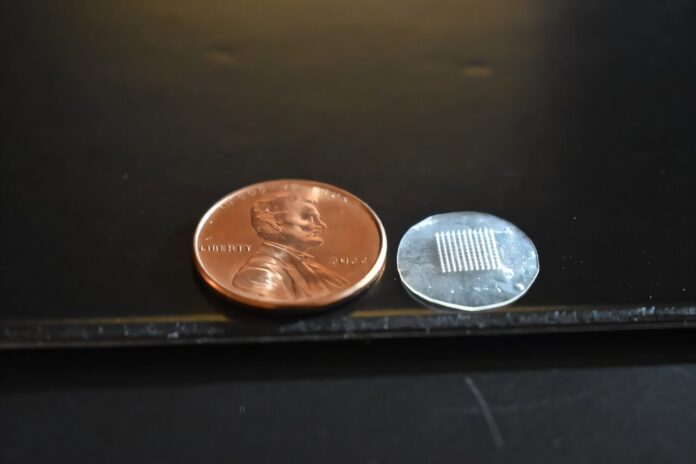
Scientists at Virginia Tech have developed an innovative microneedle patch (iNal) capable of detecting a fentanyl overdose in the body and automatically releasing the antidote, naloxone. According to a study published in the journal Advanced Science, the device can assist a patient independently, without requiring bystander intervention.
Smaller than a coin, the patch consists of 121 microscopic needles that reach the interstitial fluid with minimal tissue damage. Inside the patch are naloxone-loaded porous silica nanoparticles whose pores are blocked by special fentanyl-sensitive molecules. When fentanyl levels in the body reach a dangerous threshold, these molecular valves open to release the antidote—the higher the fentanyl concentration, the more naloxone is freed.
According to the researchers, one of the technology’s most critical features is its capability for repeated action. Because the effects of fentanyl often outlast the duration of action of naloxone, overdose symptoms can return after the initial dose wears off. In such cases, the patch responds again, releasing an additional dose of naloxone. Study co-author Wujin Sun views the device not as a replacement for emergency medical care, but as a harm-reduction tool for patients prescribed opioids for pain management who face the risk of accidental overdose.
Laboratory and mouse experiments demonstrated promising results—the patch reacted to the threat within minutes and effectively reversed overdose symptoms in animals. Nevertheless, the authors urge caution, noting that the technology is in its early stages of development. Before such a device can be implemented in clinical practice, further research is necessary to evaluate its long-term stability, performance across different human skin types, and efficacy under real-world conditions.
