


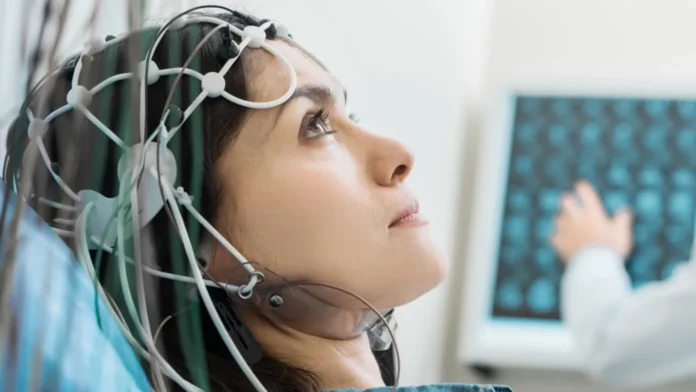
Noninvasive brain stimulation is best known for treating depression, migraine, obsessive-compulsive disorder, and smoking cessation. Now, a growing number of clinical trials are testing whether these technologies can address conditions that disproportionately affect women, including postpartum depression, menstrual pain, endometriosis-related pain, and possibly hormone-related disorders.
The shift was highlighted at a recent neuromodulation conference in New York, where researchers presented early data and ongoing studies using transcranial magnetic stimulation, or TMS, and transcranial direct current stimulation, or tDCS.
Why women’s health has been understudied
Historically, pregnant and lactating people have been excluded from many brain-stimulation trials because of safety concerns, ethical considerations, and logistical challenges. As a result, evidence for these populations has lagged behind other groups.
“It’s easier to do this in almost every other population,” says psychiatrist Veerle Bergink of the Icahn School of Medicine at Mount Sinai. “But the fact that it’s difficult to do these studies doesn’t mean they shouldn’t be done.”
New trials are now attempting to close that gap.
Postpartum depression: rapid, drug-free options
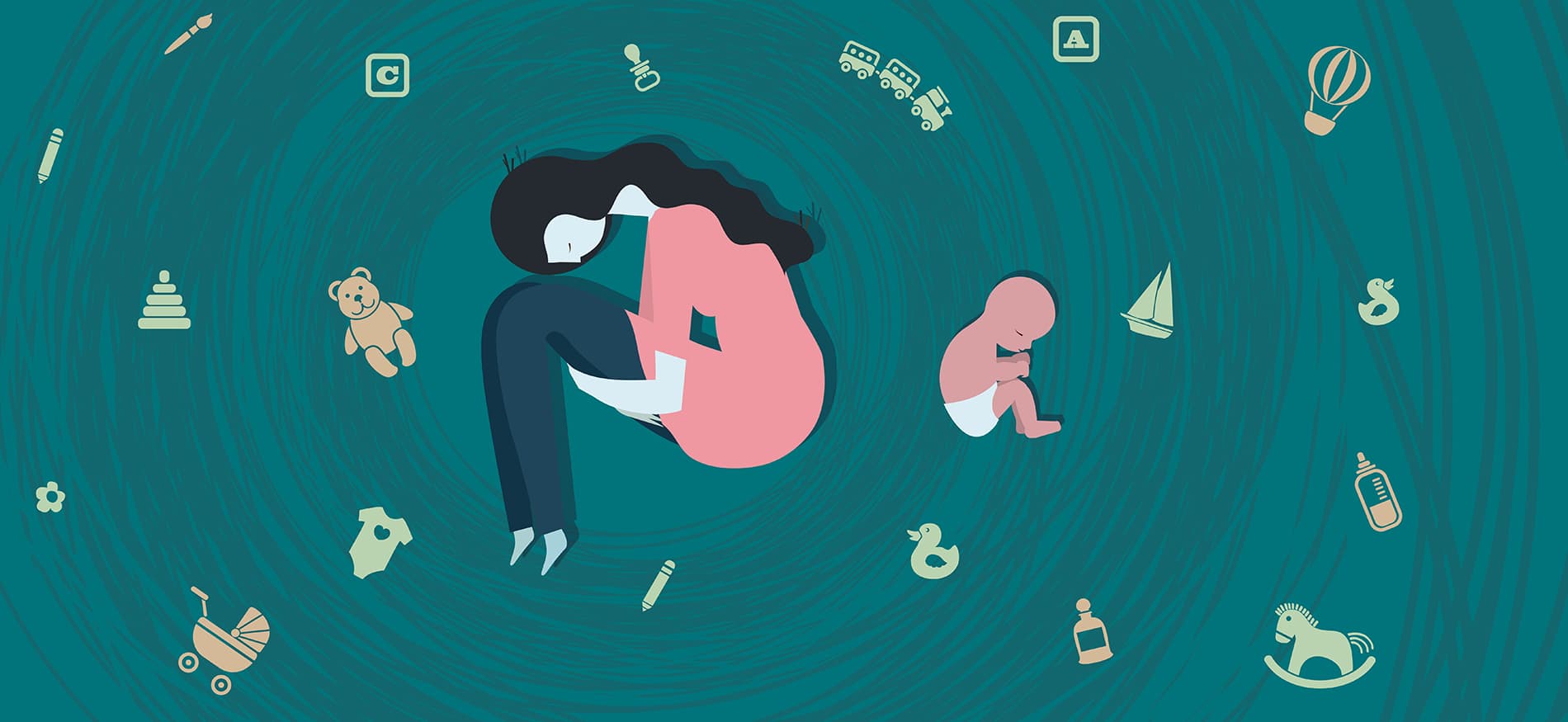
One major effort is a randomized, controlled trial testing an accelerated 5-day TMS regimen called SAINT for postpartum depression. The study, funded by the U.S. Department of Defense, is enrolling up to 192 women within 12 months after childbirth at four U.S. sites, including Mount Sinai. Participants receive ten 10-minute sessions per day over five days in an outpatient setting.
The rationale is practical: antidepressant medications often take weeks to work, and some patients prefer to avoid or minimize medication exposure while breastfeeding, even though many antidepressants are considered compatible with lactation. A rapid, noninvasive, drug-free option could offer meaningful relief during a time-sensitive period.
Separately, a nonrandomized prospective study of high-frequency rTMS targeting the left dorsolateral prefrontal cortex reported clinically meaningful improvement in women with mild postpartum depression when added to standard care, with benefits sustained for at least 4 weeks after treatment. The study was not sham-controlled, so its findings require confirmation in larger randomized trials.
tDCS for depression during and after pregnancy
tDCS uses low-voltage current delivered through electrodes on the scalp to modulate cortical excitability. It is less powerful than TMS and does not directly initiate or suppress neural firing, but it can make active neurons more or less excitable depending on electrode placement.
In late 2025, the U.S. Food and Drug Administration cleared a tDCS device for depression, although pregnant and breastfeeding women were excluded from the pivotal trial. Researchers argue that tDCS may still be a reasonable option for these patients, given more than 20 years of safety data and the absence of effects on blood pressure or heart rate.
A large randomized, controlled trial led by psychiatrist Simone Vigod at Women’s College Hospital in Toronto is testing whether remotely supervised, at-home tDCS during pregnancy can reduce depressive symptoms and lower the risk of postpartum depression after delivery.
Early pilot data in perinatal women suggest that 4 weeks of daily home-based tDCS may be associated with reductions in depressive symptoms and improvements in daily activity, but larger trials are needed to establish efficacy.
Menstrual pain and endometriosis
A headband-like tDCS device was cleared in Europe for pain and mood symptoms associated with menstruation. It is also sold in the U.S. as a consumer wellness device. The device targets the dorsolateral prefrontal cortex and the motor cortex, a region involved in pain processing.
A 2026 randomized, sham-controlled trial in 40 women with primary dysmenorrhea and premenstrual syndrome reported no statistically significant group-by-time interaction for menstrual pain, although pain decreased over time in both groups and some secondary outcomes favored the active device. The authors concluded that home-based tDCS may be safe and potentially beneficial, but larger trials with longer follow-up are needed.
Larger randomized trials are now underway for dysmenorrhea and endometriosis-related chronic pelvic pain, including an NHS-supported study testing at-home tDCS in women with endometriosis.bepartofresearch.
At the neuromodulation conference, researchers from Samphire Neuroscience presented preliminary findings suggesting the headband may help in premenstrual dysphoric disorder, a condition marked by severe mood shifts. These results have not yet been published in full.
Exploratory work on hormones and the brain
In a more experimental direction, biomedical engineer Catarina Ferraz at the City College of New York is investigating whether TMS can modulate hypothalamic activity to influence luteinizing hormone release from the pituitary gland. In a small pilot study, five of seven healthy women showed increased LH levels beyond expected changes after stimulation.
The concept is that noninvasive brain stimulation could one day contribute to nondrug approaches for conditions linked to LH timing or levels, such as certain forms of infertility or endometriosis. However, the data are preliminary. Only one participant in the pilot showed what some experts consider a robust response, and larger, better-controlled studies will be needed to determine whether this approach has clinical potential.
Safety and appropriate expectations
Noninvasive brain stimulation is generally well tolerated, with common side effects including scalp discomfort, headache, or tingling. Serious adverse events are rare in published studies, but most trials have excluded pregnant and lactating people, so safety data in these groups remain more limited.pmc.ncbi.nlm.nih+2
Researchers emphasize that these technologies should not be used arbitrarily.
“You don’t want to go around arbitrarily zapping your brain,” says neuroendocrinology researcher Emily Jacobs of the University of California, Santa Barbara. “It’s definitely encouraging to see the neurostim space beginning to ask questions that might actually be tailored to women’s bodies.”
Source: Science
