


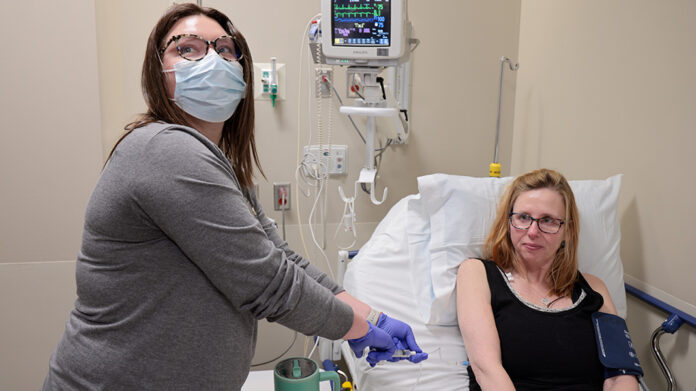
For 49-year-old Jan Janish-Hanzlik, living with multiple sclerosis had turned daily life into a true challenge. Driven by progressive symptoms, she traded her active nursing career for a desk job and, fearing frequent falls, even avoided holding her grandchildren. Since even the most advanced medications failed to alleviate her condition, Jan turned to the University of Nebraska Medical Center (UNMC), where she underwent an experimental course of CAR T-cell therapy.
The technology, initially designed to destroy cancer cells, is currently being utilized in hundreds of clinical trials against autoimmune pathologies such as multiple sclerosis, lupus, and vasculitis. The essence of this method lies in reprogramming the patient’s own immune cells; scientists hope that CAR T therapy can selectively hunt down and eliminate the cells that mistakenly attack the body’s healthy tissues, thereby resetting the immune system to its original, healthy state.
It was this innovative therapy, based on donor cells, that Nebraska native Jan Janish-Hanzlik underwent in 2025. The procedure was completed without any complications; a few months post-infusion, the patient’s double vision disappeared, and she soon abandoned using a cane in her daily life. Nearly a year after the treatment, she no longer experiences falls, has overcome chronic fatigue, and has returned to a fulfilling, active life. Although certain symptoms persist, Janish-Hanzlik remains immensely grateful for the outcome.
Despite its immense potential, reprogramming the immune system carries serious risks. In oncological practice, this approach initially caused life-threatening side effects, including severe inflammatory responses and neurological disorders. Furthermore, the FDA warns physicians regarding “unpredictable long-term toxicity” in autoimmune patients, which encompasses the potential development of Parkinson’s disease and secondary cancers directly induced by the modified cells.
To improve safety and overcome financial barriers, scientists are already developing next-generation technologies. For instance, the University of North Carolina is testing short-lived messenger RNA (mRNA) instead of DNA, which virtually eliminates the long-term persistence of cells in the body and, consequently, the risk of secondary cancer. Meanwhile, Shanghai University is working to lower the cost of individual cell engineering; using the so-called “off-the-shelf” method based on healthy donor cells, blocking genetic incompatibility allows blood from a single donor to treat more than 1,000 patients.
