


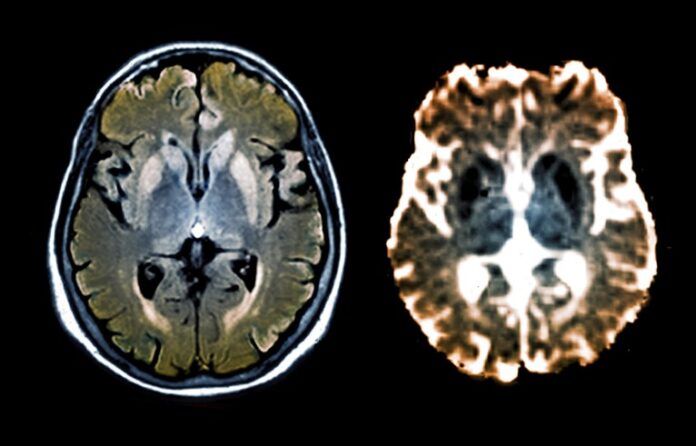
Diseases caused by toxic proteins, such as Creutzfeldt-Jakob syndrome (CJD), may soon become curable. A molecular editor called CHARM effectively “turns off” the disease at its genetic source. The research, led by Edwin Neumann, was conducted at the Whitehead Institute for Biomedical Research. Scientific teams from the Broad Institute, MIT, and Harvard University also participated in creating this innovative tool. CHARM is a significant breakthrough in the fight against prion and other neurodegenerative diseases.
How CHARM Works – Epigenetic Editing Without DNA Damage
Existing genetic therapies, such as CRISPR systems, have significant limitations. Due to their large size, they are difficult to use in treating brain-related diseases, and their potential toxicity increases the risk of side effects.
CHARM’s advantage is that it effectively addresses these challenges. The tool is compact and safe, making it possible to deliver it to the central nervous system (brain) via injection. It does not alter our DNA’s genetic code; instead, it acts on an epigenetic level. CHARM adds a chemical marker to the damaged gene, which “silences” or blocks it, preventing the production of harmful proteins. The chemical markers permanently switch off the gene and prevent the production of the incorrect protein.
Results and Potential: Prion Suppression and PrP Protein Reduction
PrP (prion protein) is a protein that naturally exists in brain cells. The development of prion disease is linked to the transformation of normal proteins into a pathological form (PrPSc). In this state, the protein can no longer dissolve in fluid, concentrates in the brain, and causes neuronal degeneration.
In the study, CHARM was successfully tested on mice. Following the injection of CHARM via an AAV vector, scientists observed a 70-90% reduction of PrP protein throughout the brain, which significantly exceeds the results obtained with other methods. The method had no significant side effects. The self-deactivating mechanism ensured that CHARM’s action was controllable and temporary, reducing potential risks and increasing the possibility of future medical use.
The research is particularly important because the principle of CHARM could prove effective in cases of other neurodegenerative diseases. Since its mechanism is based on preventing the accumulation of toxic proteins in the brain, CHARM represents a new platform for treating diseases like Alzheimer’s, Parkinson’s, and Huntington’s.
CHARM is a true breakthrough in gene therapy. It offers new hope to millions of people who today suffer from incurable diseases.
References:
Neumann, E. N., et al (n.d.). Brain-wide silencing of prion protein by AAV-mediated delivery of an engineered compact epigenetic editor. Whitehead Institute for Biomedical Research; Cambridge, MA.
