


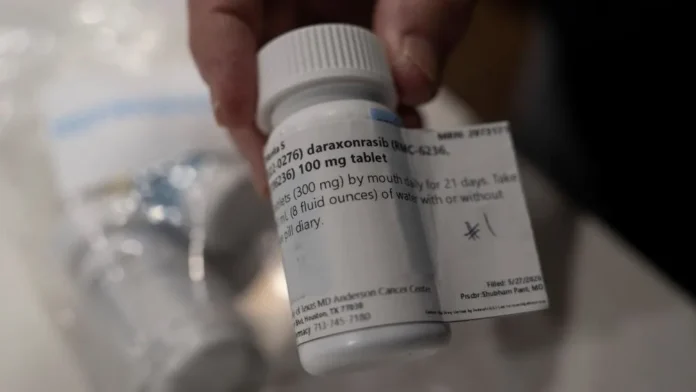
Scientists have achieved unprecedented success in the treatment of pancreatic cancer, one of the most severe and deadliest forms of the disease. A clinical trial presented in Chicago at the Annual Meeting of the American Society of Clinical Oncology (ASCO) showed that a new experimental pill called daraxonrasib doubled the median overall survival of patients with advanced stages of the tumor. Leading specialists consider this discovery to be the greatest breakthrough in recent decades.
Detecting pancreatic cancer at an early stage is extremely difficult, which is why more than half of patients are diagnosed only after the tumor has already metastasized to other organs. Furthermore, standard chemotherapy has historically shown very low efficacy. For this reason, scientists at Boston’s Dana-Farber Cancer Institute tested the new drug on 500 patients whose metastatic tumors had failed to respond to prior treatments.
The results proved so spectacular that the median survival rate for patients receiving daraxonrasib reached 13.2 months, compared to just 6.6 to 6.7 months in the standard chemotherapy group. Dr. Rachna Shroff, Chief of Gastrointestinal Medical Oncology at the University of Arizona Cancer Center, admitted that she could not hold back her tears upon reviewing the trial data, noting that in her 16 years of treating pancreatic cancer, she had never witnessed such an unprecedented survival rate.
How Does the Drug Work?
The secret behind the success of this innovative medication lies in its unique mechanism of action: it selectively blocks the mutated protein KRAS, which drives the growth and spread of nearly all pancreatic tumors. For decades, the KRAS gene remained an “undruggable” target for scientists due to its smooth structure. However, daraxonrasib operates on the principle of a so-called “molecular glue”—firmly binding to the mutated proteins, shutting down their activity, and effectively halting tumor progression.
Crucially, patients tolerated the daily oral pill much longer and more easily than traditional chemotherapy. This translated directly into an improved quality of life, reduced pain, and a significant reduction in tumor size. As for side effects, the drug primarily causes skin rashes and mouth ulcers, which are far milder compared to the systemic toxicity of standard chemotherapy.
Currently, the U.S. Food and Drug Administration (FDA) plans to expedite the drug’s review and approval process. Concurrently, an expanded access program has already been launched, allowing eligible patients to access the experimental drug prior to its official authorization. The clinical trial has already sparked immense demand among patients and physicians alike, as every additional month spent with loved ones is invaluable for individuals facing this diagnosis.
Scientists hope that daraxonrasib will become the new standard of care for pancreatic cancer, with plans already underway to test its efficacy at earlier stages of the disease. Moreover, since mutated genes of the RAS family fuel other oncological pathologies, drugs utilizing a similar mechanism are already being tested in clinical trials for lung and colorectal cancers.
