


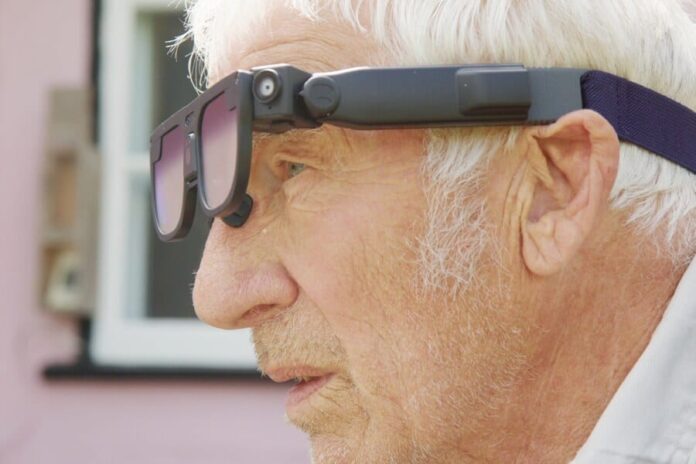
Innovative AI software, specifically designed to assist people living with dementia, has won the prestigious British Longitude Prize on Dementia along with £1 million in funding. The technology, called CrossSense, is designed to help patients maintain their independence.
How does CrossSense work?
The system is integrated into smart glasses equipped with a camera, microphone, and speakers. Its standout feature is a virtual assistant named Wispy. Wispy provides real-time support for daily tasks—such as finding misplaced items or boiling a kettle—using both voice and visual prompts.
Beyond practical assistance, the AI can engage patients in small talk, ask questions, and help recall old memories, significantly improving social interaction.
Testing has shown that using these glasses markedly enhances memory. While patients previously struggled to recognize even half of the objects around them, with the help of the glasses, the vast majority (82%) were able to correctly name household items. Most importantly, the device provides a “training” effect; even an hour after removing the glasses, patients still remembered nearly 80% of the objects.
When will it be available?
The market rollout is planned in several stages:
- Late 2026: A smartphone version will be released first.
- Q4 2026: A four-week pilot testing phase of the glasses will begin in patients’ homes.
- Early 2027: This will pave the way for the official commercial launch of the smart glasses.
What is the cost and what are the challenges?
The hardware is expected to cost approximately £1,000, with a monthly software subscription fee of £50. However, alongside the financial aspect, experts point to several challenges, such as the limited one-hour battery life, data privacy concerns, and ethical considerations.
Despite these technical barriers, for patients like 70-year-old Carol Greig, this device is a “miracle.” It restores her independence, eases the feeling of being a burden to loved ones, and allows her to enjoy life again.
Why is the £1 million prize important for the startup?
The £1 million prize is crucial as it enables the company to launch large-scale testing of this innovative technology by the end of 2026.
Although the glasses currently cost £1,000, the creators aim to reduce the price and integrate the technology into the National Health Service (NHS), making it more accessible to everyone living with dementia.
