


For individuals on the autism spectrum, social interaction and sensory self-regulation often pose significant challenges. However, advancements in Artificial Intelligence and biometric sensors have led to a new generation of assistive devices that help patients adapt to their environment in real time.
In this article, we present the technologies that are currently defining the future of autism therapy.
AI Glasses: Translating Emotions in Real Time
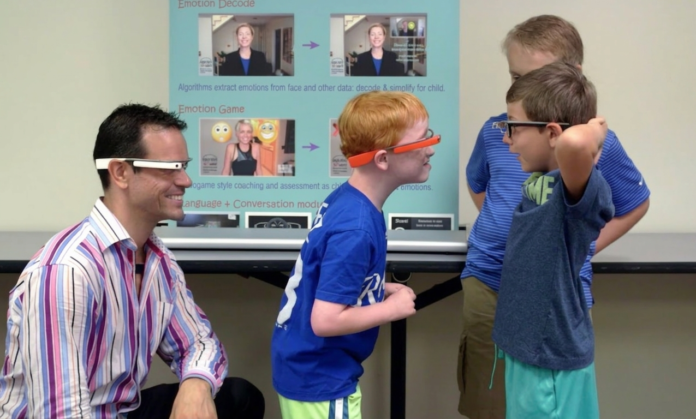
One of the most impressive innovations is AI-powered smart glasses (such as the systems developed by the company Brain Power). The device is equipped with a camera and an algorithm that analyzes the interlocutor’s facial expressions in real time.
When the glasses detect an emotion—whether it be joy, anger, or surprise—they provide the user with information through a subtle visual cue (an emoji displayed on the screen) or an audio signal. This technology helps children and adults better perceive social cues, which are often the primary barriers to communication.
Smart Vests
Sensory overload causes intense anxiety in many individuals with autism. To address this issue, high-tech vests (such as T-Jacket or Oria) have been created to constantly monitor the user’s biometric data, including heart rate and perspiration.
As soon as the device detects the first signs of stress, it automatically simulates “Deep Pressure”—the vest gently inflates, giving the patient a sensation similar to being hugged. This method effectively calms the nervous system during a sensory crisis and allows the individual to manage their emotional state independently.
Virtual Reality (VR) for Refining Social Skills
For individuals on the autism spectrum, social unpredictability is one of the greatest stressors, and VR technology is being used effectively to overcome this. This innovation allows users to conquer their fears and rehearse realistic social scenarios in a completely safe, digital environment.
Through specialized VR headsets, AI generates everyday situations, such as a job interview or simply interacting with a stranger in a cafe.
Ultimately, the integration of AI glasses, smart vests, and virtual reality simulators into autism therapy is revolutionary. These technologies provide patients with a unique opportunity to recognize social cues in real time, independently manage sensory anxiety, and refine their communication skills in a safe environment.
