


Today, food safety is a continuous and growing source of concern. Against the backdrop of widespread reports of food poisoning, the situation is complicated by the fact that the risk of bacterial contamination goes beyond simply neglecting hygiene standards. Today, consumers are not insured even with ready-to-eat products from well-known brands, as clearly demonstrated in the U.S. where one popular dish, “Cajun Style Blackened Chicken Breast Fettuccine Alfredo,” became the direct cause of a massive Listeria epidemic. Accordingly, as the statistics of foodborne illnesses rise, so does the irrational distrust and fear of products, pushing the entire food industry toward radical changes.
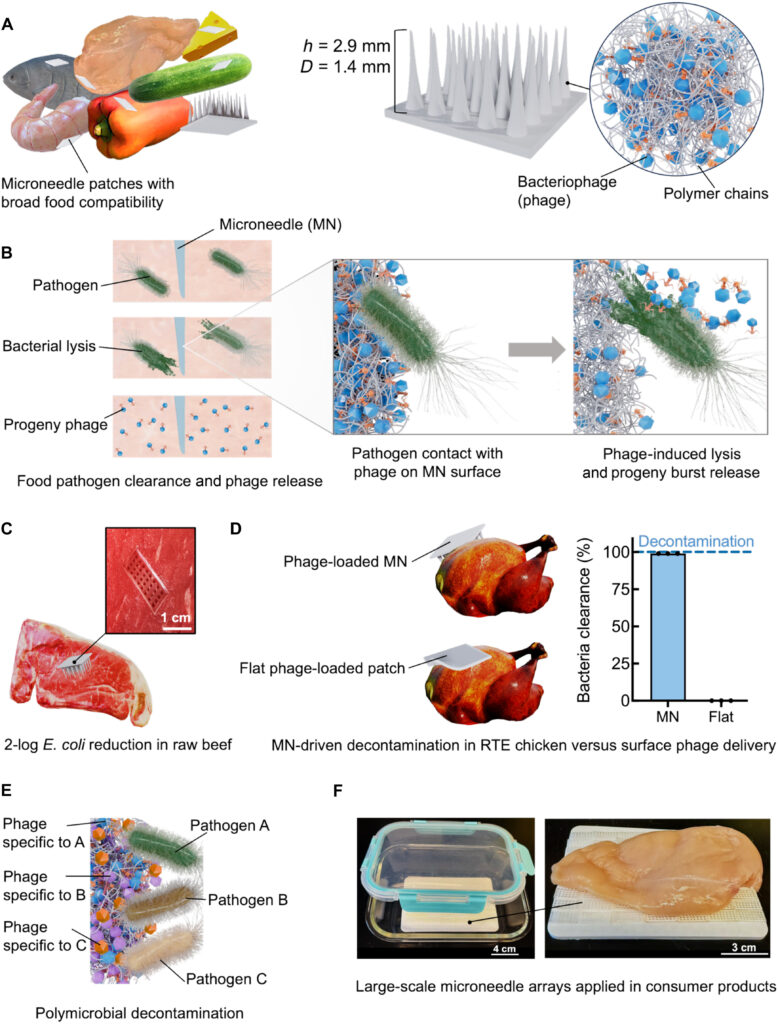
Against this challenge, scientists have developed an innovative, high-tech method that relies on the use of small patches equipped with microscopic needles (microneedles). This system allows the direct insertion of bacteria-destroying viruses—otherwise known as bacteriophages—into the food.
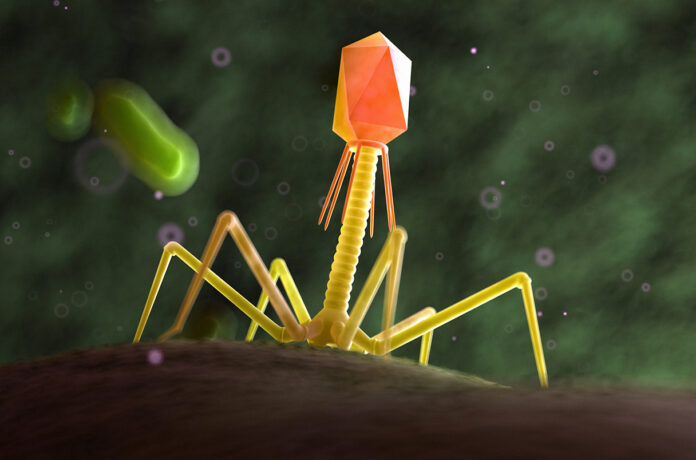
Phages are the natural enemies of harmful bacteria that exist in nature. Their advantage lies in their targeted action: phages destroy only specific pathogenic bacterial strains while leaving untouched the beneficial microbes that are vitally important for maintaining the food’s unique taste and texture. This makes phages a much safer antimicrobial agent than broad-spectrum chemical agents.
How Do Microneedle Patches Work?
Microneedles represent ultra-thin structural units whose thickness is equal to that of a sewing needle and whose length is a few millimeters. They are fixed on small-sized patches (about the size of a fingernail). These microneedles, made from food-safe polymeric material, can penetrate the surface of meat, cheese, or any other product without disrupting its integrity. This system ensures the direct delivery of bacteriophages into the food, to a depth of about 1 centimeter.
After being introduced into the food, the phages begin an active search for the target bacteria. Once the phage attaches to the bacterial cell, it injects its genetic material and uses the bacteria to produce new phages. This replicative process ultimately leads to the destruction of the bacteria, releasing new phages to continue the cycle.
Since phages multiply inside the host bacterial cells, they function as self-replicating antimicrobial agents. This property makes them extremely effective at reducing harmful bacterial strains, even in hard-to-reach, deep zones, which is impossible with traditional spraying methods.
Researchers evaluated patches made from several FDA-approved biocompatible polymers. Testing determined that Polymethyl Methacrylate (PMMA) was the most robust and optimal material for repeated use.
Key Results:
Efficacy Against E. coli: Using PMMA patches loaded with E. coli-specific phages, the concentration of E. coli was reduced by almost 99% in raw steak and 99.9% in cooked chicken.
The Role of Needles: Patches that did not use needles showed significantly lower efficacy, destroying only three-quarters of the bacteria ().
The Effect of Phage Combination (Cocktail): The patches were highly effective even when loaded with a cocktail of phages (against E. coli and Salmonella). This led to a reduction in bacteria by 96% and 99%, respectively.
Technical Challenges
Experts consider it problematic that a wide spectrum of phages may be required to completely cover the bacterial strains present in real food. An additional challenge is related to temperature optimization: phages function best at moderate temperatures, while food is often stored at . Although early data confirms phage activity for more than a week in cold conditions, extended research is needed to determine long-term stability.
In the future, the integration of these microneedle patches is possible in food packaging—for example, in salad and meat containers or on conveyor belts. This would ensure a continuous supply of phages, helping to prevent contamination throughout the entire storage and transportation period. For the widespread adoption and implementation of the technology, informing consumers about the safety of phages is crucial. It is necessary to explain that these are naturally occurring viruses that are already widely distributed in our ecosystem.
Source: Science Advances
