


The development of modern medicine has long been based on managing diseases rather than eliminating their root causes. Most treatments have aimed to reduce symptoms, slow disease progression, or compensate for biological functions that the body can no longer regulate independently. However, the emergence of CRISPR-based gene editing technology has significantly transformed this approach. CRISPR therapy represents one of the most important scientific achievements of the 21st century, offering the possibility of directly correcting genetic defects. The transition of this technology from the laboratory stage to clinical trials in humans marks a critical phase in the advancement of medicine.
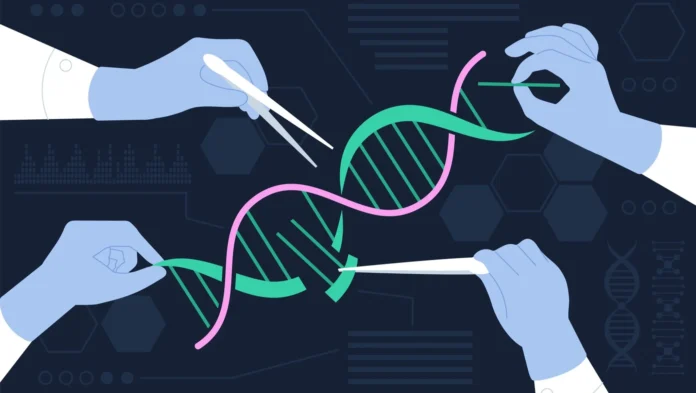
CRISPR (Clustered Regularly Interspaced Short Palindromic Repeats) is a natural mechanism first discovered in bacteria. Scientists, including Jennifer Doudna and Emmanuelle Charpentier, demonstrated that this system could be used as a powerful tool for gene editing. Its function is based on a specialized protein, most commonly Cas9, which is guided by an RNA sequence. This system locates a specific segment of DNA and precisely cuts it at the targeted site. As a result, it becomes possible to deactivate a defective gene, repair it, or replace it with a correct version. Unlike traditional medications, which primarily act on symptoms and often require lifelong use, CRISPR therapy can introduce permanent changes at the genetic level.
Such an approach brings fundamental changes to medicine. If CRISPR develops successfully, it may become possible to implement treatments that can completely eliminate a disease through a single intervention. This would mean that patients may no longer need lifelong medication or repeated medical procedures. There are already examples where early forms of gene therapy have shown significant results, such as in sickle cell disease, where patients’ conditions have improved dramatically. This indicates that the technology is not only theoretical but is becoming practically applicable.
Despite its great potential, CRISPR therapy faces several serious challenges that have slowed its implementation in clinical practice. One of the main problems is the safe and effective delivery of gene-editing components into the appropriate cells of the body. It is crucial that this process does not trigger immune reactions or affect unintended genetic regions. There is also the risk of so-called “off-target” effects, where unintended sections of DNA are altered, potentially leading to serious long-term consequences. For these reasons, CRISPR has long been limited to laboratory and animal studies.
Against this background, the transition of CRISPR therapy into clinical trials represents a particularly important milestone. Clinical trials are the most rigorous and essential phase in medical development, aimed at evaluating the safety and efficacy of new therapies in humans. The fact that CRISPR-based therapies are entering this stage means they have met predefined safety criteria and are ready for human testing. In 2026, several such trials have been initiated, particularly targeting severe genetic diseases, including Duchenne muscular dystrophy.
The advancement of CRISPR into clinical trials also reflects changes in regulatory systems. Institutions such as the U.S. Food and Drug Administration are working to adapt to this new reality and accelerate the evaluation of innovative therapies, especially in cases involving life-threatening or rare diseases. This process simultaneously increases both opportunities and risks, as some therapies may reach the market with relatively limited long-term data.
Despite the progress achieved, a realistic assessment remains essential. A large proportion of medical innovations fail during the clinical trial process, and CRISPR therapy is no exception. Long-term studies are still needed to determine how stable genetic modifications are and what effects they may have in the future. Ethical concerns also remain, particularly regarding genetic changes that could be passed on to future generations.
The entry of CRISPR into clinical trials signifies its transition from a theoretical and experimental stage to practical application. However, the full realization of its potential still depends on the future. The coming years will be decisive in determining whether CRISPR can truly transform medicine or remain a powerful but limited tool. In any case, its impact on modern science and medicine is already evident.
