


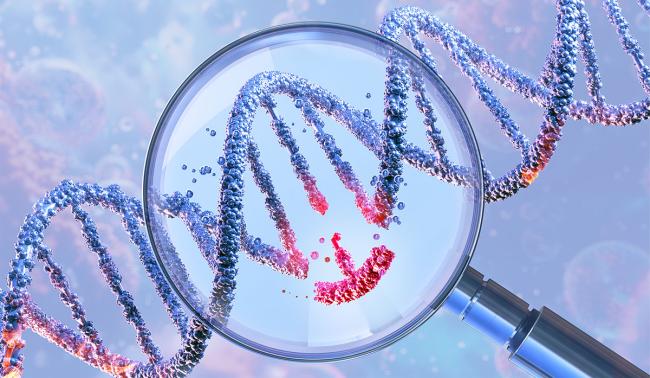
For almost 10 years now, we have been hearing a great deal about CRISPR technology and its limitless potential. Even during student years, it was considered one of the most relevant and fascinating topics, although mostly discussed in theory and in terms of potential. Therefore, it is not surprising that such interest has led to logical progress, and CRISPR technology has already become one of the most important directions in modern medicine. While in the previous article we discussed the transition of this technology into clinical trials in humans, here we will focus on one of its key challenges—Al3Cas12f and how to safely and effectively deliver gene-editing systems into the human body. Addressing this very issue is the goal of a new study published in 2026, which is considered a significant step forward in the development of gene therapy.
A study funded by the NIH (National Institutes of Health) focuses on a completely new, extremely small CRISPR system called Al3Cas12f. Traditional CRISPR systems, particularly the widely used Cas9, are relatively large, which makes their delivery into the body difficult. As a result, until now, CRISPR applications have often been limited to laboratory settings—for example, extracting patient cells, modifying them genetically in vitro, and then reintroducing them into the body.
The main significance of this new discovery lies in the fact that Al3Cas12f is small enough to fit into so-called viral vectors, specifically adeno-associated viruses, which are one of the most commonly used methods in gene therapy. This opens the real possibility of performing gene editing directly inside the human body, making the process faster, simpler, and potentially more cost-effective.
Within the study, scientists not only identified this small enzyme but also developed an improved version of it. After engineering modifications, its efficiency increased dramatically, reaching up to 80–90% in some cases, which is comparable to or approaches the efficiency of traditional CRISPR systems. This is critical, as smaller systems previously showed lower efficiency and were practically unusable in human cells.
This technology has the potential to significantly impact the treatment of diseases such as cancer, amyotrophic lateral sclerosis (ALS), genetic cardiovascular diseases, and many other conditions caused by specific genetic mutations. In theory, it may become possible to “correct” specific genetic errors directly within the patient’s body, without the need for surgery or complex laboratory procedures.
However, despite this progress, it is important to realistically assess the situation. The technology is still in its early stages, and gene editing always carries the risk of unintended modifications to other genes, which could lead to serious consequences.
Ultimately, this discovery does not mean that genetic diseases can already be fully cured, but it clearly demonstrates the direction in which medicine is moving. If this technology continues to develop successfully, we may soon have entirely new treatment methods where diseases are not only managed but actually corrected at the genetic level.
