


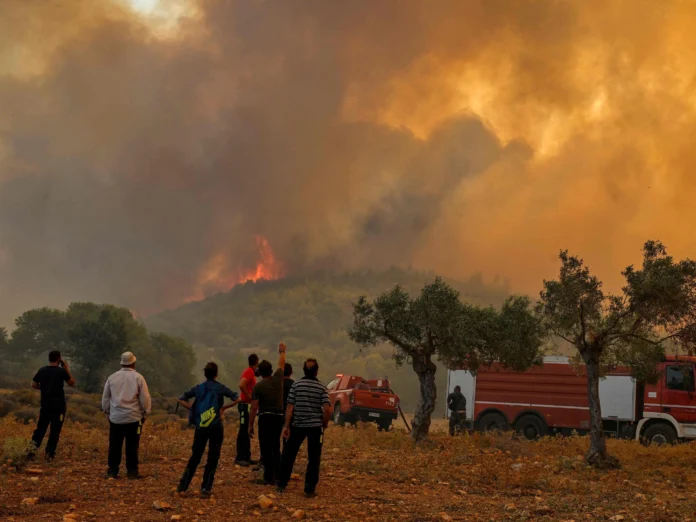
The climate crisis has dramatically increased the risk of extreme heat and drought driving massive wildfires in Spain and France. According to a new analysis by scientists at World Weather Attribution, global warming has made hot, dry, and windy weather conditions at least 20 times more likely in Spain and 2 times more likely in France. Researchers assess that what Europe is currently facing goes far beyond past expectations and paints an extremely alarming picture, especially as the wildfire season is still in its early stages.
Scientists explain that the primary cause of extreme heat in Europe is warming driven by the consumption of fossil fuels, specifically oil, gas, and coal. The situation is significantly complicated by contrasting temperature swings: a wet winter and spring across Europe caused intensive vegetation growth, which quickly dried out during the high summer temperatures, turning into ideal fuel for fires.
Since early July, raging wildfires in Spain and France have destroyed thousands of homes and forced more than 300,000 people to evacuate. The large-scale fires are accompanied by toxic smoke, which in certain instances exceeded permissible air pollution limits by 20 times, with the smoke spread reaching up to 400 kilometers from the blazes. According to global statistics, wildfire smoke reduces the life expectancy of approximately 1.5 million people every year.
A previous WWA study showed that the extreme heatwave recorded in late June, which likely claimed the lives of 20,000 people in Europe, simply would not have occurred without warming caused by carbon pollution. According to the UN Climate Change agency, the only way to remedy the situation is a rapid transition from fossil fuels to renewable energy, protecting the world from even more fatal consequences of the climate crisis, such as megastorms, floods, and drought-ravaged agriculture.
