


Recently, the American Society for Radiation Oncology (ASTRO) held its 2025 Annual Meeting in San Francisco — an event widely recognized as one of the foremost global platforms for innovation and best practices in our field. As the world’s largest conference dedicated to radiation oncology, ASTRO annually welcomes tens of thousands of delegates from around the globe. This year’s meeting brought together representatives from more than 100 countries.
This year’s event was of particular and historic significance — not only for me personally, but also, I believe, for the entire Georgian oncology community.
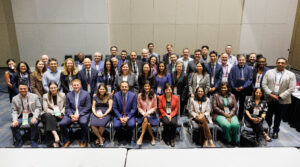
I am deeply honored to share that during this conference, I had the privilege of being selected as a member of the inaugural class of ASTRO International Ambassadors.
In addition to the formal Ambassador Induction Ceremony, it was a great privilege to take an active role in the scientific program.
As a member of ASTRO’s International Committee and moderator of an international session, I had the opportunity to contribute to academic discussions and to share the experience of our institution — the Krystyna Kiel Oncology Center — in building and strengthening international collaborations.
The ASTRO International Ambassador Program
At this year’s meeting, ASTRO officially launched its new International Ambassador Program, which selected representatives from 17 countries, including Georgia.
The initiative’s core mission is to advance the global progress of radiation oncology and to support strategies that enhance cancer care worldwide — particularly in regions where resources remain limited.
ASTRO recognizes that the fight against cancer is a global challenge, and that knowledge must transcend borders.
Through this program, ASTRO aims to foster stronger connections with local medical communities, promote its educational and scientific initiatives, and encourage collaborative national projects that strengthen radiation oncology across the world.
What This Means for Georgia
In my role as an ASTRO Ambassador, I will serve as a bridge between Georgia’s oncology community and one of the world’s leading professional organizations.
This recognition opens unique opportunities for our country and our specialists:
-
Expanded access to education: We will have greater opportunities to present and utilize ASTRO’s educational resources, training sessions, and online courses for Georgian residents and physicians.
-
International collaboration: We will strengthen our ties with global experts, facilitating joint research and cooperative projects.
-
Implementation of standards: We will gain direct access to the latest international guidelines and protocols, helping align radiation oncology practice in Georgia with American and global standards.
Georgia’s inclusion in ASTRO’s global network of ambassadors represents an acknowledgment of our country’s growing presence in the international medical community.
I firmly believe that through collective effort, we can improve cancer treatment outcomes in Georgia and beyond.
Key Themes of ASTRO 2025
This year’s ASTRO conference focused not only on technological innovation and artificial intelligence, but also on the global challenge of equitable access to care.
Discussions emphasized strategies for adapting and implementing advanced radiotherapy technologies in low- and middle-income countries, ensuring that progress in treatment reaches patients worldwide.
ASTRO 2025 also stood out for its renewed perspective that radiation therapy is not limited to oncology alone.
While it has long been a cornerstone of cancer care, the field is witnessing a resurgence of interest in non-oncologic applications of radiation therapy — a practice with a long and fascinating history.
Thanks to modern technologies, radiation can now be used safely and precisely to treat a variety of non-cancerous diseases, expanding the role of radiation therapy across medicine.
The research and discussions presented at ASTRO 2025 affirm that radiation therapy’s role in modern medicine continues to grow — empowering physicians to address a far broader spectrum of diseases than ever before.
