


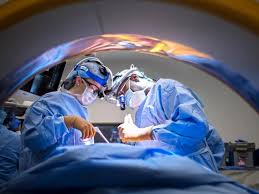
Neurosurgery is a branch of medicine that studies and surgically treats diseases of the central and peripheral nervous systems, including pathologies of the brain, spinal cord, spine, and nerves. It encompasses the treatment of trauma, tumors, vascular issues, and functional disorders, focusing on high-tech, precise, and multidisciplinary approaches aimed at maximizing the preservation of nerve function and improving the quality of life for patients.
Today, Georgian neurosurgery is recognized as a leader in the region within many academic circles and medical communities, which is historically rooted, as it played a central role during and after the Soviet era in the Caucasus.
Despite numerous challenges and issues in the healthcare sector, we can assume that the status of a leading country is still relevant today, as representatives of the field have implemented many innovations in the treatment strategies for various neurosurgical pathologies over recent years. A recent example is the invitation of a delegation of Georgian neurosurgeons to present at the third Yasargil Congress, one of the most prestigious events, which is a significant indicator of international recognition and respect. To discuss the position of Georgian neurosurgery in the region and the overall state of the field, Medscriptum interviewed Vladimir Tsikharishvili, a member of this delegation and the main speaker.
What is the Yasargil Congress and why is it important?
“There are many neurosurgical associations worldwide, and the Yasargil Congress is held in honor of the doctor recognized as the neurosurgeon of the century. This is the third time it has taken place. It serves as a platform for the exchange of the latest ideas and experiences from around the globe. We, from Georgia, have the honor of being invited along with several neurosurgeons, my colleagues, with whom we actively collaborate within the association. Our invitation is due to the recognition of our enthusiasm, which is important because it provides us the opportunity to present Georgia directly on the large map that the association covers. This is not only about my personal experience—it’s a conversation about Georgia as a whole. Our country has many renowned and high-level specialists who have participated in numerous international congresses. This is why I was particularly pleased to be invited to speak on topics considered among the most challenging and relevant in neurosurgery.”
What do these presentations entail?
“This is a compilation of retrospective studies, and the Georgian delegation will be represented by approximately six presentations at the conference:
- The most relevant and technically challenging topic from a medical perspective concerns the surgical treatment of city-based meningiomas, which are classified as high-complexity operations.
- It will also address relatively rare brain pathologies known as third ventricle tumors, which are primarily relevant in pediatric oncology. It should be noted that our experience has received international recognition worldwide.
- I would also like to highlight the topic of vascular or blood vessel pathologies, where the presentation will cover two directions: open treatment of pathologies, such as clipping aneurysms, and closed endovascular approaches, which Mirza Khinikadze will discuss.
- The innovations that have been and are being implemented concerning epilepsy will also be addressed.
- Additionally, I would highlight the topic of vestibular schwannomas and the outcomes of their surgical treatment.
All of these are considered quite complex and relevant topics in international academic circles and the neurosurgical community, which I would attribute to this response. This greatly pleases me, as my experience as a specialist, and not only mine, has received such recognition, and being represented at such a high-level congress is an honor. But the greatest joy comes from the fact that this is not just our success but the success of the entire country—a significant step forward.”
What position does Georgian neurosurgery currently occupy in the Caucasus region?
“It’s hard to say definitively; from a neurosurgical perspective, we still maintain a leading position. This is not about systemic order but rather the high quality of services provided. The country retains this first place due to the enthusiasm of professional doctors and the efforts of individual clinics. However, in terms of resource allocation, even our neighbor Azerbaijan is far ahead, as they replicate the same experiences that Turkey or many Central Asian countries have, sending specialists to countries with much more developed medical systems for proper retraining and subsequent return. This acquired knowledge is then utilized in the country, which I believe is a correct strategy.
Despite the colossal funds allocated for the treatment of children in pediatric oncology within solidarity programs implemented in Georgia, practically no finances have been earmarked for the retraining of Georgian specialists, which does not allow the field to develop in the long term. This would have enabled us to treat many severe pathologies within the country more effectively and at lower costs, ultimately contributing to the development of the neurosurgical field.”
The Role of the State in the Existence of Neurosurgery as a Field
“Currently, about 90% of medical services come from the private sector, with only a small portion provided by the state. The role of the state in the development of neurosurgery is highlighted here. There is an impression that it operates more from a regulatory standpoint of control and restrictions rather than from a partnership perspective. In reality, a partnership approach is needed, which is referred to in healthcare economics as selective contracting.
Without selective contracting, the responsibility fully shifts to the clinics, while it becomes easier for the state to impose restrictions on them. Meanwhile, contracting for patients sent abroad is conducted much more thoroughly and strictly than with domestic clinics. As a result, a comprehensive assessment of the country’s internal capabilities is not made, leading to ineffective use and dispersal of resources.
If we do not connect the “DRG” system with selective contracting, its effectiveness significantly diminishes. The internationally recognized approach is the same because the “DRG” system implies the existence of selective contracting. Clinics that provide relatively better service to consumers, especially to the citizens of our country, should not be on equal terms with those that cannot achieve this. International practice is based on the principle that clinics should be segmented based on their experience in treating specific diseases, determined by the complexity of the cases they can handle. Unfortunately, patients are not fully informed about this, as they make decisions based only on superficial marketing rather than on publications and their content. Clinics that invest more in medicine, use higher quality materials, and, most importantly, invest additional resources in training young professionals should be promoted and supported by the state. This approach would not only increase the quality of services but also create a dynamic where treatment is intertwined with academic discoveries. Unfortunately, with the current situation, there is no such readiness from the state, resulting in clinics that create differing perspectives and quality having to operate on equal terms.
This, of course, affects the field of neurosurgery, as despite many steps taken and attempts to increase the field’s weight not only in the region but globally, this dynamic will remain unstable until the training of young professionals in the field, the accumulation of evidence-based knowledge, and the continuous self-improvement process are incentivized by an appropriate systemic arrangement.”
What path have we taken, where are we now, and what is the future outlook?
“It is essential to mention the universal healthcare program in the context of neurosurgery, which has yielded many positive results, as it has released many resources for the healthcare sector, allowing the private sector to replicate the experiences of international clinics and develop rapidly. This was a significant step forward, as it naturally brought better equipment, more motivated specialists for retraining, and ultimately improved service delivery capabilities. This change has also affected neurosurgery, and since this field is resource-intensive, universal healthcare has created the necessary groundwork for its development, which has now entered a relatively subdued dynamic.
I would like to reframe the discussion regarding current conditions and future outlooks to focus more on the challenges facing the field. In this way, I would frame the issue, as Georgia is a small country with a small population, and certain diseases occur relatively rarely epidemiologically, which creates a deficit of experience in controlling and treating these diseases nationwide. This is evident in the field of movement disorders, for example, in the context of diseases such as Parkinsonism or dystonia, which can be treated through stereotactic surgical interventions in the deep structures of the brain.
Given the small population, it is challenging to manage individual cases across the country’s diverse regions, so I would prefer to see clinics in the future, each focused on a specific rare aspect of neurosurgery, which would accumulate experience in managing and treating these complex cases and further advance the field in the country.
The second issue is the foreign contacts and connections that I see in neurosurgery and Georgian medicine in general, as without the sharing of this experience and the implementation of foreign innovative approaches, the field cannot develop. Our European friends play a significant role in each success in the field, as they are most interested in the development of our healthcare system. For example, I can mention the introduction of epilepsy surgery, which initially received help from Germans, but currently, Austrians are assisting us in development.”
The experiences and evaluations discussed above clearly show that Georgian neurosurgery still holds significant and competitive positions in the region today. This status is primarily determined by specialists with high professionalism, close collaboration with international academic circles, and the practical experience accumulated in managing complex and rare pathologies.
At the same time, it is evident that the further development of the field cannot be sustained solely through individual enthusiasm and the efforts of individual clinics. There is a pressing need for more strategic involvement from state policy—especially in the targeted retraining of specialists.
The invitation of Georgian delegations to international congresses and the interest in their experiences further confirms that the country possesses significant professional potential. Systematic utilization of this potential, deepening international collaboration, and accumulating knowledge within the country represent the path that will not only maintain Georgian neurosurgery’s regional leadership but also strengthen its positions in the global medical space.
