


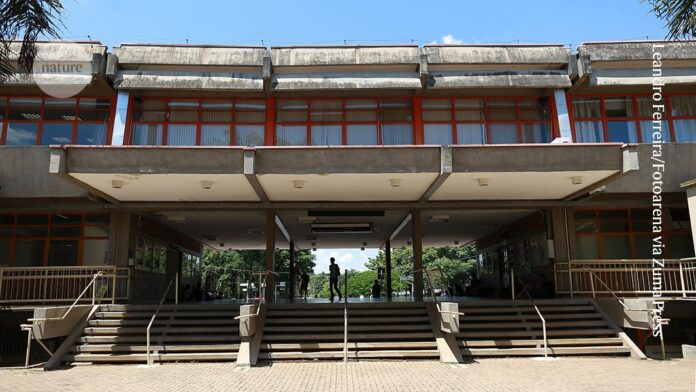
The Brazilian Federal Police have arrested Soledad Palameta Miller, a virologist and scientist at the State University of Campinas (Unicamp). She is accused of illegally removing dangerous pathogen samples from a high-security Biosafety Level 3 (BSL-3) laboratory. As part of the investigation, police have already recovered the stolen samples—including Chikungunya, Dengue, and Epstein-Barr viruses—which were hidden at various locations across the university campus.
The Brazilian scientific community has expressed deep concern over the incident, as BSL-3 laboratories operate under extraordinary security measures. In such facilities, access to pathogens is strictly controlled, making the unauthorized removal of samples nearly impossible. According to case details, laboratory staff first noticed the disappearance of the viruses in February. Surveillance footage revealed that the suspect’s spouse, who is also a doctoral student at the same laboratory, was leaving the building late at night or in the early morning hours.
Regarding security risks, the Brazilian Health Regulatory Agency (Anvisa) confirmed that the recovered samples do not pose a threat to public health at this stage. Nevertheless, experts expressed bewilderment over the theft. They explained that these specific viruses can be obtained freely through official channels and proper protocols for scientific purposes.
As for the legal proceedings, Soledad Miller was released on bail on March 24, though she faces charges of theft and attempted destruction of evidence. The State University of Campinas is cooperating fully with law enforcement and is simultaneously conducting an internal investigation to determine how high-risk materials were removed from the lab by bypassing security systems.
The primary mystery remains the motive behind the crime, as the suspect is exercising her right to remain silent. Law enforcement officers are actively investigating several theories, including the potential sale of the samples or their use in illegal, unauthorized experiments. Experts suggest that such actions call into question not only the security protocols of a specific laboratory but also the fundamental principles of scientific ethics.
Against this backdrop, specialists are warning the public about potential dangers. Experts note that the mishandling of such viruses outside of laboratory control could lead to a biological disaster. Improper storage and transportation of dangerous pathogens create epidemiological risks, further intensifying the gravity of the act.
