


Noise pollution is much more than just an annoying background sound. Recent studies underscore its significant pathogenic impact on human health, affecting virtually all organ systems, from the physiological phases of sleep to the functioning of the cardiovascular system. Recognizing this pathological risk requires a fundamental change, both in public health policy and in urban development planning.
What is Noise Pollution?
Noise pollution is defined as unwanted or excessive sound stimulation that negatively affects an individual’s health and well-being. Common sources include transport (automobiles, rail, and air traffic), industrial sites, construction work, and large-scale entertainment events. The problem is exacerbated by household appliances and noise from neighbors.
Noise intensity is measured in decibels (dB). For example, average office noise is , while a jet engine is . The World Health Organization (WHO) sets the threshold for harmful exposure at averaged over 24 hours, or during the night, an intensity that most people experience constantly.
How Does Noise Affect Health?
Noise pollution causes a stress response in the body, activating the sympathetic nervous system and releasing stress hormones. This process disrupts sleep, daily activities, and mental stability. Existing evidence links noise to the following pathologies:
Sleep Disorders: Even without complete awakening, noise increases blood pressure and causes the disruption of normal sleep-wake cycles.
Cardiovascular Pathologies: Long-term exposure to noise significantly increases the probability of serious conditions such as hypertension, coronary artery disease, and stroke.
Mental Health: Irritation caused by noise is associated with an increased risk of anxiety, depression, and irritability. In children, living near airports has been linked to a decline in memory and cognitive abilities.
Cognitive Decline: In the elderly, noise closely correlates with a high probability of developing dementia.
Pregnancy Complications: Intense noise levels may contribute to an increased risk of premature birth and low birth weight; however, clinical data confirming this is still limited.
Potential Risks: Studies indicate a possible link between noise and infertility and certain risks of oncological diseases, but data confirming this hypothesis still does not allow for final conclusions.
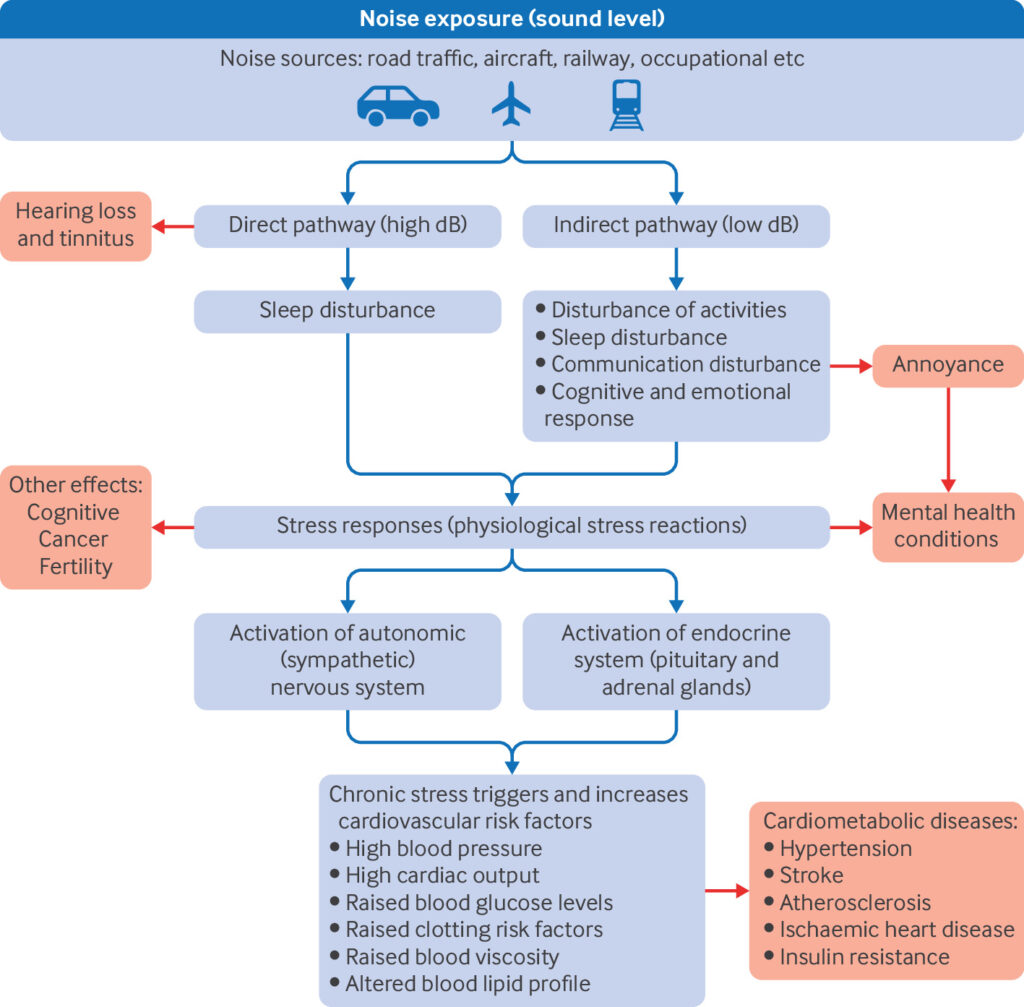
In Europe, noise pollution is attributed to approximately 48,000 new cardiovascular pathologies and 12,000 premature deaths annually. This is a massive but hidden public health burden that, like air pollution, remains without adequate regulatory and public attention.
Vulnerable Groups and Its Recognition in a Clinical Context
The most intense exposure to noise is experienced by individuals living in urban centers and near transport highways. Communities with a low socioeconomic status are often at the highest risk. Vulnerable groups include the elderly, pregnant women, night shift workers, and individuals with pre-existing sleep or mental disorders. Approximately one-third of the population (33%) is characterized by particular sensitivity to noise, which increases the severity of pathological outcomes.
In patients pathologically affected by noise, chronic fatigue, a feeling of constant stress, sleep disorders, increased excitability, or the exacerbation of existing heart diseases and anxiety states may be observed. Directly linking symptoms to noise is difficult, but doctors asking questions about the intensity of noise in the living environment and sensitivity to sound facilitates timely identification of the problem.
Management Strategies
The fight against noise pollution is carried out at three main structural levels: the patient, the healthcare provider, and regulatory policy.
Patient Level (Self-Care): To improve sleep quality, using simple methods is beneficial, such as earplugs, white noise generators (white noise is a collection of sounds that has identical intensity across the audio range, creating a uniform sound that excellently dampens other noises), or calming exercises. These low-budget means are especially helpful in reducing noise during nighttime hours.
Healthcare Provider Level: Clinicians should pay attention to noise exposure when assessing a patient’s health condition and adjust the treatment strategy accordingly. They can recommend social support and refer the patient to appropriate specialists in cases where noise exposure hinders the recovery process.
Policy and Urban Planning: Reducing noise directly at its source is the most actionable strategy, which includes the following measures:
Reducing speed limits for transport vehicles and using appropriate road surfaces.
Restricting heavy truck traffic in residential areas.
Encouraging the development of electric vehicles and public transport.
Imposing restrictions on flights and freight transportation during nighttime hours.
Constructing noise protective barriers and using green spaces (parks, squares) as a noise buffer in city planning.
Tightening regulatory norms and raising public awareness.
According to a study conducted in Switzerland, lowering the speed limit for transport vehicles from to sharply reduced noise levels and had a positive effect on the population’s sleep quality.
Noise is a serious global threat that requires the same attention as air pollution. Reducing noise helps us prevent diseases and improve the quality of life.
Source: bmj
