


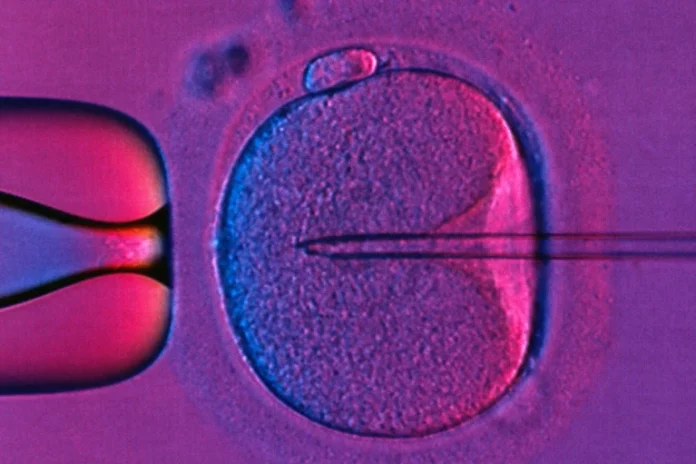
The United Kingdom is taking a historic step in the prevention of genetic diseases. For the first time in the world, eight healthy babies have been born using Mitochondrial Donation Treatment (MDT). Why has this information shaken the global media? This is an unprecedented event in human reproduction, where a child carries the genetic material of three individuals. In three-person fertilization, the mother’s nuclear DNA, the father’s sperm DNA, and the healthy mitochondria of a third woman (the donor) are used. This technology has made it possible to protect children from mutated maternal mitochondria and from genetic diseases that are transmitted through maternal mitochondrial DNA, often causing neurological, cardiological, or metabolic disorders incompatible with life. Naturally, this is especially significant for thousands of parents who face the risk of transmitting mitochondrial genetic diseases.
Mitochondria are the “powerhouses” of our cells, and when they are damaged, the body cannot produce enough energy, leading to the development of serious illnesses. MDT treatment involves replacing the damaged mitochondria in the mother’s egg cell with healthy mitochondria from a donor, resulting in an embryo with genetic material from three individuals—the mother, the father, and the donor.
The popularity of this innovative approach stems from its unprecedented potential to offer thousands of families a real chance to have healthy children. This technological breakthrough opens the door to a completely new era of genetic disease prevention, where it will be possible to eliminate hereditary pathologies at the conception stage. Although mitochondrial donation is still subject to ethical and legal debate, its scientific significance is undeniable. It represents one of the most promising directions in medicine.
Reference:
Callaway, E. (2025). ‘Landmark’ study: Three-person IVF leads to eight healthy children. Nature.
